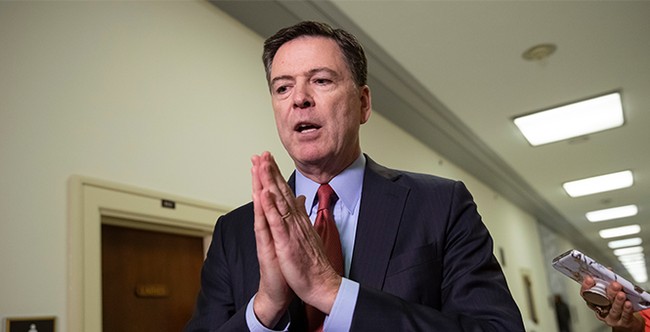
James Comey is back in the spotlight with a familiar flavor. The Department of Justice has issued a subpoena tied to his role in the 2017 intelligence assessment on Russia and the 2016 election.
Years passed, but the questions never went away. Now, however, they’ve returned with legal force behind them.
The subpoena marks a new escalation after Fox News Digital previously reported that Comey and former CIA Director John Brennan were under criminal investigation related to the probe.
Sources at the time said the investigations were examining potential wrongdoing tied to the creation of the 2017 assessment and possible false statements to Congress.
Comey, as PJ Media readers know, served as FBI director at the time and played a central role in one of the most consequential investigations in recent political history. It was an investigation that influenced public opinion, policy debates, and years of political conflict that followed.
That assessment referenced the Steele dossier, which a CIA “Tradecraft Review” completed in June under CIA Director John Ratcliffe said “ran counter to fundamental tradecraft principles and ultimately undermined the credibility of a key judgment,” according to Axios, which cited the review.
Ratcliffe has since referred Comey and Brennan for possible prosecution, Axios reported.
Senior officials from multiple agencies contributed to the document, including John Brennan and James Clapper. The document’s conclusion shaped the early narrative around the election and set the tone for investigations that stretched across years.
The current inquiry focuses on process and accountability. Lawmakers and investigators want clarity on how evidence was gathered, how conclusions were reached, and whether political pressure played any role.
Those questions may sound procedural, but they carry serious weight; decisions made during that period affected the credibility of major institutions and the direction of national policy.
Comey’s past testimony offers a preview of what may come next. During earlier hearings, he often leaned on phrases that signaled caution or distance. “I don’t recall” appeared many times, and the Fifth Amendment remains a legal option available to any witness under oath.
A subpoena raises the stakes because it requires answers, even if those answers arrive carefully measured.
President Donald Trump has long argued that the original investigation carried political bias, a view that continues to shape how supporters interpret the renewed scrutiny. Meanwhile, those on the left maintain that the original findings reflected legitimate concerns about foreign interference. There’s enough daylight between those competing views to power a solar panel for minutes.
The legal process will move forward step by step. Testimony, documents, and sworn statements will form the backbone of whatever comes next. Investigators will press for clarity, witnesses will weigh their words carefully, and the outcome will depend less on headlines and more on what can be established under oath.
For Comey, the moment carries both legal and personal weight. His time as FBI director placed him in the center of events that reshaped American politics. The subpoena pulls him back into that same arena, where every answer matters and every pause gets noticed.
The country has seen versions of this scene before: a high-profile witness, a charged political backdrop, and a series of questions that reach back years.
What happens next depends on how much clarity emerges and how much remains unreachable.
In other words, wash, rinse, repeat.
If we decide on a drinking game, basing a shot of Buffalo Trace on each time we hear “I don’t recall,” we’ll remember the first 15 minutes of his testimony.
Regardless, second verse, same as the first verse.
If you want clear-eyed analysis without the usual noise, PJ Media VIP delivers exactly that. Use promo code FIGHT right now and take 60% off your subscription.