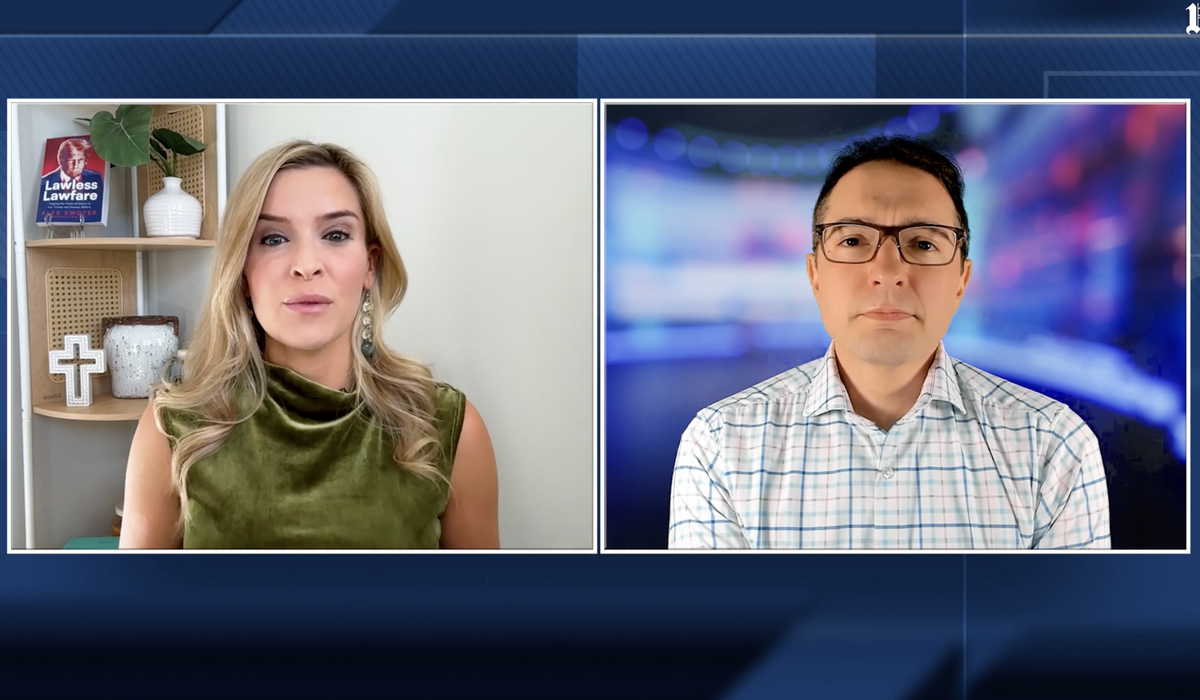
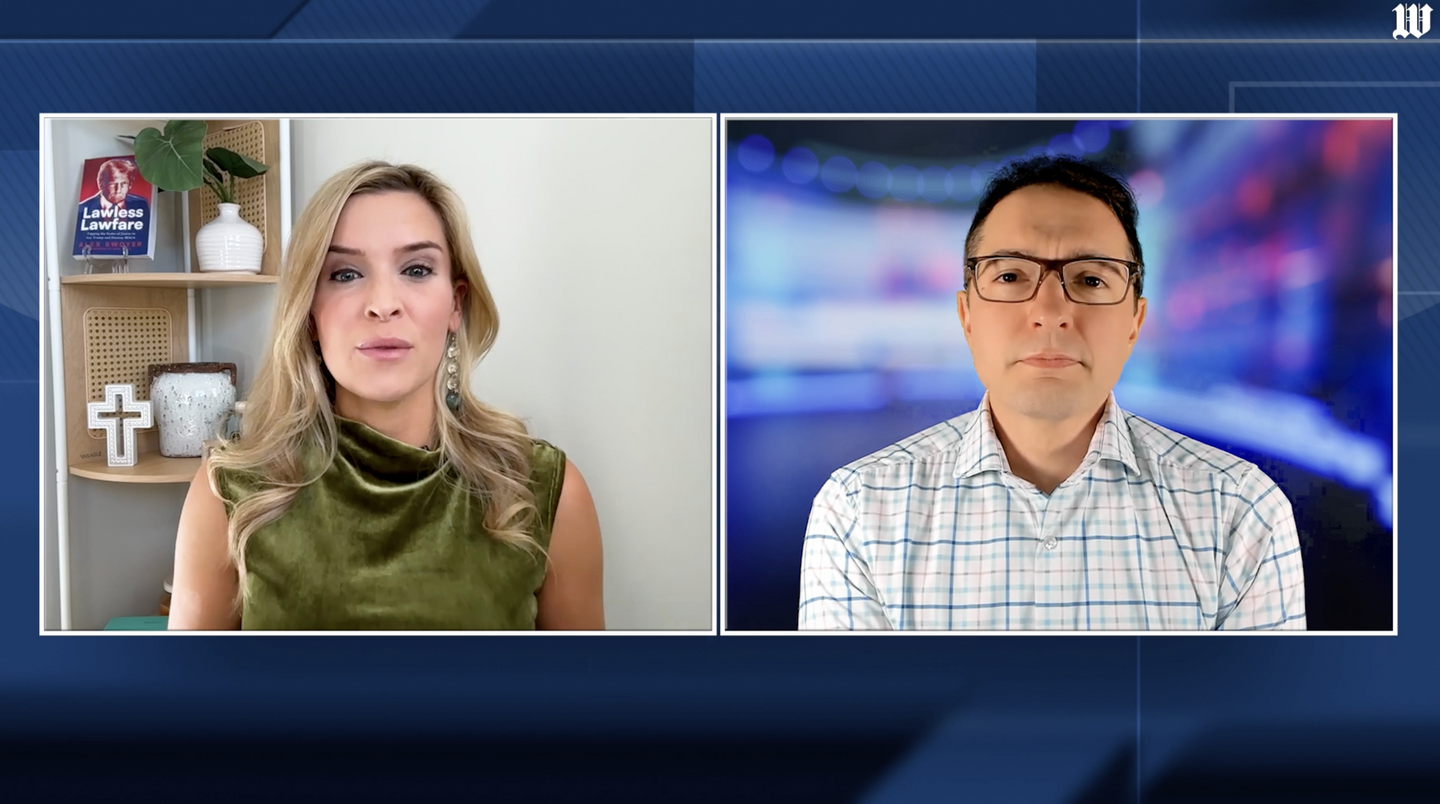
I’m George Gerbo and welcome to Washington Times Weekly, where we get a chance to sit down with our reporters and talk about their coverage of the latest news and events.
[GERBO] Let’s start on the southern U.S. border with Mexico, where construction of a border wall hasn’t progressed as much as some people probably would like it. Only 27 miles of the wall have been built since the beginning of last year. Seven of those by the Department of Defense, the rest by the Department of Homeland Security, despite having broad authority after Congress passed billions of dollars in funding for it, as well as the removal or allowance of some environmental laws that no longer have to come into effect with this wall construction.
You recently sat down with Tricia McLaughlin, DHS official. What was her stance and her speaking on the updates and potentially when we could see some of that construction moving forward? And the state of a border wall on the southern border, which has been a big topic both in President Trump’s first term and now in his second term?
[SWOYER] Yeah, you’re right. I have been sitting down with some Trump administration officials. The series is “The Sitdown with Alex Swoyer,” available via the Washington Times. And we’re trying to bring these video and print stories to life for our readers and give them a glimpse of issues like the border wall. And Tricia McLaughlin, the DHS spokesperson, told me that was in the big, beautiful bill. If you recall, there was funding to continue this border wall, and they’re going to have to crank it up. So she said there’s full effort, that they recognize that it slowed down. To give a little bit of a comparison, there was about a mile a day built during the first Trump administration. And now we’re looking at almost a little over a mile a month during the second Trump administration. Quite a difference.
[GERBO] Let’s pivot to the Supreme Court, where justices recently heard a couple of cases involving state laws regarding transgender girls and women participating in traditionally girls’ and women’s sports, specifically cases out of West Virginia and Idaho. Plaintiffs are seeking to challenge Title IX designations that have historically been based on biological sex. But from your reporting and listening to the court’s arguments, it appears that — we’ll get a decision on this later in the year, of course — but the justices seemingly want to side with the states here. And more than half of the states in the nation have similar laws, but it’s cases specifically out of Idaho and West Virginia that are being brought in this case.
[SWOYER] You’re right. About two dozen states have similar laws to West Virginia and Idaho. Those laws basically say you have to have been born biologically a female to compete in women’s sports. And they span elementary through collegiate. So it covers from young to older, to pass through puberty. And that’s one of the things the justices got into was, what do you do when we’re talking about six-year-olds, that sort of thing. It was very interesting. I think there was a push from the transgender athlete side to maybe look at the level of testosterone. You know, some of the justices were like, wait, so is it going to be on states to try to look at every athlete’s testosterone level? That seems wild.
So, leaving the court, yes, the generic feeling was that the justices were going to side with these states and allow them to uphold these laws that restrict girls’ sports to biological females. The issue you brought up was Title IX. That’s one area. There’s also the equal protection argument that the transgender athletes have made. The lower courts from West Virginia and out of Idaho both ruled for the transgender athletes. So it was really these states and interveners, biological female athletes that have been pushing to keep these laws on the books. And that’s what it seems like the Supreme Court will allow.
And when you referenced an opinion, I think it’ll probably be toward the end of June that we get one. They usually release all their opinions from May to June. Sometimes they go into early July. We’ll have to see. The bigger ones I’ve noticed, or mid-June to late June.
[GERBO] And you know we’ll be keeping tabs on, everything going on at the court. You mentioned “The Sitdown With Alex Swoyer.” There’s not much you don’t do these days. That includes a new weekly column, “Seen, Heard & Whispered,” that you can find every Friday via email and in print. Tell us about what you’re going to be getting into with the column, who you’re going to be talking to, and some of the details that you’re looking to uncover in it.
[SWOYER] Yes, thank you so much for asking about this, too. We just launched “Seen, Heard & Whispered.” This week will be the third column that comes out. It’s every Friday. And I’ll tease it for you right now. I was down at Mar-a-Lago this week, and I saw a documentary premiere for American Principles Project. They have a documentary called “Fathers Wanted,” and it featured Tucker Carlson, Benny Johnson, some of your conservative father figures. And they really highlighted the downfall of the nuclear family and the lack of children every family is having since the 60s. I think it was like an average of three. Families had an average of three kids back then. Now, of course, they don’t. They explore the reasons why that is.
One key area that I think spoke to what we’ve been hearing about in politics is the word affordability, right? And although politicians aren’t very good at nailing exactly that affordability talk down, one area really is housing. And the documentary highlighted that one in four houses being purchased by investment companies, like those that are either trying to flip. And so this is like not families being able to purchase homes, like what we used to see. That’s one area, of course, that’s leading to this downfall of the large family.