
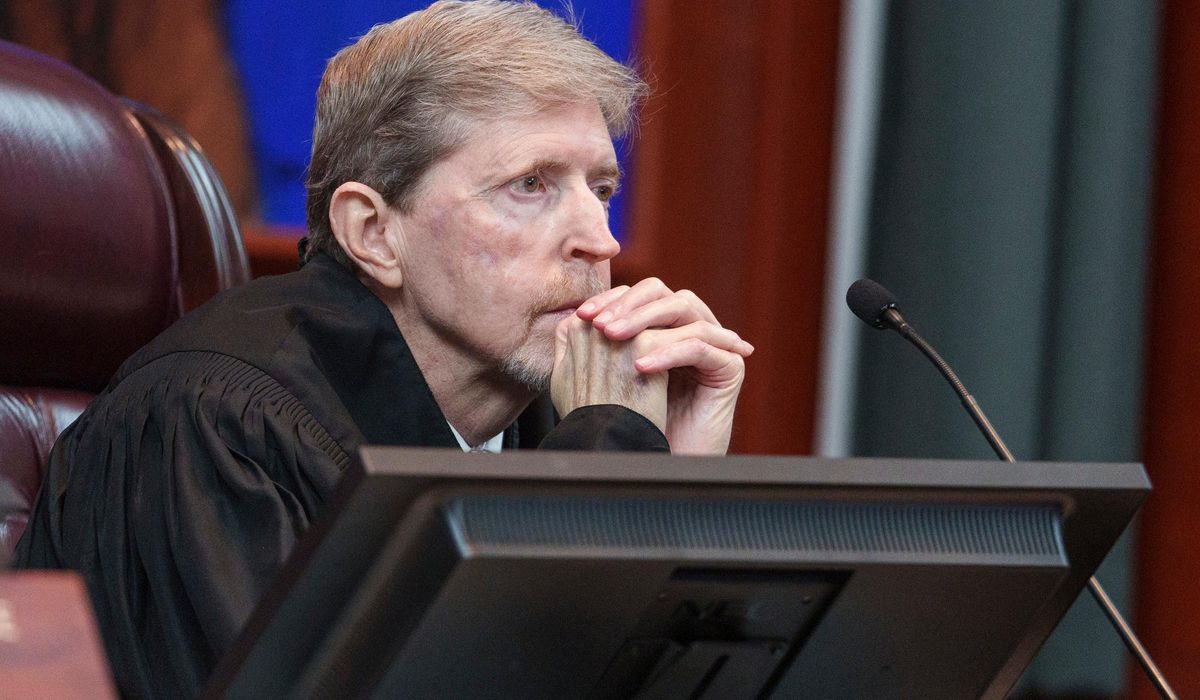
SALT LAKE CITY — Utah Gov. Spencer Cox signed a bill Saturday that expands the state Supreme Court from five justices to seven as frustration has mounted among Republican lawmakers over a string of defeats before the tribunal.
Advocates for the change argued that it would help improve the court’s efficiency, but legal experts said it could have the opposite effect and set a dangerous precedent at a time of tension between the branches of government. The state’s judiciary did not ask for more justices on the court.
Democrats, who were united in opposition to the bill, called timing suspicious. The Legislature has been preparing an appeal of a ruling that gave Democrats a strong shot at picking up one of Utah’s four Republican-held congressional seats in the fall.
New justices could be in place when the court decides the fate of the congressional map.
Because the bill received approval from more than two-thirds of legislators, it took effect immediately after the governor signed it, allowing him to bypass a several-month waiting period to start adding justices.
In Utah, justices are appointed by the governor and approved by the state Senate. Justices in many other states are elected.
Most states have five or seven Supreme Court justices, but a few have nine. Cox, a Republican, has said the additions would put Utah in line with other states of its size. He has denied that the policy is politically motivated, noting that Republican governors and senators have made all recent appointments.
Once he fills the new seats, Cox will have appointed five of the seven sitting justices.
Last month Republican lawmakers took authority from state Supreme Court justices to select their own chief justice and gave that power to the governor.
“Seven sets of eyes reviewing the most complex and difficult issues our state has ever faced is better than having only five sets of eyes,” said House Majority Leader Casey Snider, a Republican sponsor of the bill.
John Pearce, who recently retired as associate chief justice, said this month that he doubted the change would make the court more efficient.
“The more sets of comments you have to take into account, the longer the process takes,” Pearce said. “If what the Legislature is hoping to do is speed up the work of the court, it’s going to be counterproductive.”
Two states – Arizona and Georgia – have added justices in the past decade after making similar arguments about efficiency.
In the first few years after Arizona grew its court in 2016, several past and present justices said it made things less efficient because more people had to review opinions before they could be published.
Arizona’s court now issues slightly more rulings per year, while Georgia’s issues slightly fewer than before.
Utah Chief Justice Matthew Durrant told legislators on the opening day of the 2026 session the court had “essentially no backlog” and urged them to add judges to lower courts, where the need is greater. Bill sponsors responded by adding some lower court judges and clerks.
The Utah State Bar has raised concern over the expansion and other proposals that it said would weaken the judiciary’s independence. Among them is a bill that would create a new trial court with exclusive jurisdiction to hear constitutional challenges. The governor would appoint three judges who would be confirmed by the Senate.