President Trump’s push to rewrite the SAVE America Act with a ban on mail-in ballots and a crackdown on transgender policies is adding new roadblocks to the bill’s survival.
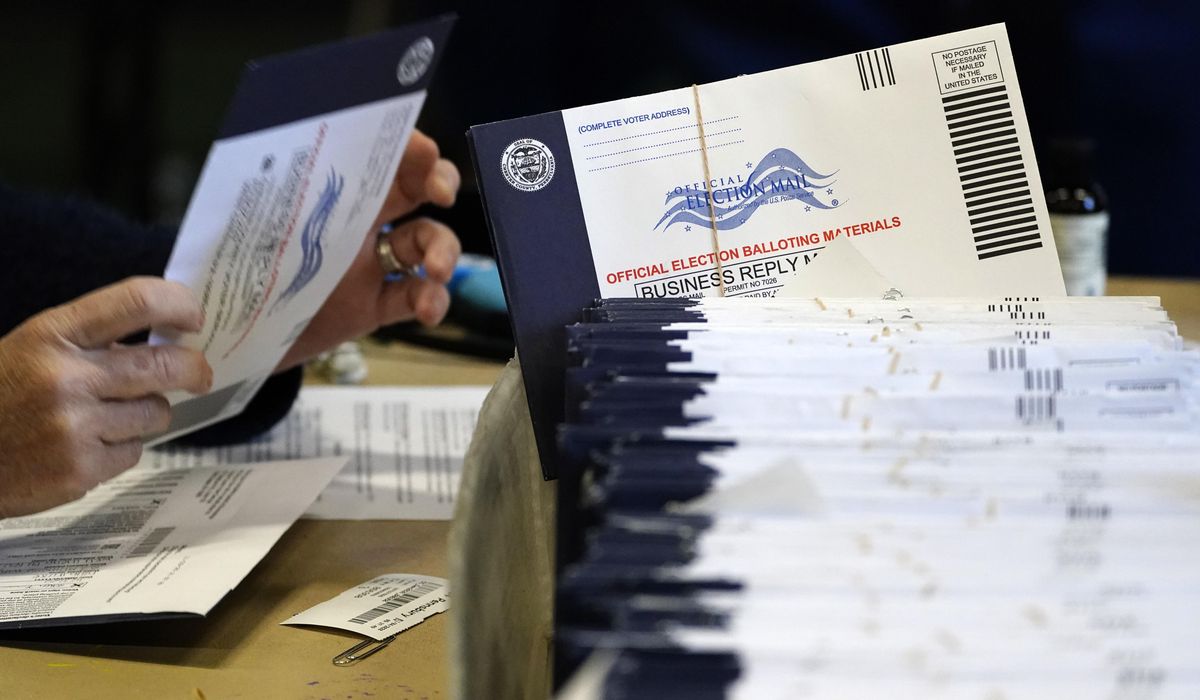
House Republicans did not have enough internal support to add the mail-in ballot ban when they passed the bill last month, and the ban also faces resistance among the Senate GOP.
“Vote by mail in Utah has been done very successfully, and my instinct is to support my state,” said Sen. John Curtis, Utah Republican.
He supports the House-passed version of the SAVE America Act that requires proof of citizenship to register to vote and a photo ID to cast a ballot.
Utah is one of eight states, plus the District of Columbia, that automatically send mail-in ballots to voters. The others are California, Colorado, Hawaii, Nevada, Oregon, Vermont and Washington — all of which are represented by Democrats in the Senate.
Sen. Jon Husted, who served as secretary of state for Ohio, said states sending unsolicited mail-in ballots creates a potential for significant fraud and he supports banning the practice.
“If that’s the direction we go, that would be a good enhancement to our voting system, without creating any complications with making it easy to vote and hard to cheat,” the Ohio Republican said.
Other Senate Republicans wanted to make sure there were exceptions to a ban on absentee voting, such as for the military and people with disabilities.
Mr. Trump said he is willing to be “very liberal” in proposing exceptions, including for “people that are away, business trips or whatever, even vacations.”
The president told House Republicans during their annual retreat on Monday that he is “not going to sign a watered-down version” of the SAVE America Act and wants them to rewrite the measure they passed last month.
“Let’s go for the gold, and let’s just not accept anything else,” he said.
Mr. Trump asked House Speaker Mike Johnson to draft a new bill adding the mail-in voting restrictions and two nonelection priorities, bans on transgender athletes playing in women’s sports and children receiving “transgender mutilation surgery.”
“The reason I put those other two that have not much to do with it is because they are equally popular, and I think it might help us,” Mr. Trump said.
The president called the five main goals — the two already in the bill and three he wants to add — “the best of Trump” and said it is his No. 1 legislative priority.
“I don’t think we should approve anything until this is approved,” he said.
Mr. Johnson told reporters on Tuesday he views the president’s threat not to sign any other bills as “a signal to the Senate in particular, that he’s very serious about this.”
He is not worried about a lawmaking blockade because if the president does not sign or veto legislation within 10 days, it becomes law automatically.
Still, he said the House could add the president’s additional priorities to the bill and send it to the Senate, or the Senate could do it and send it back to the House.
“We’re looking at the mechanisms to do it,” he said.
Mr. Trump offered his support for one idea some House Republicans floated, attaching it to a bill reauthorizing the Foreign Intelligence Surveillance Act to entice Democrats to vote for it.
Senate Majority Leader John Thune, South Dakota Republican, does not see a path to passing the bill with Democratic support.
“There are a lot of optimistic views about what Democrats may or may not do,” he said. “We all know, because we deal with them every day, that the Democrats are not all of a sudden going to decide that this is something they want to be for.”
Nor does Mr. Thune think Republicans could pass the bill without Democratic support, using the talking filibuster to force them to speak on the floor so long as they want to block the bill.
“We don’t have the votes,” he said. “That is just a function of math, and there isn’t anything I can do about that.”
At least 25 Senate Republicans, led by Utah Sen. Mike Lee, want to use the talking filibuster to pass the SAVE America Act, according to a list maintained by Mark Meadows. The former Trump chief of staff is working to promote the bill at the Conservative Partnership Institute, a networking hub and coalition-building organization.
Other Republicans are skeptical about the process, which would take weeks of floor time given the ability for unlimited debate and amendments — the latter of which Democrats would use as a political cudgel to put Republicans on record on any number of issues.
The Senate will still take up the bill under the normal process, which would require 60 votes to end debate and advance the bill.
“We’re going to have the fight on the floor,” Mr. Thune said. “We’ll give the Democrats the opportunity to cast their votes on whether or not they think noncitizens should vote in elections.”
Asked about the other provisions Mr. Trump wants to add, he said, “We will figure out a way to get votes on [those] as well.”