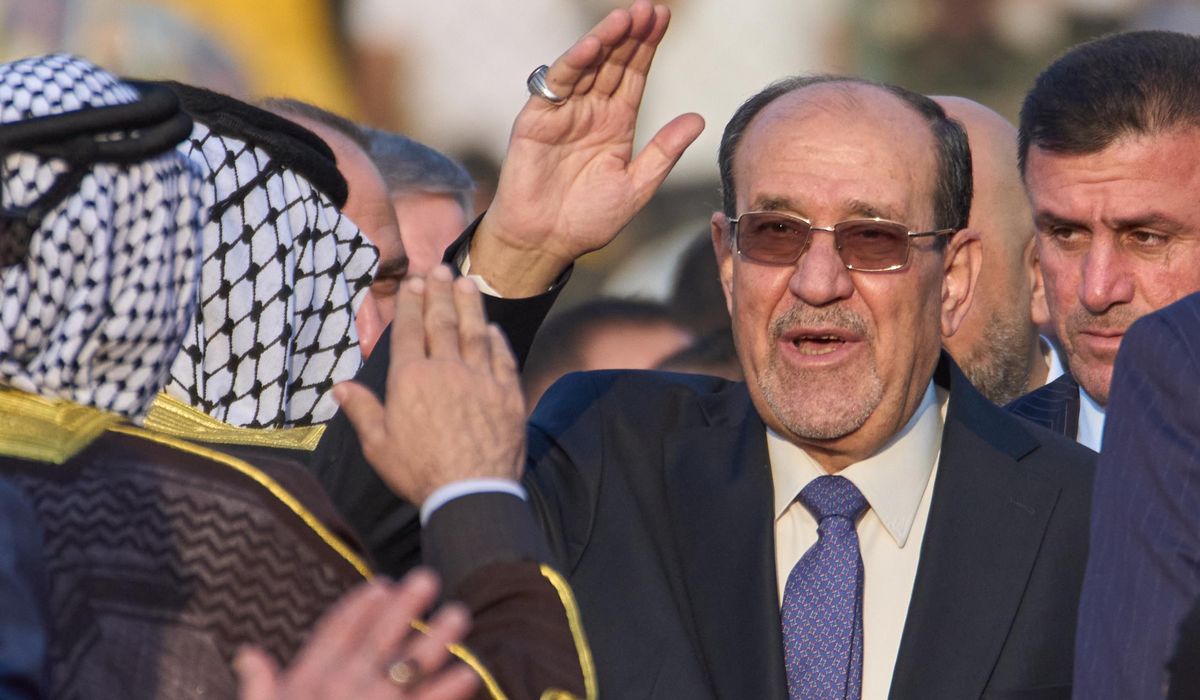
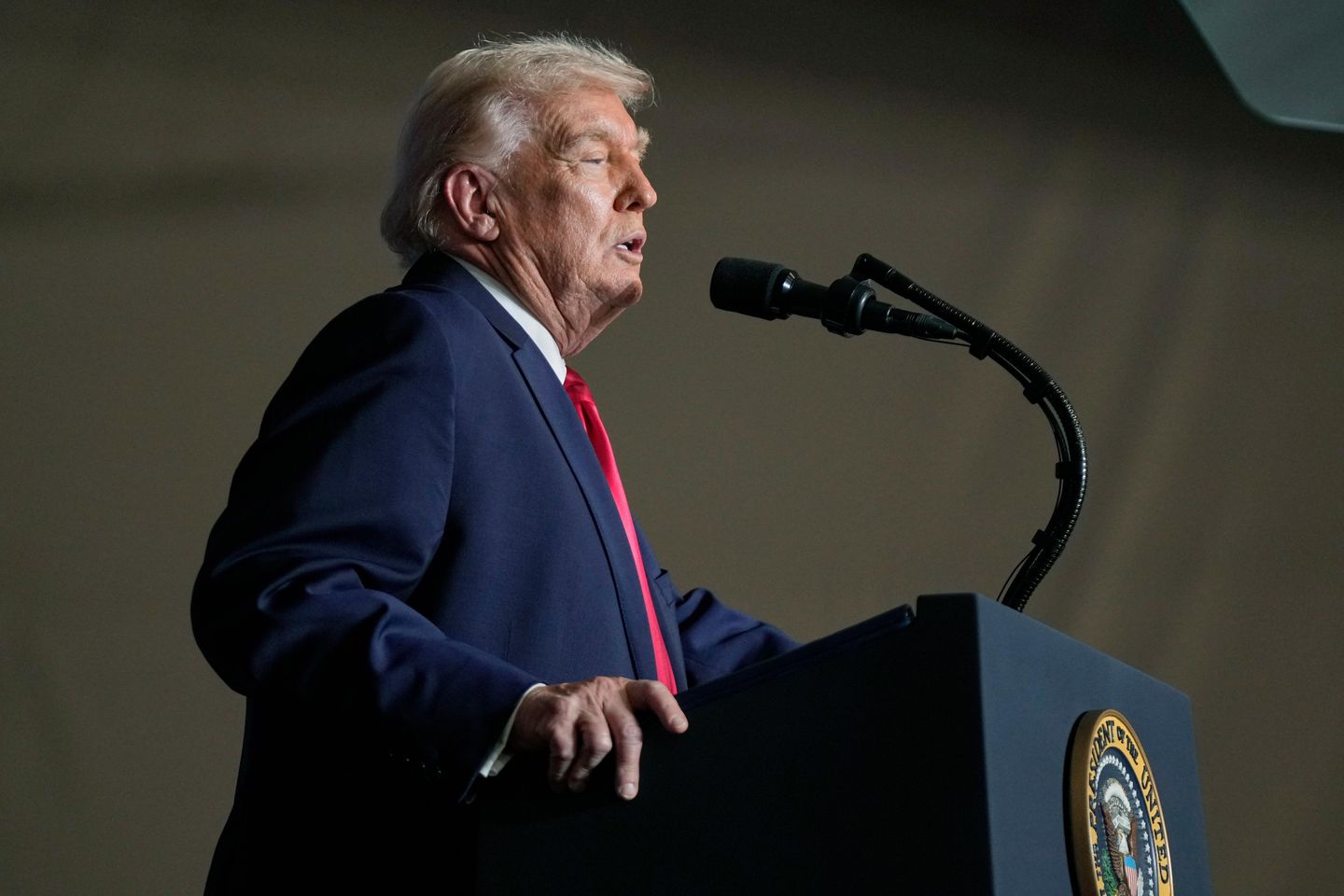
WASHINGTON — President Donald Trump warned Iraq on Tuesday that the U.S. would no longer support the country if its former prime minister, Nouri al-Maliki, returns to power.
Trump made the threat days after the dominant political bloc known as the Coordination Framework, a collection of Shiite parties, announced it was backing the nomination of al-Maliki, who the U.S. administration views as too close to Iran.
“Last time Maliki was in power, the Country descended into poverty and total chaos. That should not be allowed to happen again,” Trump said in a social media post announcing his opposition to al-Maliki. “Because of his insane policies and ideologies, if elected, the United States of America will no longer help Iraq and, if we are not there to help, Iraq has ZERO chance of Success, Prosperity, or Freedom.”
Trump’s intervention into Iraqi politics comes at a fraught moment for Trump in the Middle East as he weighs carrying out new strikes on Iraq’s neighbor Iran, which has maintained deep influence in Iraq’s government since the U.S. ouster of Saddam Hussein in 2003.
Trump has left open the possibility of military action in response to Tehran’s deadly crackdown on recent protests against the Islamic government.
Caretaker Prime Minister Mohammed Shia al-Sudani ’s bloc won the largest share of seats in November’s parliamentary elections. But he stepped aside earlier this month after he was unable to form a government. That cleared the field for al-Maliki after the two had competed for the backing of the Coordination Framework.
Al-Maliki, who first served as prime minister in 2006, is the only Iraqi prime minister to serve two terms since the U.S. toppled Saddam Hussein in 2003. Al-Maliki’s bid for a third term failed after he was accused of monopolizing power and alienating the country’s sizable Sunni and Kurdish populations.
When he came to power in May 2006, Al-Maliki was initially embraced by President George W. Bush. Al-Maliki took over as prime minister months after the bombing of the al-Askari shrine, a significant Shiite mosque. It was a moment that deepened sectarian tension in Iraq and sparked a period of intense violence in the country.
But within months, U.S. officials soured on al-Maliki. They saw his government as too often favoring Shiite factions and alienating Sunni populations, which exacerbated the security crisis.
For years, concerns were frequently raised in Washington about Maliki’s closeness to Iran and his ability to govern independently of Tehran’s influence.
By 2014, the Obama administration had lost confidence in al-Maliki’s ability to manage the security situation, particularly the rise of the Islamic State group, which had seized large swaths of the country.
The Trump administration began publicly signaling its concerns about the political situation in Iraq in recent days, with Secretary of State Marco Rubio telling caretaker Prime Minister al-Sudani in a phone call Sunday that the U.S. was concerned about a pro-Iran government taking root in Iraq.
“The Secretary emphasized that a government controlled by Iran cannot successfully put Iraq’s own interests first, keep Iraq out of regional conflicts, or advance the mutually beneficial partnership between the United States and Iraq,” said State Department principal deputy spokesperson Tommy Pigott in a statement.
Hussain Abdul-Hussain, a research fellow focused on the Middle East at the Foundation for Defense of Democracies, a hawkish Washington think tank, said that Trump’s public opposition creates a difficult hurdle for al-Maliki to overcome.
“But this is Iraq, so never say never,” said Abdul-Hussein. “And this was a guy whose political life was supposed to have expired many, many years ago, and yet Maliki is still here.”
The U.S. also has been pushing Baghdad to disarm Iran-backed groups operating inside Iraq – a difficult proposition, given the political power that many of them hold.
It’s not the first time that Trump has intervened in another country’s politics since returning to office. He also offered strong backing last year for right-wing candidates in Argentina, Honduras, and Poland.
The long-frayed relationship between the U.S. and Iran remains tense after Trump earlier this month repeatedly threatened Tehran with military action if his administration found the Islamic Republic was using deadly force against anti-government protesters.
He then said he was holding off on strikes after claiming that Iran had halted the execution of some 800 people detained in the protests – something Iran’s top prosecutor, Mohammad Movahedi, has strongly denied.
Trump may have been at least temporarily dissuaded from carrying out a strike because of a shift in the U.S. naval presence from the Middle East to South America.
The aircraft carrier USS Gerald Ford was redirected from the Mediterranean Sea in November to support operations targeting drug smugglers in the Caribbean Sea and eastern Pacific as well as this month’s capture of former Venezuelan president Nicolás Maduro.
But the aircraft carrier USS Abraham Lincoln and three accompanying warships have arrived in the Middle East, U.S. Central Command confirmed Monday. That’s raised anew speculation that Trump could soon opt to order airstrikes on Iran for its crackdown on protesters.