If I had a dollar for every article, comment, or conversation from the last year in which I’ve mentioned the big rightward swing away from socialism in Latin America, I’d probably have a sweet little beach casa in Costa Rica right now, or at least a nice down payment for one.
Sunday’s elections in Costa Rica were just the latest in the trend. While the country already had a fairly conservative president, Rodrigo Chaves, and while his successor, Laura Fernández, was likely to win the election, she ended up doing so by a much larger margin than anyone predicted. It was the first time in 16 years that a run-off wasn’t needed. Plus, she picked up so many legislative seats from her party that it should be easy for her to pass her agenda.
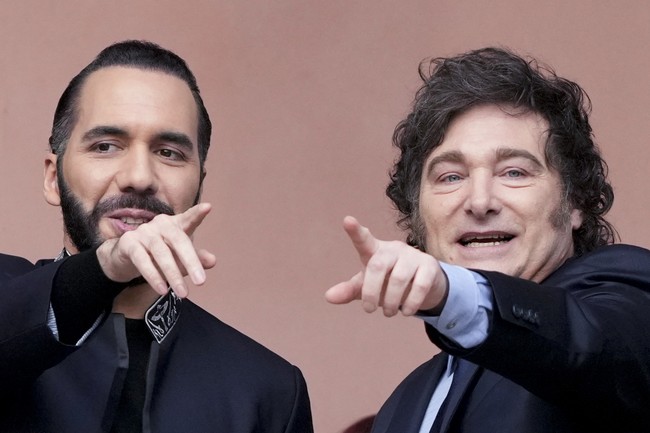
But that’s just one example in what has been a major surge of conservative victories over the last year or two. In Argentina, despite predictions stating otherwise leading up to the country’s late October election day, the mid-terms heavily favored libertarian President Javier Milei and his party. In Ecuador, the center-right president, Daniel Noboa, won re-election in early 2025 by a margin much higher than predicted, as well. In 2024, El Salvador’s Nayib Bukele won re-election by a landslide. In recent months, countries like Bolivia, Honduras, and Chile have all elected more conservative leaders, and it’s probable that Peru will in 2026. Heck, it’s possible that even Colombia and Brazil will too, though we’re still a long way off from those elections, and anything could happen.
I’ve seen a lot of you saying this was the work of Donald Trump, but the fact is that this was happening before he was even re-elected. I can’t discount the role he’s played — endorsing and supporting candidates, for example, and, you know, removing a whole dictator from a country overnight with more to come — but, much like our own 2024 elections, the reasons why this big shift is happening are largely domestic.
Reason 1: Crime and Insecurity
Without a doubt, crime is the number one driving factor behind this movement. Cartels, narco-terrorism, gang violence, extortion — people are tired of feeling unsafe in their own communities, and it’s extending beyond the normal hotspots into mostly peaceful cities and countries as they become part of transit routes for cartel and drug smuggling activity.
In Peru, murder rates increased 35.9% between 2023 and 2024. In 2024, Costa Rica had its second-most violent year on record. While murder rates in Colombia were down in 2024, there was an increase in murder and violence linked to organized crime. Boliva’s border regions saw a significant increase in violence in 2024 as well. I could go on, but you get the idea.
Leftist leaders, like Claudia Sheinbaum of Mexico and Gustavo Petro of Colombia, have been notoriously soft on crime. Many parts of Sheinbaum’s country are overrun by cartels, but, despite pressure from Donald Trump and Marco Rubio to clean the place up, she has more or less continued her predecessor Andrés Manuel López Obrador’s “abrazos, no balazos” (hugs, not bullets) attitude toward crime. Meanwhile, the cartels continue their own “bullets, not hugs” campaign largely unchecked.
When Petro was elected, he had this policy called “Total Peace.” It involved fighting the violence that’s so ingrained in Colombia with dialogue, negotiation, and social programs. To give you an idea of how well that’s gone, as of last June, 72% of Colombians disapproved of it, while only 19% approved. I’m guessing that 19% was largely made up of guerrillas and other criminal groups, like FARC dissidents, ELN, and Clan del Golfo.
But there is one man who isn’t hugging or negotiating with terrorists. Bukele is actually locking them up. He’s turned El Salvador, which was once deemed the “murder capital of the world,” into one of the safest countries in the world. The newly elected leaders have made promises to follow suit.
Costa Rica’s president-elect, Fernández, campaigned on cleaning up the country Bukele-style. As a matter of fact, Bukele has served as a mentor of sorts in that area. Her predecessor, Chaves, began construction on a mega-prison in 2025, similar to Bukele’s Centro de Confinamiento del Terrorismo (CECOT). Chile’s conservative president-elect, José Antonio Kast, who also campaigned on being tough on crime, was just in El Salvador last week. He toured CECOT and spoke with Bukele about his methods. To put into perspective how badly many people in Latin American want Bukele-type leaders at the moment, I just received an email from a reader who mentioned that there are posters of him hanging up around Peru.
Of course, this couldn’t come at a better time for the entire Western Hemisphere. With Trump being our own law and order president, it’s created a situation where these leaders can partner with the United States to eradicate the crime issues that plague us all, from Canada to Chile. For example, the U.S. and Ecuadorian Air Forces came together late last year for an operation that President Noboa said was “part of a long-term bilateral security strategy” that will “enable the identification and dismantling of drug trafficking routes, and the submission of those who believed they could take over the country.”
Reason 2: Mass Migration Backlash
Despite what Democrats want to tell you, mass migration and a lack of secure borders is a problem and not just for the United States. I almost made this “Reason 1A” because a lot of it does tie back to crime, but there’s more to it than that.
The biggest source of mass migration into the region in recent years has been Venezuela. Since 2014, between 8 and 9 million Venezuelans have left their home country. While it has been one of the fastest-growing sources of migration into the United States recently, many of them didn’t quite make it this far north. I actually witnessed this personally in 2023 when there was a huge group of Venezuelan migrants causing some problems in Costa Rica. They’ve also landed in Chile, Ecuador, Colombia, Peru, etc.
This led to the mobilization of gangs and criminal groups, like Tren de Aragua (TdA), that Nicolás Maduro even weaponized, sending them into foreign communities to cause chaos and disruption. Open-door policies allow criminals, whether they’re TdA, Chinese spies, or members of Middle Eastern terrorist groups like Hamas or Hezbollah, to sneak right in alongside the people who are just searching for a better life.
And let’s be honest, many people who leave places like Venezuela are just looking for a better life and leave out of desperation. But when they come at rates of tens and hundreds of thousands at a time, they put pressure on other countries’ infrastructure and services. This has led to overcrowding in certain areas, competition for low-wage jobs, schools that can’t meet capacity needs, long wait times for healthcare and other services, and numerous other strains.
As a matter of fact, tougher border security and mass deportations were a large part of Kast’s campaign that helped him win over Chile.
For the United States, again, this is part of Trump and Rubio’s broader plan for the Western Hemisphere. Taking out Maduro, liberating Cuba (hopefully soon), eliminating cartels and narco-activity in the region — all of this will help prevent another wave of mass migration into our country.
Reason 3: Economic Frustration
I won’t get too deep into the weeds with this one, but frustration with the economy is something else driving people to the polls. Between 2014 and 2023, Latin America had some of the worst economies in the world, marking a second “lost decade” for the region. Average annual growth was just below 0.9%, even lower than the 1.3% of the first “lost decade” back in the 1980s. Many countries faced persistent inflation.
Fortunately, they eventually realized that this is what leftist, big-government policies get you: heavy spending, regulation, state control, etc. Businesses move to or invest in other countries. People end up trapped in poverty. There aren’t enough jobs to go around. Promised prosperity never comes… unless you’re one of the ones at the top.
Like Bukele led the way on crime, Milei has been the economic leader in the region. People like Kast, Bolivia’s new president, Rodrigo Paz, Noboa, and even likely future leaders like María Corina Machado and Edmundo González of Venezuela have promised to follow his model by slashing regulations, cutting spending, and implementing free-market and pro-business principles. Some of them have already started.
These policies also pave the way for major trade opportunities and business partnerships with the United States. During that “lost decade,” the U.S. lost ground in this area, as many leaders in the regions opted to rely on China instead. But I’d say that’s just as much our fault as theirs.
Reason 4: Socialism Fatigue
This one could kind of be “Reason 3A” because it blends together, but these countries that bought into “21st-century socialism” see what’s happening around them, especially in Venezuela and Cuba, and suddenly, they have buyers’ remorse. They want out before its too late.
They see what a decade plus of Maduro got Venezuela: hyperinflation, food and medicine shortages, power outages, poverty, malnutrition, political prisoners, stolen elections, unkept promises, and authoritarianism. They don’t want anything to do with it, so they’re shifting to leaders who shun ideology in favor of pragmatism.
And I think that has grown even stronger in the last month. Countless polls have shown that the majority of Latin American people approve of Trump capturing and arresting Maduro. I see so many social media posts from people in other countries, especially Cuba, pleading for him to do the same for them.
I’ve wanted to share this video with y’all, but I haven’t really had a place to do it, so I’ll add it here. Some folks from Rebel News posed as tourists and spoke to people in Cuba about Trump, Maduro, etc., and what they said was quite telling. You won’t find this on CNN.
El equipo de @RebelNewsOnline fue a Cuba, disfrazados de turistas progres, para mostrar la realidad de miseria en la isla.
Los ciudadanos estaban festejando la captura de Maduro y querían el fin del comunismo también en la isla.pic.twitter.com/rBDiXl6iDB
— Emmanuel Rincón (@EmmaRincon) January 31, 2026
Reason 5: Cultural Pushback
Last but not least, some of the change is cultural. In general, Latin Americans tend to be socially conservative and family-oriented. They favor traditional values. Many are Catholics, though there’s a growing evangelical presence in the region — it’s up to something like 25% from 5% in the 1970s — and those voices are getting louder and more political.
They oppose abortion. They don’t want gender ideology in their schools, and they favor parental vs. government control over their children. They’re tired policies that appease the LGBT+ crowd, and simply put, they’re tired of woke infiltrating their communities.
These leaders are giving them what they want. Bukele has banned gender ideology talk in schools.
Milei stood up on the world stage at Davos a few weeks ago and said, “Therefore, the Americas will be the beacon of light that will once again illuminate the entire West, thereby repaying the civilizational debt with expressions of gratitude towards the foundations in Greek philosophy, Roman law, and Judeo-Christian values.”
Kast, a devout Catholic with nine children, is a staunch conservative who opposes even the morning-after pill and same-sex marriage.
It’s the same sort of backlash we’ve seen in the United States. How long it lasts for any of us will largely depend on many things, most importantly, the results these new leaders bring to their citizens.
But when you look at where Europe and parts of Asia are now, you realize that we currently have a lot more in common with these countries, and it’s the perfect time for Trump and Rubio to implement their Western Hemisphere strategy: restoring U.S. preeminence, securing borders, reducing organized crime, and building alliances that are both America First and beneficial to these other nations so that we all prosper.
Good luck finding any of this in the MSM. The world is changing, and for once, we have a president and administration who understands it. For more coverage like this, consider signing up to become a PJ Media VIP member.
Not only do you support conservative media, but you also earn some cool perks for yourself. Best of all, it’s currently less than $20 for an entire year. We can’t wait to see you in the comments sections. Click here to get started and use the code word FIGHT to get the discount.