
As I’m writing this, I have the livestream of the Artemis II crew getting ready to swing around the far side of the moon on the TV next to my desk. The four astronauts aboard Integrity will have traveled further in space than any other human beings.
The media have spilled gallons of ink — actual and digital — about how diverse this crew is. The first black man: Victor Glover. The first woman to travel to the moon: Christina Koch. The first Canadian to fly this far into space: Jeremy Hansen. It’s true that they’re all memorable firsts, but the mainstream press sometimes goes a little too far in pushing the diversity angle.
Side note: Glover’s sincere Christian faith and unwillingness to buy into the diversity angle are more impressive to me. Those are what make me root for him.
I’m listening to the audiobook of John Strausbaugh’s The Wrong Stuff: How the Soviet Space Program Crashed and Burned, and while this isn’t a book review, it’s been an entertaining listen, even as I read that reviewers point out inaccuracies. Strasbaugh mentions a bizarre New York Times article in passing that I thought might be worth looking at in more detail.
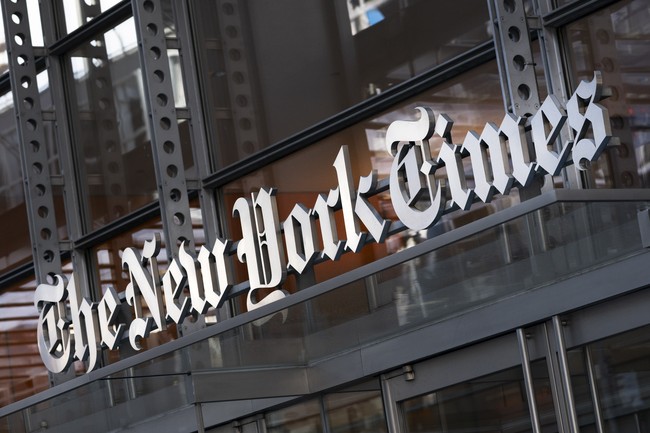
On July 16, 2019, in the run-up to the 50th anniversary of the Apollo 11 lunar landing, the Times ran a piece by a reporter named Sophie Pinkham with the headline “How the Soviets Won the Space Race for Equality.” The subhed reads, “The U.S.S.R. sent women and people of color to space years before the U.S.”
No, seriously. Here’s how it starts:
The Cold War was fought as much on an ideological front as a military one, and the Soviet Union often emphasized the sexism and racism of its capitalist opponents — particularly the segregated United States. And the space race was a prime opportunity to signal the U.S.S.R.’s commitment to equality. After putting the first man in space in 1961, the Soviets went on to send the first woman, the first Asian man, and the first black man into orbit — all years before the Americans would follow suit.
Pinkham — or maybe her last name should be Pinko — tells the rosiest stories of Valentina Tereshkova, the first woman in space, who flew in 1963. She continued with the lesser-known story of Phạm Tuân, a Vietnamese astronaut who flew in 1980; Pinkham calls him “the first Asian and the first person from a developing country to travel to space.”
Two months later, Cuban astronaut and revolutionary Arnaldo Tamayo Méndez flew in space. He was the first person of African descent to go into space, and Fidel Castro made a massive point of crowing about that when Tamayo Méndez came home.
The kicker is the last sentence of the piece: “Cosmonaut diversity was key for the Soviet message to the rest of the globe: Under socialism, a person of even the humblest origins could make it all the way up.”
So aspirational. I bet Pinkham is thrilled to bits about the “warmth of collectivism.”
This should give you a glimpse into the worldview at the New York Times that someone would commission a piece like this. The Soviets were our enemies in the space race and the Cold War. Nothing about their efforts was praiseworthy.
But hey, look how diverse they were! That’s all that matters to the left. We don’t loathe these people enough.
The New York Times can dress up Soviet propaganda in the language of “equality” all it wants, but history is still history. At PJ Media, we’re not interested in swooning over communist PR campaigns or pretending the left’s worldview makes sense just because it comes wrapped in elite-media packaging. We call it like it is. Become a PJ Media VIP today and get 60% off with the promo code FIGHT. That gets you deeper analysis, exclusive content, podcasts, commenting privileges, and an ad-free experience. Join us and help support fearless conservative journalism that still knows the difference between American achievement and Soviet mythmaking.