President Donald Trump and Secretary of War Pete Hegseth flatly denied that U.S. forces targeted civilians after a missile strike destroyed a girls’ school in Minab, Iran. Trump said the information he reviewed suggested Iran may have caused the explosion itself, while Hegseth repeated that U.S. forces don’t deliberately attack civilians and confirmed the Pentagon is reviewing the incident.
That didn’t stop Western media outlets from rushing to repeat Tehran’s accusations.
This may be a shock to you, but Iranian state media quickly blamed the United States and Israel for the February 28 explosion at Shajareh Tayyebeh girls’ school, which killed 168 people, injuring dozens more.
The claim rapidly spread through Western coverage, even though it came from the same government currently fighting the United States.
In other words, the source behind the accusation wasn’t a neutral investigator, a verified battlefield report, or an independent intelligence agency.
It was the Iranian regime.
Reports describing a preliminary U.S. intelligence review added more fuel to the story; an assessment suggested American forces were “likely” responsible for the strike while targeting an Islamic Revolutionary Guard Corps naval facility located nearby.
The same early review also stated the school may have been struck accidentally after outdated targeting data misidentified the structure as part of the military compound.
Even with those caveats, many outlets ran headlines that treated Tehran’s accusation as a fact rather than an allegation from an adversarial government.
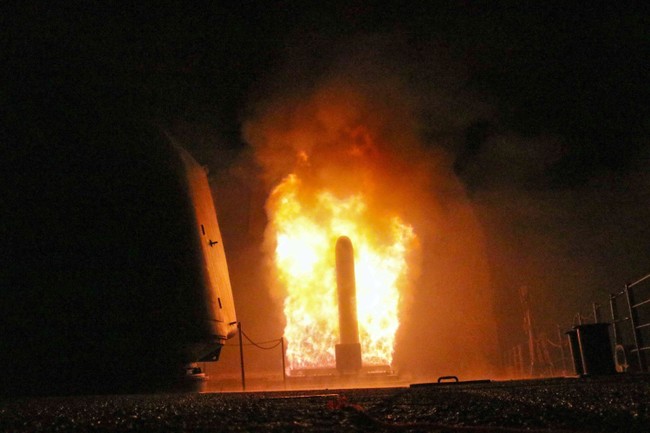
A US Tomahawk missile hit a military base near a primary school in southern Iran, where Iranian authorities said 168 people, including around 110 children, were killed, expert video analysis shows.
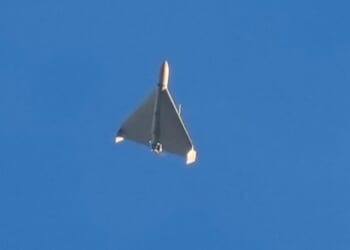
A video published yesterday by Iran’s semi-official Mehr news agency, which BBC Verify has confirmed as authentic, shows a missile moments before it struck an Iranian Revolutionary Guard Corps (IRGC) base next to the Shajareh Tayebeh primary school in Minab.
BBC Verify has previously established, through satellite imagery, verified videos, and expert analysis, that a series of strikes hit the area near the school.
Experts who have seen this latest video told us the presence of a Tomahawk missile, along with evidence that the area was hit with multiple strikes, indicates this was a U.S. operation. Neither Israel nor Iran is known to possess Tomahawks, experts said.
Iranian officials quickly moved to frame the incident as proof of deliberate American aggression. Ali Bahreini, Iran’s ambassador to the United Nations in Geneva, claimed more than 150 students died in the strike and demanded international condemnation of the U.S. Tehran also pushed the narrative that the school attack represented a coalition operation involving both American and Israeli forces.
Israeli military officials rejected involvement in the strike and stated they had no operational role in the Minab attack.
Calls for investigations soon followed; several international organizations urged independent reviews of the strike while activists labeled the explosion a possible war crime. Those demands emerged even as key facts surrounding the targeting data, operational orders, and battlefield conditions remained unclear.
The narrative’s pace revealed something more troubling. Major coverage built its central claim on statements coming directly from Tehran, an approach that raises an obvious question: why would journalists treat an active combatant’s accusation as reliable evidence before investigators conclude?
Iran’s leadership understands how information warfare works. Tehran quickly spreads accusations during conflicts because each headline shapes global opinion before the full story emerges. When Western media outlets amplify those claims without hesitation, they hand Iran a powerful propaganda victory.
The pattern has become familiar during modern conflicts. Allegations surface within hours. Politicians react, commentators declare guilt, and investigations arrive later, long after the first wave of headlines has already shaped public perception.
The president and war secretary insist the United States never targets civilians intentionally. Investigators now face the task of determining what happened in Minab — whether the strike involved faulty intelligence, or whether Iran manipulated the narrative surrounding the explosion.
Until that investigation finishes, one fact remains clear.
The Western press accepted Tehran’s version of events with remarkable speed. A willingness to repeat an adversary’s claims without verified evidence raises serious questions about how modern conflicts are reported.
If Iran wanted its accusation to dominate global headlines and achieve a status of aggrieved victim, it achieved exactly that.
The fog of war creates confusion, propaganda, and competing claims within hours of major events. Responsible reporting requires skepticism toward every side involved in the fight.
When coverage relies heavily on accusations from an adversarial government, credibility begins to wobble. The Minab school strike deserves a full investigation grounded in evidence rather than speculation. Until investigators deliver clear findings, repeating Tehran’s claims as fact risks turning journalism into an amplifier for wartime propaganda.
Besides, if anybody believes that Iran’s news bureau is credible without hesitation, then let’s sell them a bridge.
PJ Media VIP digs deeper into stories that larger outlets rush through or frame with political bias. A VIP membership unlocks exclusive commentary, analysis, and investigative reporting that challenge the narratives dominating daily headlines. Right now, you can get 60% off a VIP membership with promo code FIGHT.