
Residents across Northeast Ohio got a shock the morning of St. Patrick’s Day. A bright fireball streaked across the sky around 9:00 a.m., visible in multiple states before a loud boom rattled homes from Cleveland into parts of Pennsylvania and New York.
Windows shook, phones lit up, and, for a moment, people wondered if something far more serious had happened.
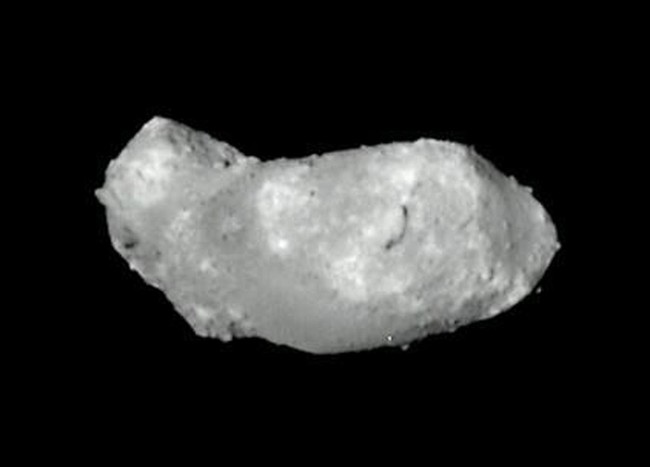
The object started as a small asteroid about six feet wide, weighing close to seven tons, and entered Earth’s atmosphere at more than 40,000 miles per hour. The fireball first became visible about 50 miles above Lake Erie near Lorain, traveling roughly 34 miles before breaking apart about 30 miles above Valley City in Medina County. The breakup produced the flash and the shockwave people felt on the ground.
The meteor entered the atmosphere at about 9 a.m. local time on Tuesday, producing a sonic boom felt across a wide swath of northern Ohio and beyond. Reports poured in from Cleveland and other sectors as far east as Pittsburgh, Pennsylvania, and into New York State.
Cleveland.com reported that Ohio residents described thinking a tree had smashed into their roof—and one said the sound was similar to fireworks.
The NWS’s Cleveland office said that satellite data “does suggest that the boom was a result of a meteor,” according to a post on X.
Meanwhile, the NWS office in Pittsburgh posted a video filmed by one of its employees, showing the meteor shooting across the sky.
So far, NWS has no reports of debris.
The energy released reached about 250 tons of TNT, which sounds large until you place it next to a historical benchmark.
The Tunguska blast in Siberia in 1908 released between 10 and 15 megatons of energy. The difference isn’t small: Tunguska was tens of thousands of times more powerful and flattened more than 800 square miles of forest.
A suspected meteor enters Earth’s atmosphere, creating a large “boom” that was heard and felt across Northeast Ohio, the National Weather Service said. pic.twitter.com/mRw5sC0uDB
— Breitbart News (@BreitbartNews) March 17, 2026
That comparison answers the question about how much of a bullet Cleveland dodged. The Ohio event exploded high in the atmosphere, and most of its energy spread out as light, heat, and a pressure wave that weakened before reaching the ground. If an object even a fraction of the size of the Tunguska body had entered on a similar path over a dense city, the outcome would’ve looked very different. Buildings would’ve taken damage, and injuries would’ve been likely. The gap between a loud boom and real destruction came down to size, altitude, and timing.
The Cleveland fireball also helps explain how often events like this get captured on camera. Years ago, many meteors passed unnoticed unless someone happened to be looking up. Today, nearly every street, school, and business has cameras running. Dash cams, doorbell systems, and security networks record the sky without anyone thinking about it. When a bright object appears, dozens or even hundreds of angles show up within minutes. That doesn’t mean these events happen more regularly. It means we finally see them.
Small meteors enter Earth’s atmosphere every day. Most burn up over oceans or remote land. Few pass over large populations during daylight, and fewer still produce a boom strong enough to be felt across several states. That combination explains why the Cleveland event drew so much attention.
Reports of the fireball stretched from Wisconsin to Maryland. Many people stepped outside after hearing the noise, expecting an explosion or aircraft problem. Within hours, scientists confirmed the cause and tracked the path. Some fragments may have reached the ground as small meteorites in Medina County, offering researchers fresh material to study.
Events like the one over Cleveland happen more often than most people realize, but the conditions that turn them into disasters remain rare. The difference between a light show and widespread damage depends on a narrow set of variables that don’t leave much room for error. Cleveland ended up on the safe side of that line.
The fireball over Ohio didn’t bring destruction, but it offered a clear reminder of what moves through space every day. A slightly larger object, a lower breakup point, or a different angle could’ve changed the story. Cleveland heard the boom and felt the shake, then went back to their day.
That outcome wasn’t guaranteed. It was luck.
If you want deeper coverage of events like this, along with clear breakdowns that cut through noise and hype, there’s more waiting behind the VIP wall. Get full access now and save 60% with promo code FIGHT. Join here: