
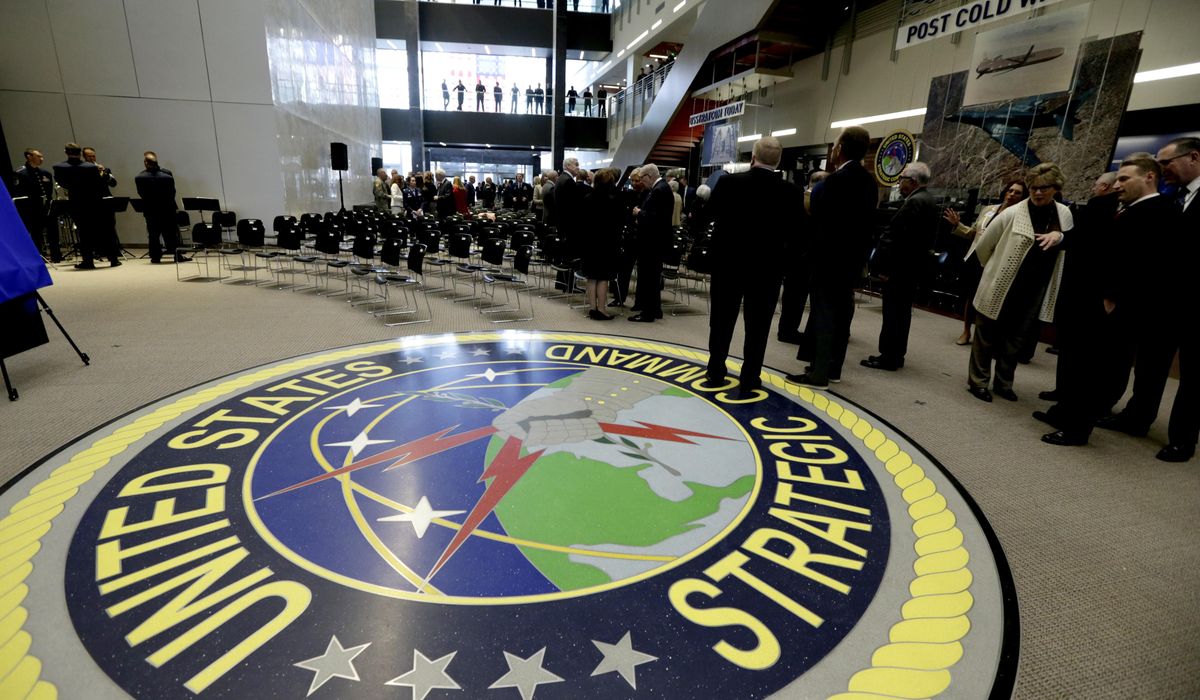
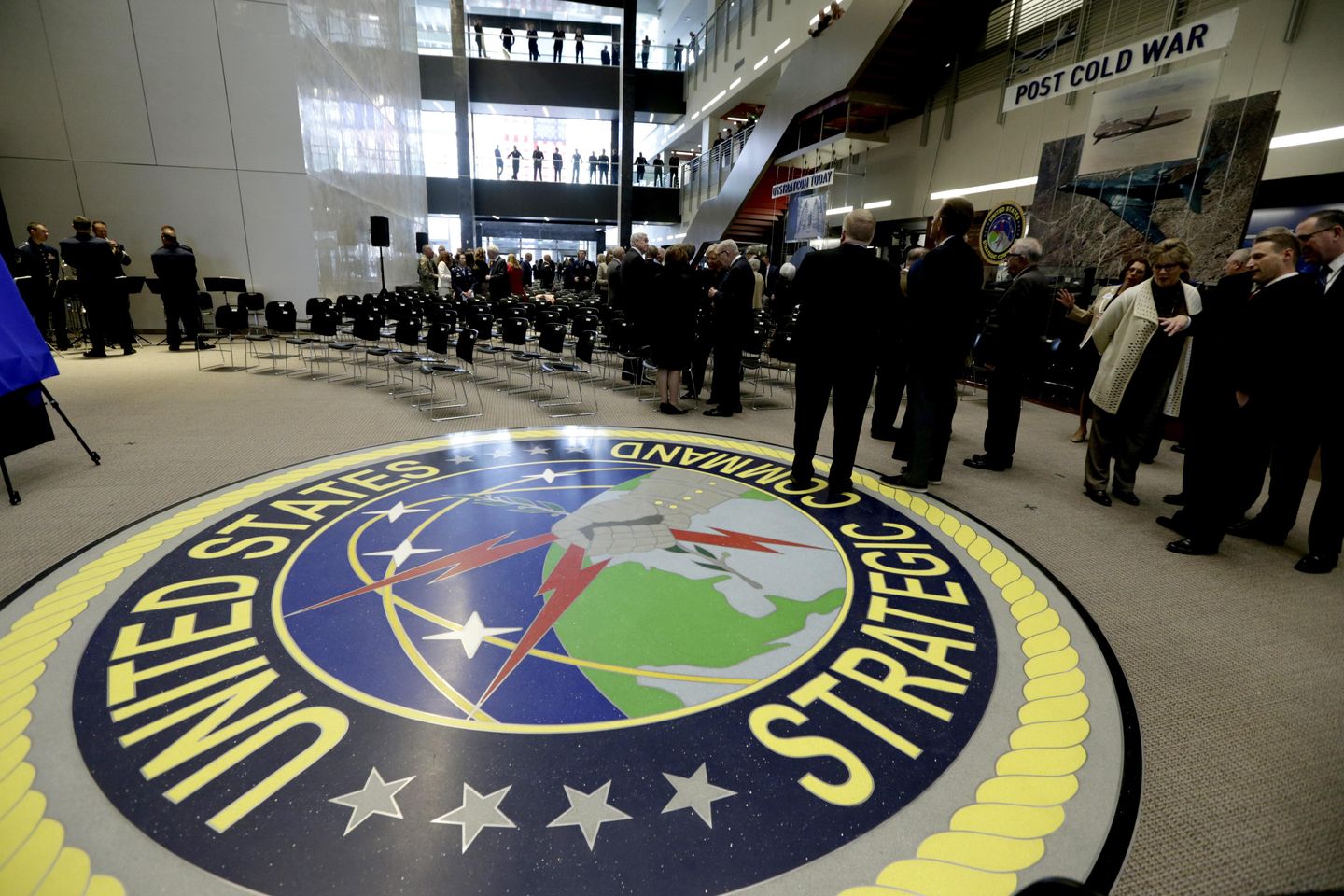
Advanced technology and low-yield nuclear weapons highlight the most complex and strategic threat environment for the United States since World War II, the new commander of the Strategic Command says.
Adm. Rich A. Correll, who assumed the Nebraska-based nuclear forces command in December, told a House Armed Services strategic forces subcommittee hearing that China, Russia, North Korea and Iran are subverting global balances of power.
Artificial intelligence, autonomous weapons, quantum communications and sensors are changing the character of war, he said. New threats from cyberattacks, electromagnetic and space weapons, novel missile systems and supply chain threats “continue to impact our decision calculus and planning practices,” Adm. Correll stated in prepared testimony.
“The development of nuclear weapons with smaller yields, improved precision, and increased range increases strategic ambiguity and the possibility for coercive use by potential adversaries,” he said.
Despite the challenges, Strategic Command continues to deter strategic attacks and is ready to wage war under presidential directives if deterrence fails, said the four-star admiral, a former nuclear submariner.
The major strategic nuclear threat continues to be China, which, under President Xi Jinping, has increased its strategic and shorter-range nuclear capabilities, including massive megaton-class warheads.
“Driven by President Xi’s directive for military preparedness, China is heavily investing in its land-, sea-, and air-based nuclear delivery platforms,” Adm. Correll said.
“The People’s Liberation Army (PLA) seeks a larger and more diverse nuclear force, comprised of systems ranging from low-yield precision strike missiles to intercontinental ballistic missiles (ICBMs) with multi-megaton yields,” he said.
A new strategic weapon disclosed by the admiral is the PLA’s rapid development of electromagnetic warfare capabilities that are growing in scale and sophistication and are designed to attack U.S. systems, he said.
“Over the last two decades, the PLA[air force] has almost doubled its dedicated intelligence, surveillance, and reconnaissance (ISR)/electromagnetic warfare (EW) aircraft inventory with newer and fully operational jamming platforms,” he said.
China is also continuing to threaten the U.S. global forces posture and presence and has expanded the threat into space with “offensive space capabilities” that include concentrated targeting of U.S. nuclear command and control systems.
“These efforts include direct-ascent anti-satellite weapons capable of destroying satellites in orbit and advanced jamming technologies aimed at disrupting encrypted satellite communication links,” he said.
The People’s Liberation Army is increasing the number of silos for DF-31 intercontinental missiles to 320 and up to 50 silos for liquid-fueled DF-5 ICBMs, he said.
Past assessments put the number of DF-31 silos in western China at 300.
The PLA Rocket Force is also deploying additional DF-31 and DF-41 ICBMs that are capable of hitting the United States, Adm. Correll said.
Under the sea, the PLA now has six Jin-class ballistic missile submarines, each outfitted with up to 12 JL-2 or newer JL-3 missiles that also can reach the U.S.
The strategic bomber fleet includes H-6N bombers that carry nuclear-tipped air-launched ballistic missiles and a new H-20 stealth bomber with a range of about 6,000 miles is “intended to hold the continental United States at risk,” he said.
Robert Kadlec, assistant defense secretary for nuclear deterrence, who testified along with Adm. Correll, said China’s nuclear “breakout,” or rapid buildup of nuclear forces, has produced “the unprecedented challenge of deterring two nuclear peers, China and Russia, simultaneously.”
Mr. Kadlec said the threat is not a distant problem and is “the central, organizing challenge for our defense strategy today.”
“China is engaged in the most rapid and opaque nuclear expansion in history,” he said, noting “a massive investment in theater-range delivery systems” that threaten U.S. forces, allies and partners in the Indo-Pacific region.
“The purpose of this expansion is clear: to create a strategic shield behind which the People’s Liberation Army can conduct regional aggression, particularly against Taiwan,” Mr. Kadlec said.
“A force of this size and sophistication provides China with a spectrum of nuclear options to try to deter U.S. intervention and coerce a resolution to a conflict on China’s terms.”