
Why do South Carolina lawmakers want to make it more difficult for families to educate their children? Lawmakers are misinterpreting the very law they approved just last year that creates more learning opportunities, and now the state is on the brink of becoming one of the least family-friendly locales in the southeast. Fortunately, other state officials are pushing back.
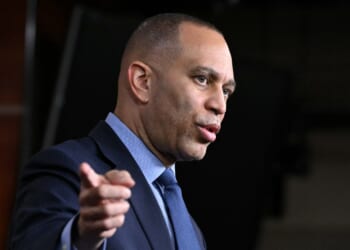
State Rep. Neal Collins (R-5), who was endorsed by the state teachers’ union, misidentifies South Carolina’s Education Scholarship Trust Fund as a “voucher” program and told local media that the ESTF does not expand education choices in the state. Still other lawmakers are trying to remove students who are customizing their learning experience while using the scholarships.
In fact, state lawmakers overcame union opposition to support parents and create the scholarships—twice, actually, recreating the scholarship trust fund in 2025 after a state supreme court ruling forced nearly 1,000 children to leave the program a year earlier.
Surveys of South Carolinians find strong support for scholarships like the Trust Fund, with 75 percent of parents of K-12 students in favor. Charitable donations and work by the Palmetto Promise Institute allowed students to remain at the schools they chose until lawmakers updated and approved the options in 2025.
Now, however, Collins and other lawmakers are saying families should have fewer choices under the law. The scholarships are not vouchers but are similar to education savings accounts. With a voucher, the state provides parents with funds to pay private school tuition costs. With education savings accounts, as adopted by South Carolina’s regional neighbors in Alabama, Florida, North Carolina and more than a dozen other states around the country, state officials deposit a portion of a child’s spending from the education formula into a private account that parents use to buy education products and services.
Families can pay for personal tutors, online classes, private school tuition, and more, and even save money from year to year to prepare for high school tuition or college expenses.
Parents are therefore empowered to customize their children’s learning experiences. Advocates in South Carolina have called this an “unbundling” process. In this way, families can meet the unique needs of their students. Yet some legislators are balking at this feature of the scholarships despite having supported the language last year.
State superintendent Ellen Weaver has defended the scholarship trust fund, and her office’s general council even gave lawmakers a memo explaining that the provisions in the law “clearly contemplates and authorizes students to ‘unbundle.’”
Parent demand for education savings accounts is surging around the country. In Texas, state officials have received 118,000 applications for education savings accounts this year. In Tennessee, the Tennessee Department has received more than 56,000 applications. Alabama officials received some 36,900 applications.
Across 17 states, every child can apply for an education savings account, no matter color or creed or zip code or their family’s tax bracket.
Students participating in South Carolina’s Trust Fund received $7,500 in the 2025-2026 school year. Meanwhile, taxpayer spending on students in traditional public schools provides more than $14,500 per child—almost double the amount in each scholarship account. Taxpayers should ask legislators why they are suddenly allergic to cost savings (and education opportunities).
Education choice is changing lives. From single parents trying to keep their children from dropping out of school to parents of children with disabilities trying to find specific services for their student to families simply trying to help their children learn to read, education savings accounts are a lifeline to parents and students across the country.
The accounts have also inspired education entrepreneurs who are creating new schools to meet a wide variety of student needs. In Florida, a husband-wife team created a hybrid school in Sarasota where students spend part of their week in school with a focus on outdoor activities and part at home. South Carolina’s Trust Fund would allow for the same innovations, along with offering students access to college preparatory private schools, virtual schools, and more.
Palmetto state officials should be looking for ways to expand every student’s education horizon, not limit them. The school year is nearly finished, and parents and their children should not have to wonder if the same learning options will be open to them next year.