ORLANDO, Fla. — The U.S. is amid a high-stakes second space race, and its chief adversary, communist China, is “overwhelmingly” achieving its goals up there, top Pentagon officials warned at a major conference Thursday.
The rapid pace of Beijing’s advancements in space is a key topic of conversation at the Spacepower 2025 conference, sponsored by the Space Force Association.
From military commanders to private defense industry leaders, virtually all stakeholders acknowledge that China has accelerated its space-based capabilities to a level almost unimaginable a few years ago.
Now imagine it: Beijing has fielded remote-sensing satellites, cutting-edge refueling assets, on-edge computing capabilities to process data in space, and experimental spacecraft — some with as-of-yet mysterious missions — as part of its bid to challenge and ultimately supplant America’s dominance in space.
China’s space launch capabilities are also improving quickly, giving the nation even greater ability to put satellites in orbit — beyond the more than 1,300 it already has there.
“It is just amazing how quickly the Chinese and other adversaries are advancing,” Air Force Secretary Troy Meink told an audience here. “Four or five years ago, we had been dominating in launch, and you can see them making massive improvements, really trying to catch up.”
China, he said, is fielding some systems “at a scale … that nobody’s ever really seen.”
“The pace of the development is phenomenal,” Mr. Meink said, echoing comments from other military and industry leaders, many of whom marveled at how far China has come so fast.
That advancement isn’t lost on policymakers. Last week, the House Science, Space, and Technology Committee held a hearing examining China’s “space rise” and the threats it poses to U.S. national security.
In his opening statement, committee Chairman Brian Babin, Texas Republican, ticked off some of the most consequential milestones.
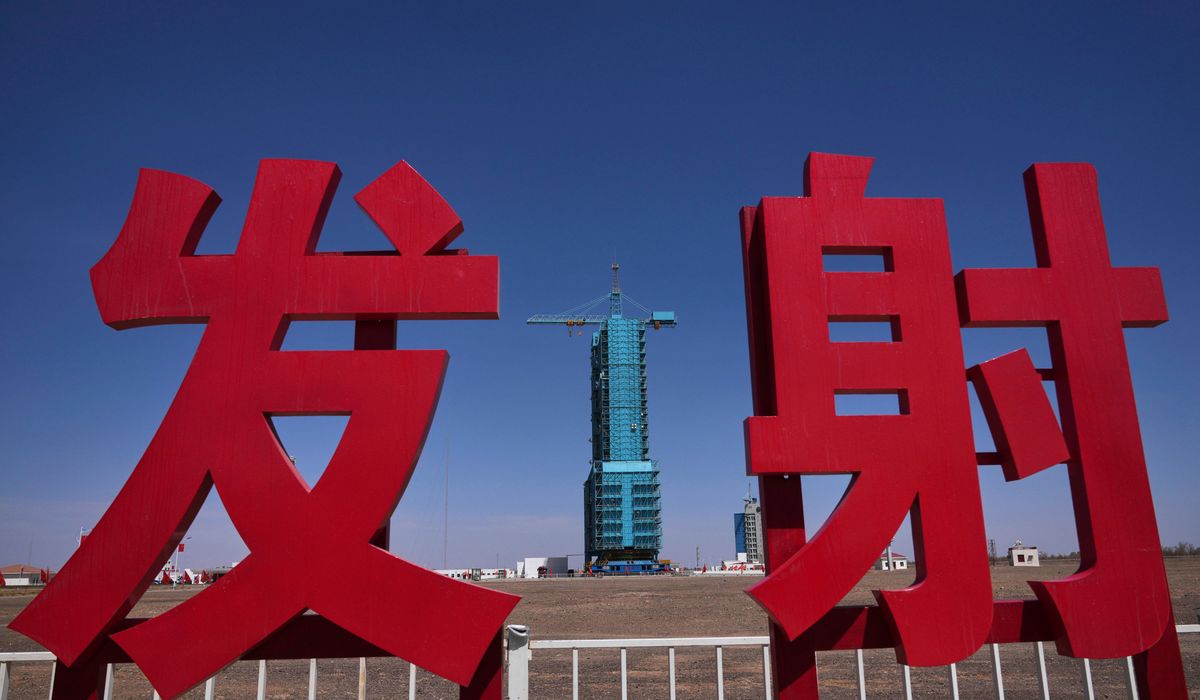
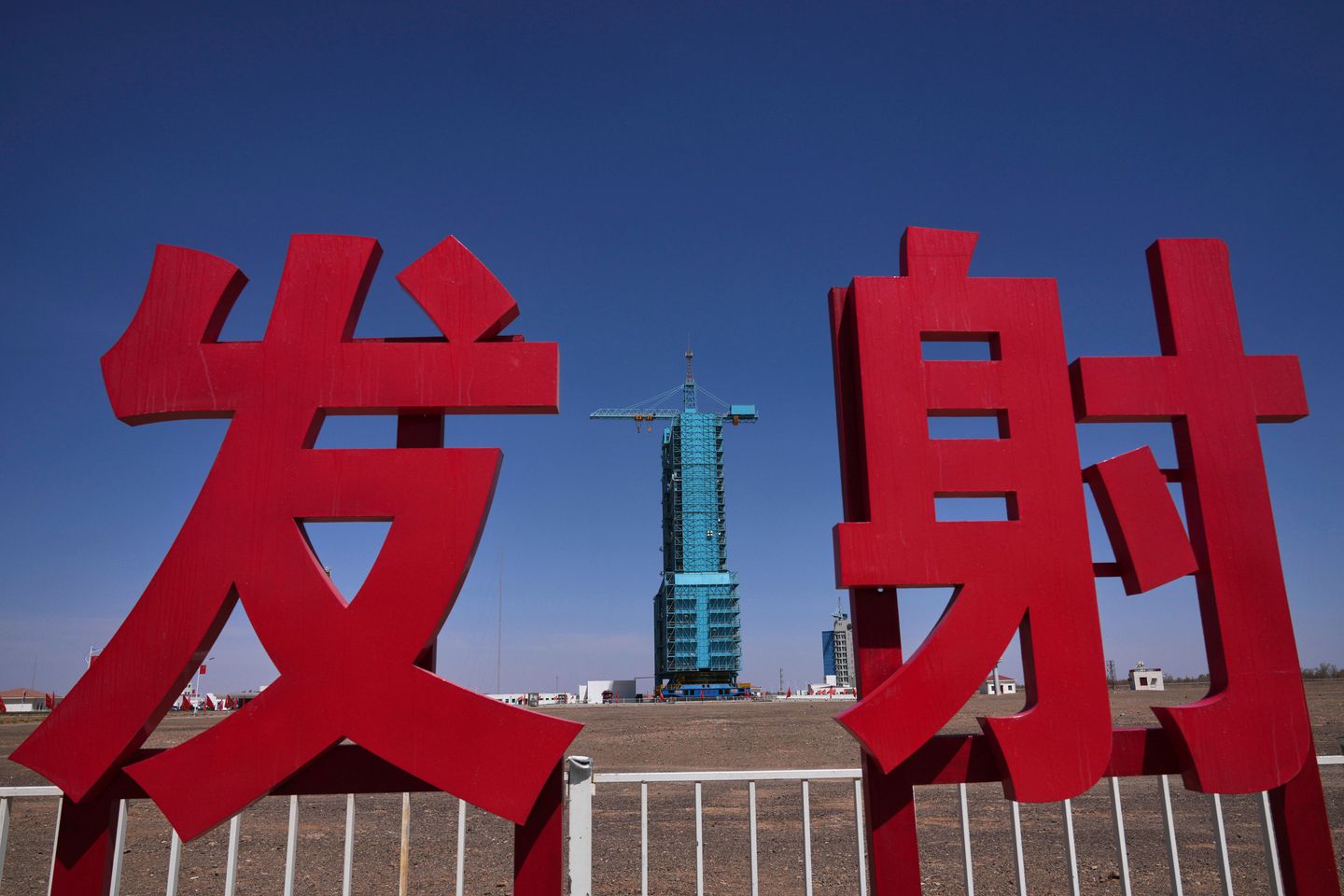
“China has maintained a crewed presence in low Earth orbit since 2021, using its Tiangong space station. In 2024, China became the first and only nation to return samples from the far side of the moon. This year, China conducted a series of tests to develop major components and systems that will support its future lunar missions, demonstrating that the [Chinese Communist Party] is both committed and working expeditiously toward its goal of landing taikonauts on the moon by 2030,” Mr. Babin said.
He added, “The U.S. cannot afford to fall behind.”
Pentagon officials stress that the space domain, and the work of the Space Force, is crucial to the functioning of every other domain. Traditional air, land and sea forces all rely on communications, navigation, surveillance and other capabilities provided by satellites in orbit.
Destroying or otherwise compromising those assets could be a likely first step by an adversary before a major military move on earth, perhaps a Chinese invasion of the island democracy of Taiwan.
While Russia and even other adversaries such as Iran and North Korea have made their own significant strides in space, they pale versus China’s feats.
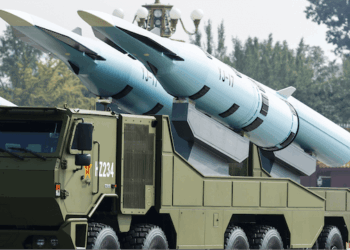
On the strictly military side, China has invested heavily in building space weapons that can destroy or disrupt satellites that would “incapacitate” U.S. communications and undermine the military’s ability to conduct joint operations and project power, according to a recent report from the U.S.-China Economic and Security Review Commission.
The space weapons include three types of ground-based anti-satellite missiles, robot satellites that can grab and destroy satellites without causing debris.
The development of such weapons is part of what’s driving the drastic changes in how military leaders view the space domain today.
“Our domain and all of the conditions that govern it have changed so dramatically, so quickly, that we must recognize that we can’t conquer these new challenges with old ways of thinking,” Gen. B. Chance Saltzman, chief of space operations for the Space Force, said in a speech Thursday.
Gen. Saltzman was followed on stage by Chief Master Sgt. Ron Lerch, the senior enlisted adviser to the deputy chief of space for operations for intelligence at the Space Force, who delivered a briefing on China’s space capabilities.
The biggest takeaway was that China set a number of ambitious space-related goals in its most recent five-year plan, which runs through this year, and achieved them.
“Overwhelmingly, they met or exceeded their goals,” Sgt. Lerch told the audience in Orlando.
Specifically, he said China is connecting its rendezvous and proximity operations in lower earth orbit with other satellites as part of what appears to be a plan to operate small, stealth satellites.
He said China’s XJY-7 satellite appears to be conducting multidimensional radar imaging.
Sgt. Lerch said China also appears to have demonstrated new on-orbit refueling capabilities and other “experimental spacecraft,” the exact purposes of which aren’t clear.