The day we published this column is Maundy Thursday, the day during Holy Week when we remember the last meal that Jesus ate with His disciples, as well as the long discourse he had with them before Judas betrayed him (John 13-17). The word “Maundy” comes from Jesus’ “new commandment” to the disciples.
GotQuestions describes it this way:
The word Maundy is derived from the Latin word mandatum, meaning “mandate” or “commandment.” So, Maundy Thursday could be thought of as “Commandment Thursday.” The specific mandate is the new commandment Jesus gave the disciples that night. Before He was arrested, Jesus said,
A new command I give you: Love one another. As I have loved you, so you must love one another. By this everyone will know that you are my disciples, if you love one another. (John 13:34–35)
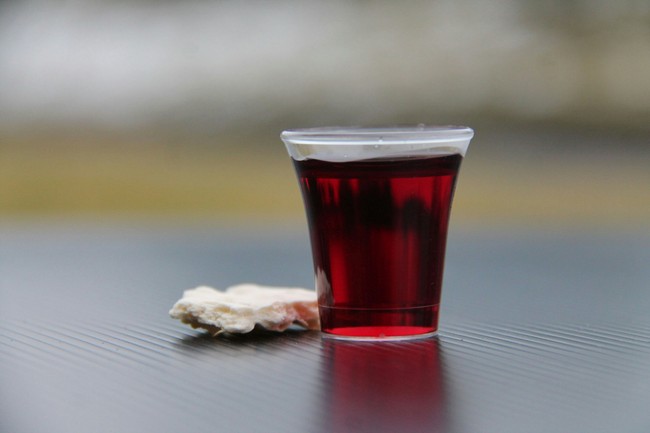
On Maundy Thursday, Jesus instituted the Lord’s Supper — or Communion or the Eucharist — with His disciples. It was part of the Passover meal, and He commanded His followers, including us, to remember Him with it. At my home church, we take Communion every Sunday, and a member of the worship team leads the congregation in reading the Apostle Paul’s account of the Lord’s Supper:
For I pass on to you what I received from the Lord himself. On the night when he was betrayed, the Lord Jesus took some bread and gave thanks to God for it. Then he broke it in pieces and said, “This is my body, which is given for you. Do this in remembrance of me.” In the same way, he took the cup of wine after supper, saying, “This cup is the new covenant between God and his people—an agreement confirmed with my blood. Do this in remembrance of me as often as you drink it.” For every time you eat this bread and drink this cup, you are announcing the Lord’s death until he comes again. (1 Corinthians 11:23-26, NLT)
We also recite this creed: “Christ has died. Christ is risen. Christ will come again.”
Related: Maundy Thursday Prepares Us for the Cross and the Empty Tomb
Jesus foreshadowed the Lord’s Supper and His sacrifice in John 6, the day after He fed the five thousand.
So they said to him, “Then what sign do you do, that we may see and believe you? What work do you perform? Our fathers ate the manna in the wilderness; as it is written, ‘He gave them bread from heaven to eat.’ ” Jesus then said to them, “Truly, truly, I say to you, it was not Moses who gave you the bread from heaven, but my Father gives you the true bread from heaven. For the bread of God is he who comes down from heaven and gives life to the world.” They said to him, “Sir, give us this bread always.” Jesus said to them, “I am the bread of life; whoever comes to me shall not hunger, and whoever believes in me shall never thirst. But I said to you that you have seen me and yet do not believe. All that the Father gives me will come to me, and whoever comes to me I will never cast out. (John 6:30-37, ESV)
Jesus made it even more challenging for the people listening to him teach:
Truly, truly, I say to you, whoever believes has eternal life. I am the bread of life. Your fathers ate the manna in the wilderness, and they died. This is the bread that comes down from heaven, so that one may eat of it and not die. I am the living bread that came down from heaven. If anyone eats of this bread, he will live forever. And the bread that I will give for the life of the world is my flesh.” The Jews then disputed among themselves, saying, “How can this man give us his flesh to eat?” So Jesus said to them, “Truly, truly, I say to you, unless you eat the flesh of the Son of Man and drink his blood, you have no life in you. Whoever feeds on my flesh and drinks my blood has eternal life, and I will raise him up on the last day. For my flesh is true food, and my blood is true drink. Whoever feeds on my flesh and drinks my blood abides in me, and I in him. As the living Father sent me, and I live because of the Father, so whoever feeds on me, he also will live because of me. This is the bread that came down from heaven, not like the bread the fathers ate, and died. Whoever feeds on this bread will live forever.” Jesus said these things in the synagogue, as he taught at Capernaum. (John 6:47-59, ESV)
This was a challenging teaching because the Torah forbade eating blood — and you’ll see how the reason even ties the law to Jesus. Leviticus 17:10-11 reads, “If any one of the house of Israel or of the strangers who sojourn among them eats any blood, I will set my face against that person who eats blood and will cut him off from among his people. For the life of the flesh is in the blood, and I have given it for you on the altar to make atonement for your souls, for it is the blood that makes atonement by the life.”
Related: The Threads Between Passover and Good Friday
“Understand that in the Bible, blood is perhaps the most important symbol,” says Kris Langham in Through the Word’s wonderful Holy Week audio devotions. “From the Passover to the cross, blood is the universal object lesson of the Bible, and blood always pictures life and death.”
Langham continues:
God told his people, “Do not drink blood. Do not find life there.” So imagine the shock of the Jews when Jesus said that unless you eat his flesh and drink his blood, you have no life in you. Even the disciples said this is a hard teaching. But Jesus explained, “Whoever eats my flesh and drinks my blood has eternal life.” The key is in the word eternal.
Every other place you try to find life, look it all up, is mortal. It doesn’t last. Don’t drink blood means don’t find your life there. It’s empty. For us, there’s only one way to eternal life, the blood of Christ.
This is why the shedding of Jesus’ blood was so important. The blood of bulls and goats made atonement for God’s people before Jesus, but the sacrifice of God’s only begotten Son made the sacrifice eternal for us.
“For if the blood of goats and bulls, and the sprinkling of defiled persons with the ashes of a heifer, sanctify for the purification of the flesh, how much more will the blood of Christ, who through the eternal Spirit offered himself without blemish to God, purify our conscience from dead works to serve the living God,” asks the author of Hebrews in chapter 9, verses 13 and 14.
That’s why Christians all over the world remember Jesus’ sacrifice by taking the Lord’s Supper every Sunday. It’s a commemoration of the life that came from the blood of Jesus.
Support independent journalism that doesn’t flinch when faith enters the conversation. Join PJ Media VIP today and get 60% off with promo code FIGHT.