
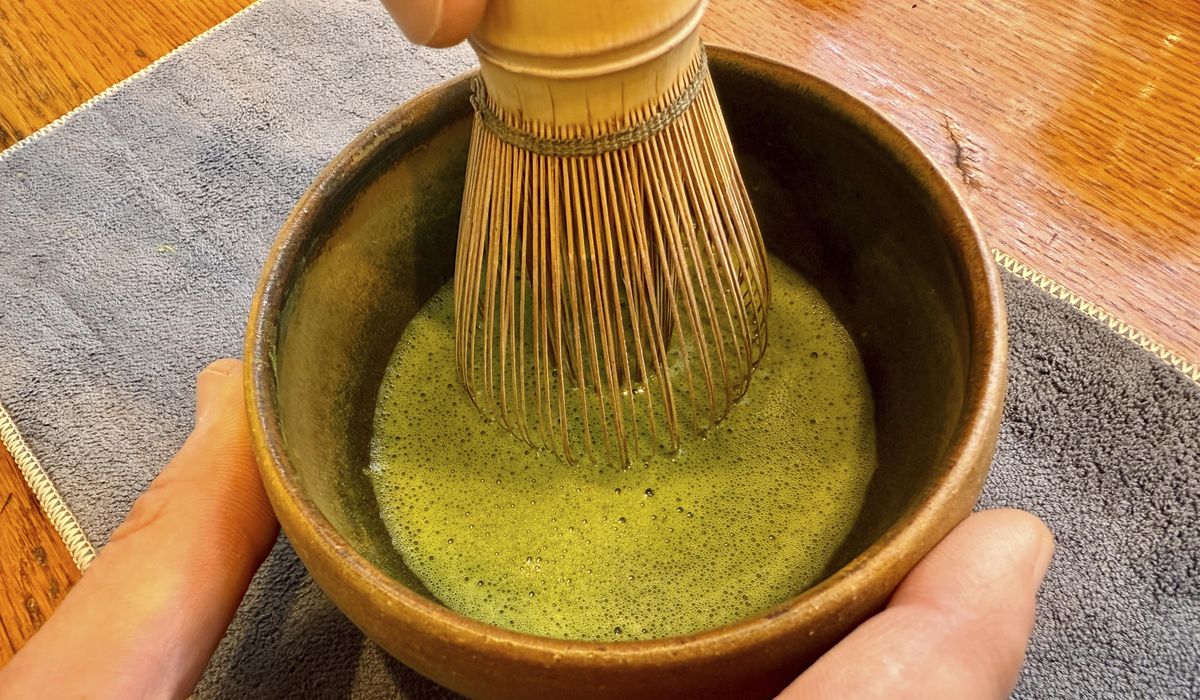
With spring around the corner and temperatures starting to warm up, plenty of Americans will be carrying tissues with them wherever they go. Yes, allergy season is upon us, and new research points to an herbal remedy that could help fight the sniffles. A mouse study from Japan suggests that matcha, the finely ground green tea powder long consumed across East Asia, may help suppress sneezing linked to allergies. The study finds matcha may dampen neural activity involved in the sneeze reflex rather than working through the immune pathways that most allergy treatments target.
Researchers at Hiroshima University gave matcha extract to mice that had been immunized with ovalbumin, a protein derived from egg white commonly used in allergy research, combined with an immune-boosting adjuvant. They then repeatedly exposed the mice to the same protein through nasal drops to induce hay fever-like symptoms. The treated mice sneezed significantly less than those that received no matcha.
The findings, published March 5 in npj Science of Food, point to a possible neural mechanism distinct from the immune pathways targeted by many allergy medicines.
“Human studies suggest green tea may relieve allergic rhinitis, but how it works is unclear,” said Prof. Osamu Kaminuma, the study’s lead researcher at the Research Institute for Radiation Biology and Medicine, in a press release.
An oak tree with new leaf …
more >
Allergic rhinitis, commonly called hay fever, affects hundreds of millions of people worldwide. The condition develops when the immune system overreacts to harmless airborne particles like pollen or dust, releasing histamine and other chemicals that inflame nasal passages and trigger sneezing, congestion and a runny nose. Most treatments target that immune response directly.
What surprised researchers in this study was that matcha did not appear to work that way. The tea showed no clear suppressive effect on immunoglobulin E antibodies or mast cell responses, the immune players most central to allergic reactions. The T-cell pathways examined were not suppressed either; one measure of T-cell proliferation was slightly enhanced, which researchers attributed to matcha’s iron content.
Matcha also showed no significant change in gut bacteria diversity, based on small sample groups of three mice each, and did not affect inflammatory cell infiltration measured in nasal lavage fluid. Notably, the allergy process itself did shift gut bacteria composition, including a reduction in Lactobacillus; but matcha neither caused nor corrected those changes.
Instead, the researchers found their most striking result in the brainstem. They examined activity in a region of the brainstem which acts as a relay station for sensory signals from the nose. To measure neurological activity there, they tracked expression of a gene called c-Fos, which increases when neurons fire in response to a stimulus. Histamine applied to the nasal passages markedly increased c-Fos expression in that region. In mice that had received matcha, that signal was nearly abolished, reduced to levels seen in unstimulated animals.
The researchers described this brainstem result as their most direct evidence that matcha may be acting on the neural circuitry underlying the sneeze reflex, though they noted the finding was based on a small sample and should be confirmed in larger studies.
“Oral matcha reduced sneezing without clearly changing major immune markers. Instead, it strongly suppressed brainstem neuronal activation linked to the sneezing reflex,” Dr. Kaminuma said.
The matcha used in the study was extracted using hot water at about 149 degrees Fahrenheit and administered to mice with the tea’s solid residue included. This mimics how matcha is traditionally consumed, with the whole ground leaf, not just a filtered brew. That is a key distinction from regular green tea, the researchers noted, because drinking the whole powder allows the body to absorb compounds that would otherwise be filtered out.
Matcha contains a range of biologically active compounds, including catechins, polyphenols, caffeine and the amino acid L-theanine. The researchers believe several of those components, working together, may influence the autonomic nervous system in ways that reduce the sensitivity of the sneezing reflex. They have not yet pinpointed which specific compound is responsible for the effect.
The study does carry limitations. The experiments were conducted entirely in mice, and animal models do not always translate to human biology. The neural imaging component relied on small sample sizes, and the researchers acknowledged that larger confirmatory studies will be needed before any clinical conclusions can be drawn.
“The goal is an evidence-backed, food-based option that complements standard care for allergic rhinitis symptoms,” Dr. Kaminuma said.
The research builds on earlier work showing that green tea components such as epigallocatechin gallate and gallic acid can suppress allergic nasal symptoms in animal models. Matcha may offer an advantage over standard green tea in delivering those compounds, because consumers ingest the entire ground leaf rather than a water-soluble extract.
This article was constructed with the assistance of artificial intelligence and published by a member of The Washington Times’ AI News Desk team. The contents of this report are based solely on The Washington Times’ original reporting, wire services, and/or other sources cited within the report. For more information, please read our AI policy AI policy or contact Steve Fink, Director of Artificial Intelligence, at sfink@washingtontimes.com
The Washington Times AI Ethics Newsroom Committee can be reached at aispotlight@washingtontimes.com.