This is part 2 of our Modern Warfare series. The previous installment covered Ukraine.
Today we’re going to steer clear of the political minefield and focus on the weaponry and tactics used in the Iran war.
This conflict is very different from Ukraine. It is a long-distance war, and ground fighting is highly unlikely. No artillery. No mortars. No small arms.
Just long-distance weapons at scale.
Lesson number one is that everyone is vulnerable to drones and missiles. No matter how good your air defenses are.
Israel, for example, is a very small country bristling with advanced and layered missile defense systems. With the possible exception of Moscow, it is the most well-defended area on earth.
And Tel Aviv still gets hit. That’s the biggest lesson from this war. Defending against $20,000 drones with expensive SAM (surface-to-air) missiles is a losing game. For everyone.
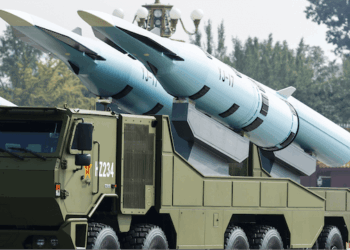
Defending against ballistic missiles is even more challenging, especially hypersonics. These speedy weapons can reach speeds of Mach 10 (7,600 MPH), and maneuver to avoid air defenses.
All the major powers are working on laser weapons, modern flak cannons, electronic warfare, and smaller cheaper missiles. But for now, the advantage lies with the attacker.
Drones: Front and Center
As in Ukraine, drones are playing a key role in the Iran conflict. They remain today’s unchallenged asymmetric weapon of choice.
The U.S. has launched a number of strikes using its new LUCAS (Low-cost Uncrewed Combat Attack System) drone.
The LUCAS is roughly based on Iran’s Shahed-136 drone, and is quite similar in design. The Shahed-136 is the same drone system which Russia has adapted into its military as the Geranium (Geran).
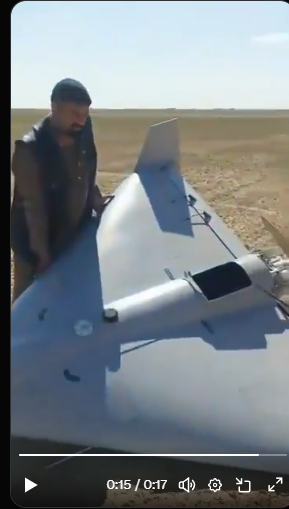
An American LUCAS drone recovered intact in Iraq
It’s a delta-wing drone with a simple gas motor driving a propeller. The wings hold fuel, while the fuselage holds the warhead, engine, and avionics.
Interestingly, the LUCAS drone which went down in Iraq was carrying a Starlink satellite antenna. This is Elon Musk’s satellite communication network, which has been widely used in Ukraine by both sides.
It is likely that Starlink is used due to widespread GPS jamming.
Iran, of course, is also using drones extensively. In fact, they appear to be doing most of the damage due to their higher accuracy compared to ballistic missiles.
Drones like the Shahed-136 are far slower than ballistic missiles, but they have a 1,500 kilometer range and can be launched in much larger numbers.
So far, Iran has taken out several U.S. and Israeli radar systems, oil infrastructure, and unfortunately, also killed several American soldiers.
Iran: A Decentralized Network of Field Commanders
Iranian leadership has been devastated by U.S. and Israeli strikes. However, large stockpiles of missiles and drones remain in control of regime forces.
These outposts of field commanders and soldiers are essentially operating on their own now. Command and control has been decimated, yet weapons and soldiers still remain.
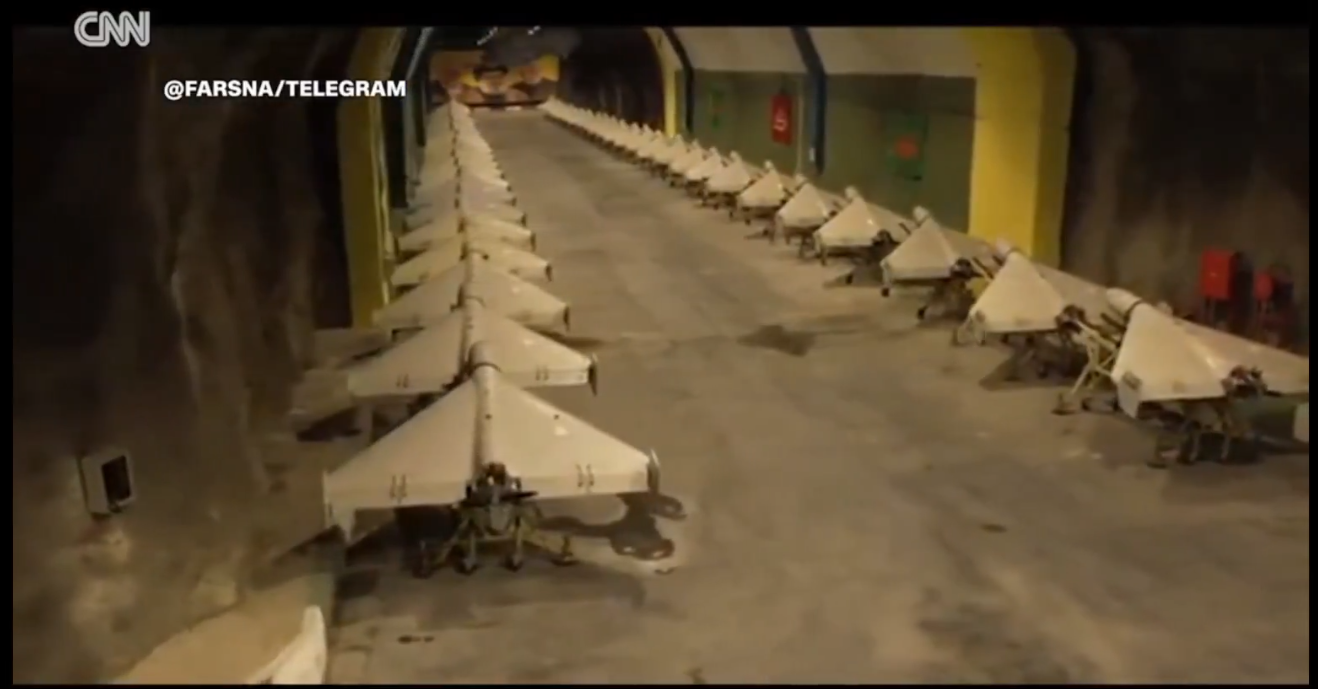
Underground drone stockpiles in Iran – Source: Farsi News via CNN, posted March 1
Similar underground cities exist which are packed with ballistic missiles. Those, at least to my knowledge, have not been hit, as they lie under 100+ feet of rock.
Missile launchers are hidden throughout the country. Some are underneath camouflaged tarps, while others are disguised as commercial trucks.
A large number of these weapons have been destroyed, but most analysts think there are still thousands of missiles scattered throughout Iran. And many thousands of long-range drones.
So local Iranian field commanders are essentially running their own playbooks, based on loose guidelines handed down in the early stages of the war. Decisions are mostly being made at a local level.
This is a unique and dangerous situation. In the early stages of the war, for example, Iran largely avoided targeting oil infrastructure. This was a sort of unspoken truce between both sides not to unleash total chaos on the region’s primary economy.
Now refineries and production facilities have been struck in Saudi Arabia, the UAE, and Bahrain. And today, oil prices spiked once again.
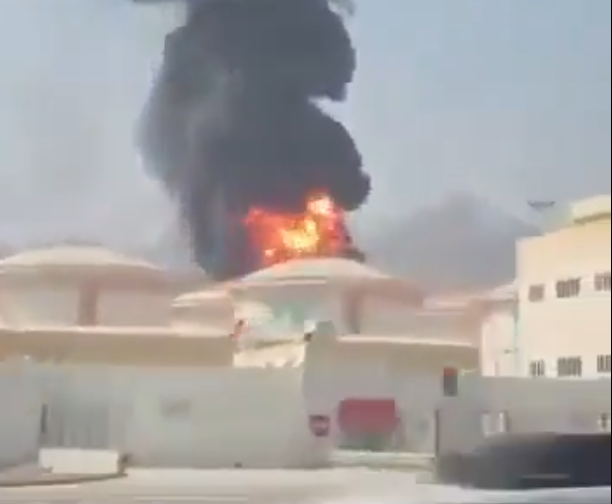
Screenshot from a video showing a fire at an oil storage facility in UAE’s Fujairah port. It was allegedly hit with a Shahed-136 drone.
This decentralization makes it difficult for Iranian forces to coordinate on strikes, but it also makes them difficult to completely disable. And challenging to negotiate with.
Iran’s missiles have been less of a threat in this latest conflict compared to last summer’s 12-day war. And that’s a good thing, because Iran’s missiles proved capable during that conflict.
Due to the current situation, unless some sort of deal is reached, it will be difficult to completely eliminate Iran’s offensive capability.
American & Israeli Weapons Effective, But Stockpiles Questioned
Thus far, American and Israeli weapons have proved extremely effective. From sea-launched Tomahawk cruise missiles to air-launched American and Israeli stealth missiles, they have proved accurate and deadly.
SAMs such as the Patriot and THAAD have also shot down large numbers of Iranian missiles.
However, questions about stockpiles (magazine depth) remain. The U.S. has expended vast quantities of defensive missiles in Ukraine. Additionally, a large number of munitions were sent to Israel for use in Gaza.
President Trump has stated that the United States has a “virtually unlimited supply” of medium and upper-medium grade weapons. And that wars can be fought “forever”.

Source: President Trump via Truth Social
However, he acknowledged that supplies of the “highest end” weapons are “not where we want to be”. This likely refers to defensive missiles and lower-production items such as the sea-launched Tomahawk cruise missile.
Strategic stockpiles of these weapons exist, but how far will President Trump be willing to draw them down? And what could this mean if China launches an invasion of Taiwan, and we are low on weapons? There are multiple considerations here.
It is also worth noting that Trump referred to Ukrainian President Zelensky as “P.T. Barnum”, and blamed Biden for handing over too many weapons to the country. It appears that Ukraine has slid down the list of priorities.
Israel likely maintains a large stockpile of offensive missiles, but defensive ones may be running low after recent fighting and last summer’s 12-day war.
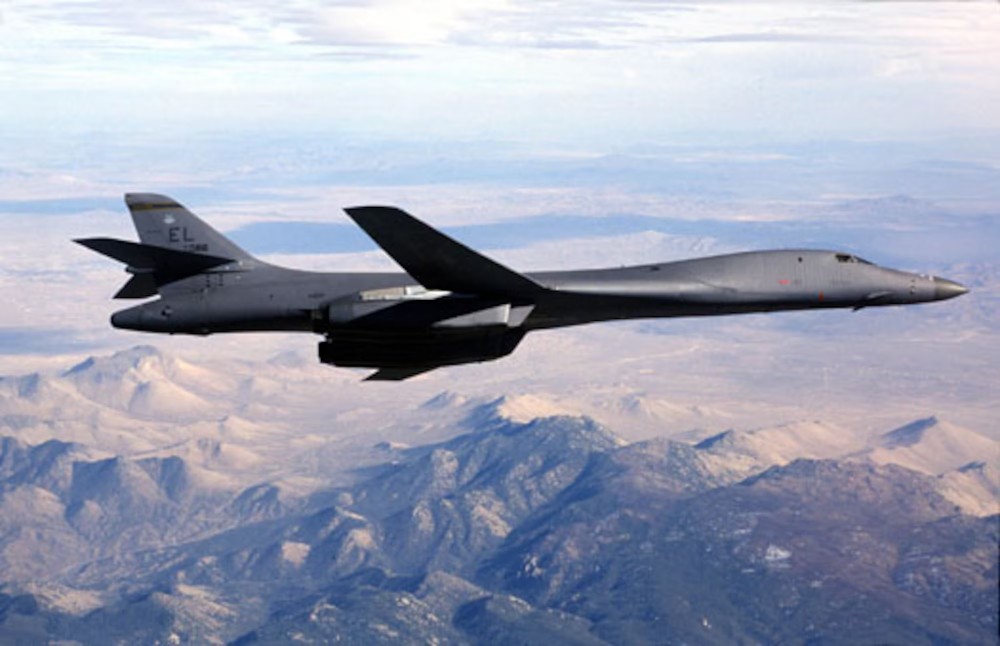
America is also utilizing B-2 stealth bombers and B-1 Lancers. Munitions should still be plentiful for these, but they do require long flight times and multiple refuelings.
Despite the fact that many Iranian missile defenses have been eliminated, there is still a small risk that their Russian S-300 air defense systems could hypothetically down even a B-2 stealth bomber if they get lucky catching a radar signal. So it remains to be seen how extensively these bombers are being deployed.
The AI Misinformation Threat
The rise of advanced AI video and image creation has added a new layer to this war.
Countless fake videos circulate every day, some with millions of views on social media. The video below, posted on X, got more than 25 million views, and is clearly an AI-generated fake:

That’s 25 million views on a fake video from just one post. And the video was plastered all over the internet.
People are claiming the video is “verified” because someone asked X’s AI, Grok, to verify it, and Grok replied that it is real. But Grok is not built to detect AI fakes. It simply makes a guess.
Misinformation and fakes have added to the fog of war. As AI video continues to improve, this problem will only get worse.
AI is now a valuable propaganda weapon, and it will be used extensively going forward.
In Conclusion
For now, Iran’s military has been severely degraded. The risk is that they re-organize under new leadership and manage to continue producing and launching long-range fires.
The longer this war lasts, the lower American and Israeli long-range stockpiles will fall.
Meanwhile, a ground invasion is essentially out of the question. The American people won’t support it, and it would be extremely challenging due to Iran’s large military and difficult terrain.
Hopefully some sort of positive conclusion comes soon. Otherwise the situation risks spiraling out of control.
We’ll be keeping a very close eye on this conflict and will update readers soon.