Should we file this story under causation, correlation, or coincidence?
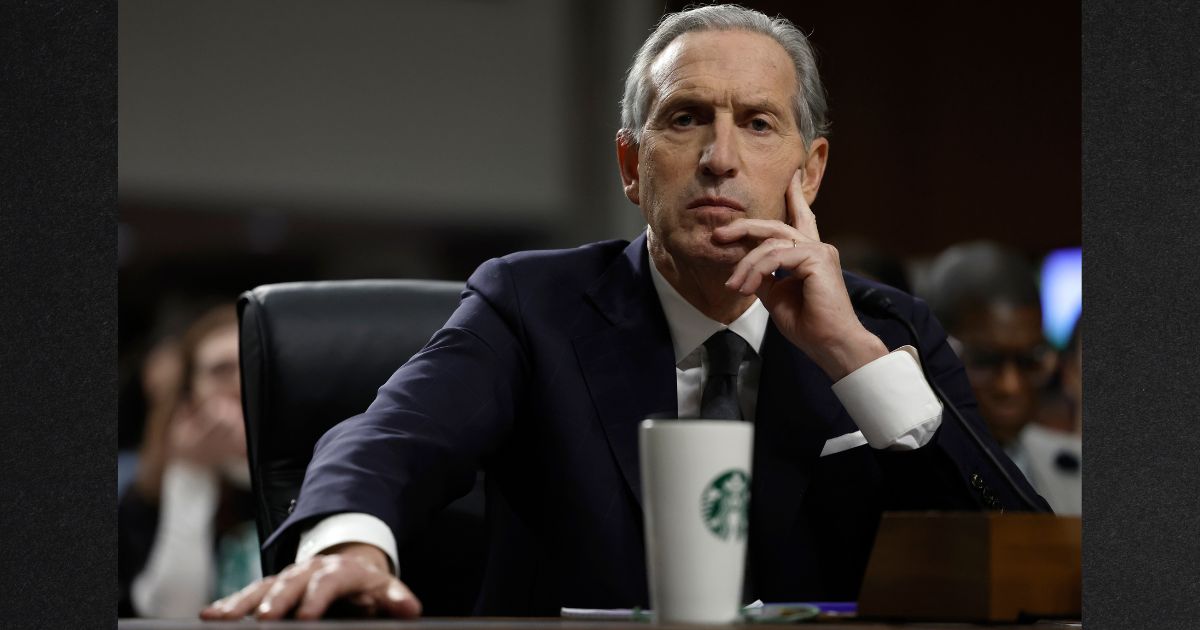
Tuesday on LinkedIn, longtime Starbucks CEO Howard Schultz announced that he and his wife Sheri had retired to Miami, Florida.
Meanwhile, in far-away Olympia, Washington, legislators passed their state’s first-ever income tax, the so-called “Millionaires’ Tax.”
Could the latter have caused, or at least influenced, the former? Schultz did not say, but he did drop at least one possible clue.
“It is our hope that Washington will remain a place for business and entrepreneurship to thrive, creating essential opportunity for those in Seattle and the surrounding areas,” the former CEO wrote.
Alas, entrepreneurs will have fewer opportunities to “thrive” if some Washington state legislators get their way.
According to KOMO-TV in Seattle, on Tuesday, the state House passed a bill that would impose a 9.9 percent tax on income above $1 million, beginning in 2029. If the Senate approves, which might happen on Wednesday, then Democratic Gov. Bob Ferguson likely will sign the bill.
For the most part, of course, Democrats only ever seem to see one aspect of the debate.
Democratic state Rep. Lisa Parshley, for instance, said that the new tax will “help feed our people,” “provide behavioral health,” and “fill the gaps.”
No one, of course, opposes feeding people or providing behavioral health. In that sense, liberals have always had the advantage over conservatives in debate. “You oppose this tax?” they might say. “Well, then, you want people to starve and suffer! You care only about the rich!”
But conservatives neither want people to starve nor care only about the rich. In fact, judging by electoral results, the rich tend to vote for liberals anyway.
Nor do conservatives oppose taxation of every kind and for any reason. The Founding Fathers gave us a national government with the power to tax because governments, even governments of that size, do a (very) few things better than private citizens do.
What conservatives cannot abide is the simple-minded assertion that taxation benefits the underprivileged. If it did, then perhaps we could all agree on it. But it does not.
Of course, one could identify many reasons why taxes on the rich do not ultimately benefit the poor.
One such reason lies in the incidence of government fraud. Washington’s legislators, in fact, showed considerable chutzpah by imposing an income tax at the same time taxpayers in Minnesota have begun to discover how much money Somali fraudsters have cost them. In light of all the fraud, surely we should pause before trusting state legislators with more tax dollars.
Another reason is that the rich have the ability to shrink the tax base by leaving the state. The Schultzes did this. Whether they did it because of the Millionaires’ Tax specifically, we cannot say.
We can say with certainty, however, that if the tax becomes law, then other wealthy people will follow. They always do.

Advertise with The Western Journal and reach millions of highly engaged readers, while supporting our work. Advertise Today.