Sister Eileen McKenzie has helped feed and shelter migrants at the Arizona-Mexico border for years, but she cites her recent encounter with a man in a government facility in Nogales, Mexico, as an impactful reminder of the people affected by the crackdown on illegal immigration.
Brought to the U.S. as a child, “Manuel” spoke English better than he spoke Spanish, owned a business, attended church every Sunday and was raising four children with his wife in Indiana while going through the paperwork to document his status, she said. But U.S. Immigration and Customs Enforcement agents detained and deported him to Mexico, a country he barely knows.
“The one constant is connection with people who are stuck in Nogales, separated from their families, and trying to survive,” Sister Eileen said, adding that “Manuel” is receiving assistance in Mexico from the Kino Border Initiative.
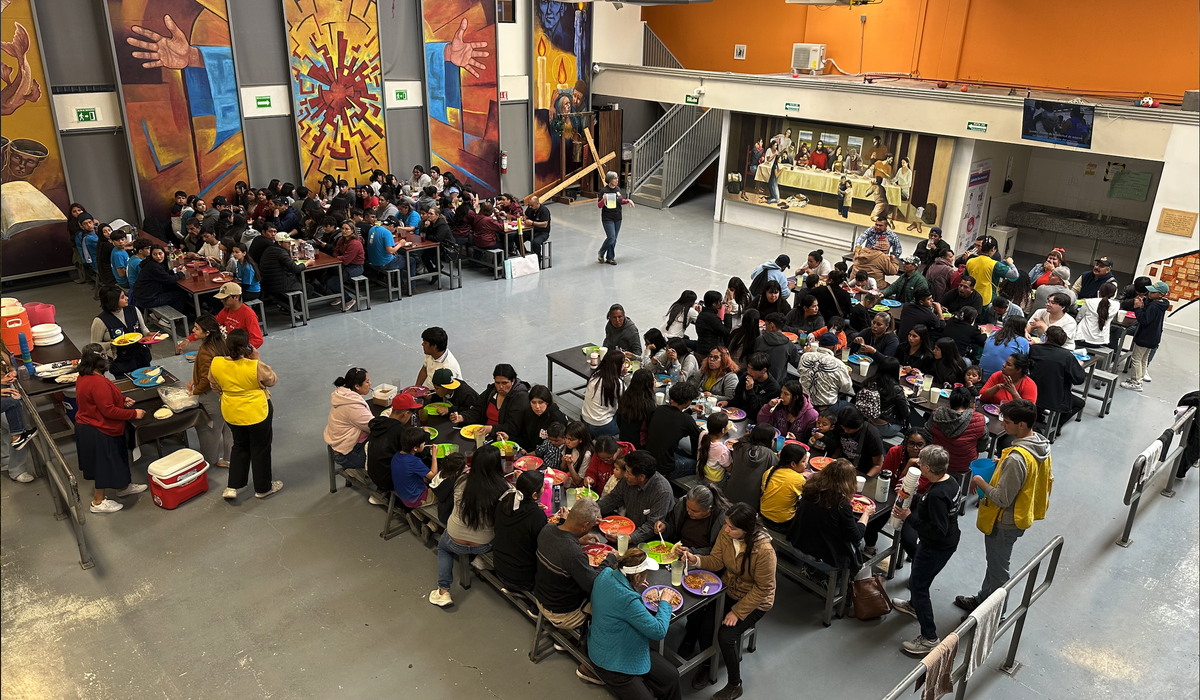
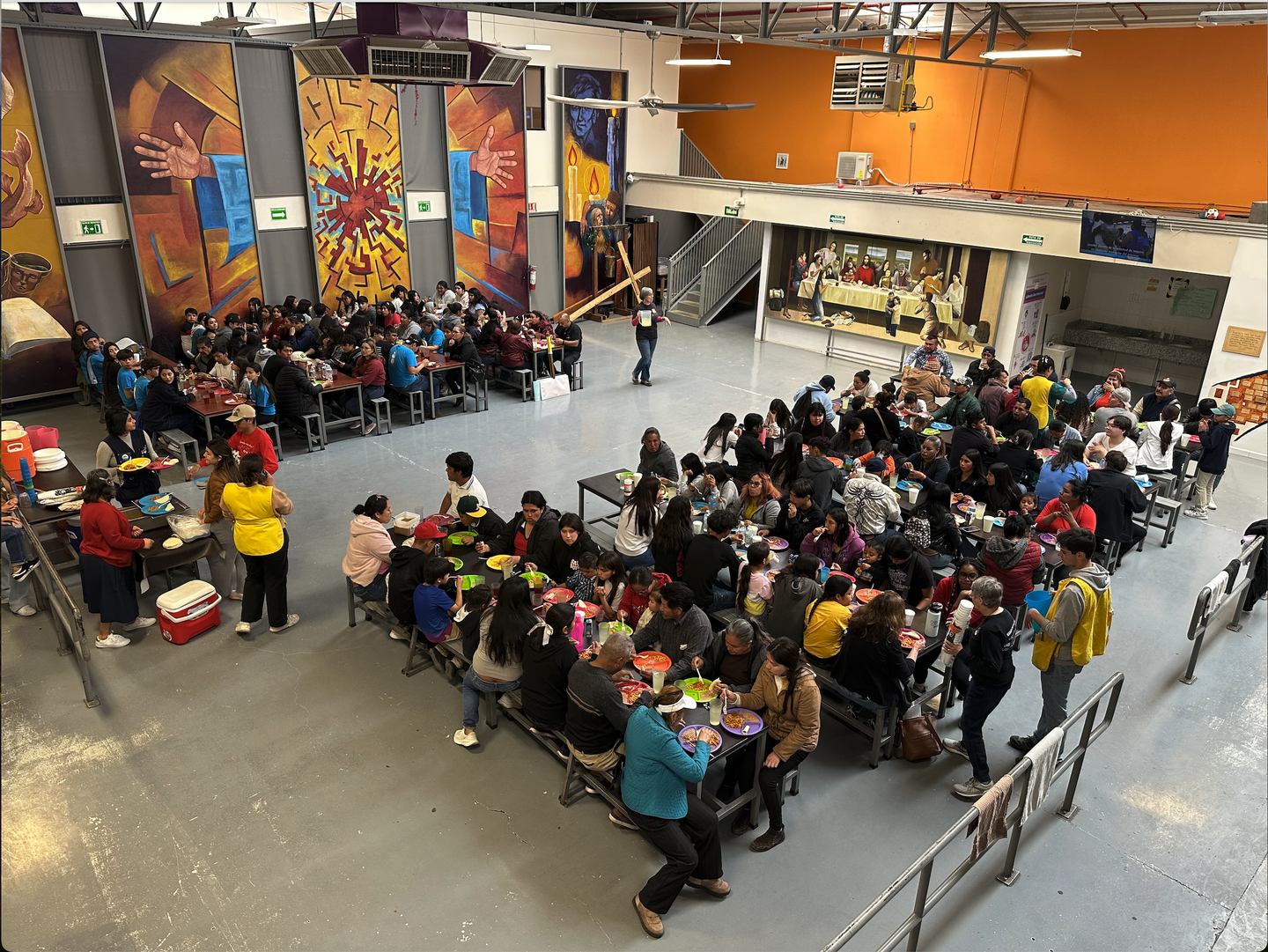
A Catholic nonprofit, the Kino Border Initiative provides food, clothing, medical care, legal aid and job training to migrants in the sister cities of Nogales, Mexico, and Nogales, Arizona. Sister Eileen is the group’s mobilization specialist, in charge of “building political support for dignified migration and fostering migrant integration by empowering communities, education partners, volunteers, and Catholic Sisters to act in solidarity with migrants.”
“The Catholic Church prays to a God who we believe incarnated as a refugee and who was forcibly displaced,” Sister Eileen said. “And so the Catholic Church’s role in this, I believe, is not only upholding the dignity of people who are forcibly displaced or moving, particularly those who don’t have the choice to stay.”
The initiative, named after an 18th-century Italian Jesuit missionary, has served nearly 200,000 meals, administered first aid to more than 2,600 people, given clothing to more than 10,000 and sheltered about 300 people since its founding in 2009. It also has worked with the nonprofit Florence Immigrant and Refugee Rights Project to do social work for immigrants detained by ICE in Arizona.
The Kino Border Initiative says the average migrant spent more than 200 days in its care in 2025, and Executive Director Joanna Williams adds that no one she has served was a criminal.
“There’s something very life-giving in listening carefully to Jesus and knowing that when we welcome a man who’s been deported from the U.S., we’re really welcoming Jesus in that moment,” said Ms. Williams, who has led the organization since 2021. “We can see that in the dignity that that person has, because we believe every person is created in the image and likeness of God.
“And that comes to life when we give them a plate of food and get to talk to them about how much they love their kids or what their dreams were for the future,” she said.
The initiative’s namesake is Father Eusebio Francisco Kino, who spent the final 24 years of his life in the early 1700s building Catholic communities across what is now southern Arizona and the Sonora state of Mexico. The Nogales border towns share not only the same name but also the history and economy.
The initiative grew out of a collaboration among six Catholic groups in California and Mexico — among them Jesuit Refugee Service/USA, the Missionary Sisters of the Eucharist, the Diocese of Tucson and the Archdiocese of Hermosillo — united by the spirit of Father Kino.
Sister Eileen, 57, joined the Kino Border Initiative 3 years ago, leaving her Franciscan convent in La Crosse, Wisconsin.
Ms. Williams says the initiative’s mission is rooted in faith.
“When we welcome a man who’s been deported from the U.S., we’re really welcoming Jesus in that moment,” she said. “We can see that in the dignity that person has, because we believe every person is created in the image and likeness of God.”
“Many of the people who are being deported have lived for more than 10 years in the U.S.,” Ms. Williams said. “And many were detained while working a job or trying to get to their job. Maybe they’re at the gas station filling up with gas and were pulled over by immigration agents. Many of them had never experienced a detention until this moment that they were deported. And they have families in the United States. They’ve been separated from their kids. They’ve been hardworking for many years in the same job.”
She points to the Gospels, namely Matthew 25, as the foundation of the initiative’s work: “Jesus says, I was a stranger and you welcomed me. I was hungry and you gave me food. As Catholics and Christians, our call is to care for the people in need around us — and in this case, specifically the migrants at the border.”
The organization has opposed federal border policy. In 2013, under then-Executive Director Father Sean Carroll, the organization filed complaints with the Department of Homeland Security over migrant abuse and border policies.
Under the second Trump administration, DHS reports that nearly 3 million immigrants have been deported or left the United States since the start of 2025.
Deportees have surged through the Kino Border Initiative’s doors in Mexico, many of them longtime U.S. residents who had worked in landscaping, agriculture, construction and small businesses. Sister Eileen says many Americans don’t realize how many undocumented people are part of their daily lives as caretakers, construction workers and home aides.
As their numbers continue to rise, Sister Eileen cites Scripture: “Am I my brother’s keeper?”