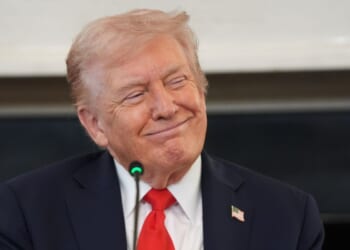
Less than two weeks ago, President Trump stood before Congress and boasted about cheap gas. Now, with U.S. and Israeli forces locked in an active military campaign against Iran, that talking point is evaporating at roughly 50 cents a gallon per week.
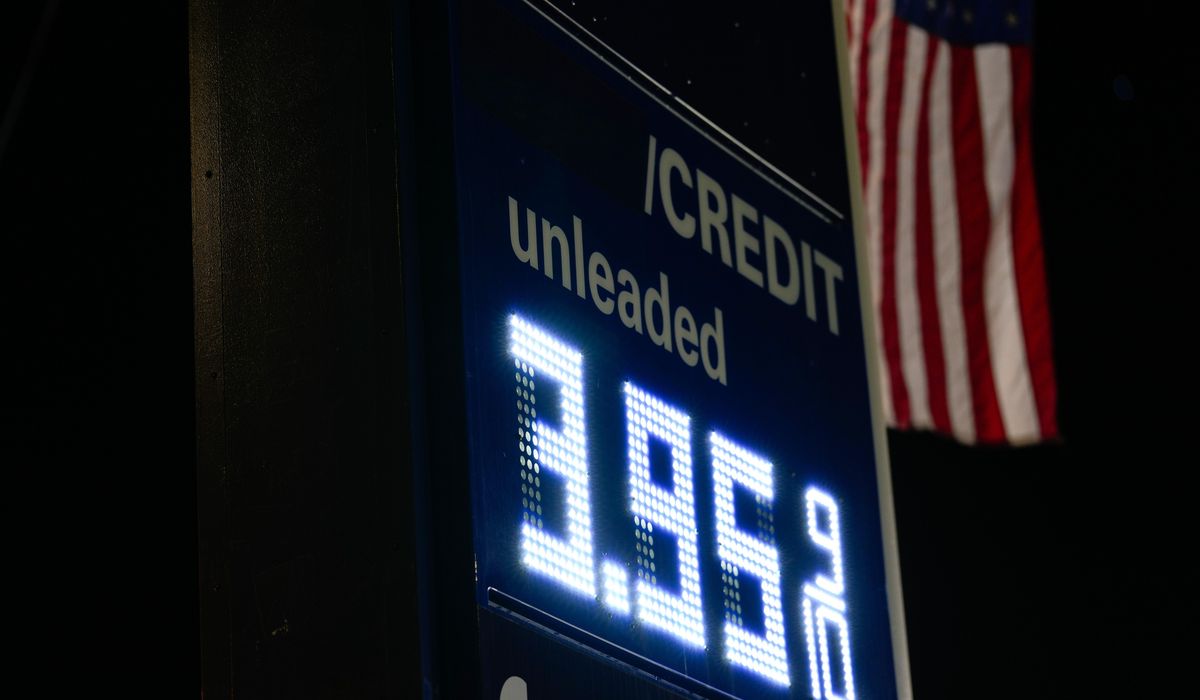
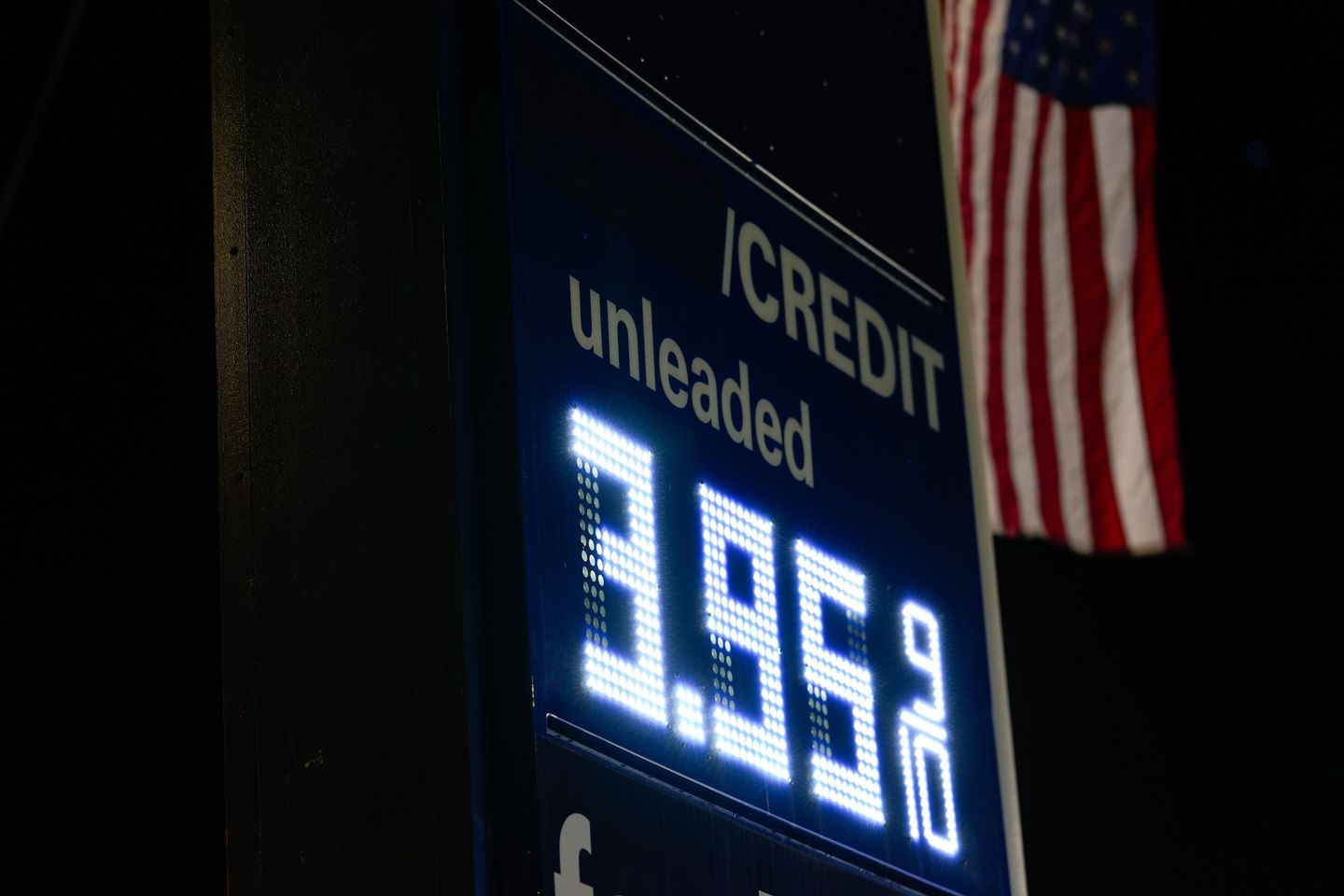
The national average for a gallon of regular gasoline hit $3.48 on Monday, according to AAA, up nearly 50 cents in a single week and 58 cents from a month ago. As of Tuesday, the AAA average tracked by The Washington Times had climbed to $3.50, with oil prices for West Texas Intermediate crude and Brent hovering near $90 per barrel after briefly surging past $100 earlier in the week.
The speed of the increase is striking. Before the conflict escalated, the national average had remained below $3.00 for thirteen consecutive weeks, a stretch not seen since 2021. In his State of the Union address just last month, Mr. Trump claimed gas was “below $2.30 a gallon in most states,” framing low pump prices as one of his administration’s signature achievements heading into November’s midterm elections.
“Gasoline, which reached a peak of over $6 a gallon in some states under my predecessor — it was, quite honestly, a disaster — is now below $2.30 a gallon in most states, and in some places $1.99 a gallon,” Mr. Trump said in the address.
That message is now difficult to sustain. When asked about surging prices in a Sunday interview with ABC News, Mr. Trump dismissed the increases as “a little glitch,” saying: “I think it’s fine. It’s a little glitch. We had to take this detour.” On Truth Social, he has argued that short-term oil price spikes are a small price to pay for national security.
Inside the administration, the reaction has been less relaxed. Senior Trump aides had anticipated a brief surge in oil prices when the Iran campaign began, but the size and persistence of the market reaction caught them off guard, prompting alarm over the potential political fallout. Officials have been drawing up options ranging from easing Jones Act restrictions to deploying the Strategic Petroleum Reserve, a tool the administration had firmly ruled out just days earlier.
The political math is straightforward and uncomfortable. Low gas prices had been planned as a central pillar of the GOP’s midterm message, one that Energy Secretary Chris Wright literally pumped gas to underscore. That message is now competing with prices that analysts warn could approach $4 per gallon nationally if the conflict drags on.
“It’s one thing if you go from $3 to $3.25,” Mark Zandi, chief economist at Moody’s Analytics, told CNN. “But if you go from $3 to $4, then that undermines confidence completely.”
The damage is already registering in battleground states. Three of the four biggest weekly diesel price jumps have hit key Senate races — Texas, North Carolina and Georgia each saw diesel costs climb by more than $1 per gallon in the past week, according to GasBuddy’s Patrick De Haan. Democrats are pressing the advantage. Senate Minority Leader Chuck Schumer has called on Mr. Trump to tap the Strategic Petroleum Reserve, arguing that “American families are suffering from higher prices as the effects of Trump’s reckless war become pain at the gas pump.”
Republicans, for their part, are hoping brevity saves them. “A small, short spike — even if it happens — won’t be an issue,” said Matt Gorman, a veteran Republican political operative, according to NBC News. A second GOP operative working on midterm campaigns was more candid: “If it sustains at all, it’s really bad.”
That anxiety is compounded by the broader economic backdrop. A recent NBC News poll found just 36% of registered voters approved of Trump’s handling of inflation and the cost of living, while 54% disapproved of his management of the Iran situation. A Pew Research survey conducted before the strikes found 68% of respondents were very or somewhat concerned about gas prices — a level of anxiety that predates the current spike.
Gas prices carry an outsize political weight that other cost-of-living measures don’t. “The price of milk is not on a sign outside of grocery stores,” Jon Krosnick, a Stanford political science professor, told Axios. The spike also presents what Mr. Krosnick described as unusual “attributional clarity”: “It’s so clear what just happened.”
Aramco CEO Amin Nasser underscored Tuesday that the economic stakes extend well beyond the U.S. political calendar. Addressing investors on an earnings call, he said oil disruptions from the Middle East fighting set off a “drastic domino effect” impacting shipping and other industries. “There will be catastrophic consequences for the world’s oil market,” Mr. Nasser said. “The longer the disruption goes on and the more drastic the consequences for the global economy.”
Global spare capacity, he noted, is “mostly concentrated in this region,” making resumed shipping through the Strait of Hormuz, in his words, “absolutely critical.”
This article was constructed with the assistance of artificial intelligence and published by a member of The Washington Times’ AI News Desk team. The contents of this report are based solely on The Washington Times’ original reporting, wire services, and/or other sources cited within the report. For more information, please read our AI policy AI policy or contact Steve Fink, Director of Artificial Intelligence, at sfink@washingtontimes.com
The Washington Times AI Ethics Newsroom Committee can be reached at aispotlight@washingtontimes.com.