Hello, and welcome to Thursday, March 19, 2026. Today, among other things, is National Certified Nurses Day. My own sister was a nurse for many years, now retired. I’ve always admired her, and anyone else who can do that.
It must be spring. I’m hearing robins and cardinals around the Florack Shack this morning. Always nice to hear.
1279: Mongolian victory at the naval Battle of Yamen ends the Song Dynasty in China.
1740: British Parliament passes the Plantation Act, naturalizing foreign Protestants and others residing for seven years or more in any of Britain’s American colonies.
1859: Charles Gounod’s opera Faust premieres at the Théâtre Lyrique in Paris, France.
1915: Pluto photographed for the first time (although unknown at the time).
1918: The U.S. adopts the Standard Time Act of 1918, also known as the Calder Act, a federal law implementing standard time (and daylight saving time) and defining five time zones for the United States.
1920: The U.S. Senate rejects the Treaty of Versailles for the second time, refusing to ratify the League of Nations’ covenant and maintaining a policy of isolation.
1943: Frank Nitti, the Chicago Outfit boss after Al Capone, commits suicide at the Chicago Central Railyard.
1962: Columbia Records releases the self-titled debut album of American folk singer Bob Dylan.
1964: Sean Connery’s first day of shooting on the James Bond film Goldfinger.
1969: Chicago 8 indicted in aftermath of Chicago Democratic convention.
1974: Jefferson Starship begins its first tour.
1977: The last episode of The Mary Tyler Moore Show premieres on CBS.
1987: American televangelist Jim Bakker resigns amid rape accusation by his secretary, Jessica Hahn.
Birthdays today include: Scottish explorer David Livingstone; Wyatt Earp; American orator William Jennings Bryan; General Joseph W. Stilwell; Chief Justice Earl Warren; comedienne Moms Mabley; Judge John Sirica (Watergate Hearings); Nazis Albert Speer and Adolf Eichmann; actor Tige Andrews (Mod Squad); National Security Advisor Brent Scowcroft; actor Patrick McGoohan; actor and producer Burt Metcalfe (M*A*S*H); actress Ursula Andress (Dr. No, Casino Royale); Clarence “Frogman” Henry (Ain’t Got No Home); Sirhan Sirhan, the Palestinian-born assassin of U.S. Sen. Robert F. Kennedy; Donny Gerrard, Canadian pop and session singer (Skylark -“Wildflower”); actress Glenn Close; producer Harvey Weinstein; and actor Bruce Willis. If today is your day, too, have a happy one.
* * *
As is the norm these days, I spent last evening going over reports from Iran. Of necessity, that includes a number of analyses from outside the region. Reading the tea leaves about the status of the Islamic Republic has become something of a “Soothsayer’s Olympics” in many online columns of late.
A fair percentage of write-ups, notably from traditional left-wing outlets, suggest we’ve not had nearly the crippling effect that some in the States would have liked to see. Then again, these are mostly folks who would have preferred we weren’t trying to eliminate the Islamic Republic, instead choosing that we try again with feckless diplomatic efforts — despite the fact that they have never had the desired effect.
Our Stephen Green over at Instapundit links to a piece from Mehdi Parpanchi, which I think does the best job of any I’ve seen thus far. Given the sheer volume of such guesswork, it seems worth mentioning.
Eighteen days after the United States and Israel launched their military campaign against Iran on February 28, 2026, many of the usual signs of state continuity are still visible. The Islamic Republic is still firing missiles and drones at Israel and other targets across the region, including advanced systems such as the Sejjil ballistic missile. State television is still broadcasting. Basij and IRGC units are still present on the streets. Mojtaba Khamenei has been installed as successor. No major elite split has yet surfaced. Parts of the regime’s regional network still exist. Shops still carry basic goods. And the nationwide uprising many expected has yet to materialize.
For many observers, these signs point to one conclusion: the regime has taken a severe blow, but it is still holding.
That reading may be fundamentally wrong.
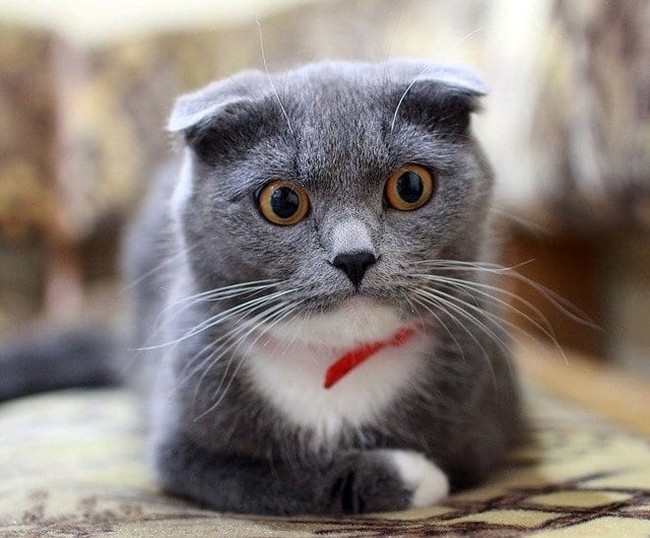
I would suggest it likely is. The comparison to examples in nature is perhaps telling. Now, as unlikely a link as this seems, take your average house cat trying not to show weakness. At a website called petworks, we find:
- Safety and Security
Cats often seek out cat hiding places to feel protected from perceived threats, such as loud noises, unfamiliar visitors, or other animals.- Stress and Anxiety
Major life changes—like moving, renovations, or a new pet—can trigger anxiety. Hiding allows cats to decompress in a private space.- Illness or Pain
Cats are experts at masking discomfort. Sudden or prolonged hiding can signal underlying health issues, including urinary infections, digestive problems, or injuries.
The idea, of course, is a pretty basic one: Essentially, showing weakness to those around you is an open invitation to an attack. That’s the reason the cat acts the way it does. It is instinctive.
That same concept is particularly true in an environment like the Middle East, where it seems everyone feels forced to play the bully and show nothing but strength to the world, regardless of their actual condition.
Those of you who were alive during our action in Iraq will recall that Saddam Hussein spent a good deal of time and effort, both during and in the days surrounding that war, hiding Iraq’s true, and rather frail, status. Even the attacks Iraq managed to make on others, including U.S. troops, were designed to show strength that Iraq simply didn’t have.
More directly, we have seen evidence of this behavior in the Iranian regime. Like any terrorist, Iran at the moment is depending on spreading fear for its survival. That fear is also designed to keep its military fighting. If the regime shows weakness, its troops might abandon their posts. But the efforts to that end, covering up that weakness, are less than successful. Mehdi Parpanchi, again:
These indicators are not false; they are simply being read through the wrong framework. They are taken as evidence that the system has absorbed the shock and remains solid. In reality, they indicate the opposite. The Islamic Republic prepared for the moment when its center would be hit, and its command structure would fracture. In that scenario, regional units keep firing, security forces keep repressing, and the state projects fragments of normality even as central control collapses. The activation of these mechanisms is evidence that the system has entered its collapse phase, not escaped it. What we are seeing is not resilience, but a regime preserving violence and surface function long enough to outlast the political patience of its adversaries.
That is the essence of Tehran’s calculation. It does not believe it can defeat the United States and Israel in a long conventional war. It believes Washington will not fight such a war for long. Its strategy, then, is not victory but endurance: keep shooting, keep coercing, keep signaling continued function, and keep imposing costs until the Americans decide the game is no longer worth the price.
That almost instinctive reaction does seem to include a dependence on Democrats here in the U.S., with their war powers votes, or administrations like the UK and France, as well as others in the increasingly useless NATO, refusing to fight and working through whatever channels they can to stop our efforts to eliminate the Islamic regime’s threat to the world.
That threat also includes potential sleeper cells in the U.S., which have been notably silent as yet. The behavior that I’ve noted here, from my vantage point, seems endemic to the breed.
As an aside, to those who worry about the costs of the current action against Iran in terms of blood and treasure, I submit that the amount of blood and treasure we have invested since 1979 far outstrips what we’ve invested in simply eliminating the problem. Indeed, if that’s the angle you’re arguing from, I would suggest that the elimination of the Islamic Regime should have been accomplished back in ’79. But of course, that’s something Jimmy Carter wouldn’t even have considered.
The conclusion here is obvious: We need to finish off the regime, completely and decisively. These are not people who will be swayed by diplomacy, which they have shown a tendency to use as they would any other weapon: against their enemy. Is there a single agreement the mullahs have stuck to that kept them from obtaining nukes for the purpose of overpowering the world? Even one?
Its attempts at showing strength it doesn’t have should not be allowed to sway us from the total elimination of the biggest fear monger in the world — the Islamic Republic of Iran.
Thought of the day: “The mobile phone is proof positive that people will look at anything but each other.” — Unknown
Take care of yourselves today. I’ll see you tomorrow.
Recommended: Asking the Big Questions, Exposing the Left
PJ Media’s investigative reporting and honest analysis (and don’t forget the occasional snarky nonsense), which you can’t get anywhere else, are why it’s important to become a VIP. Not only do you support the reporters and writers who support YOU, but you also get 60% off the regular price by going to this link and using the promo code FIGHT.