House Democrats on Thursday secured an unlikely win with the passage of a bill to re-up their COVID-era expansion of Obamacare subsidies for three years.
The 230-196 House vote is more of a symbolic and political victory than a substantive one, as the Senate has already rejected a nearly identical bill, nine votes short of the 60 needed to overcome a filibuster.
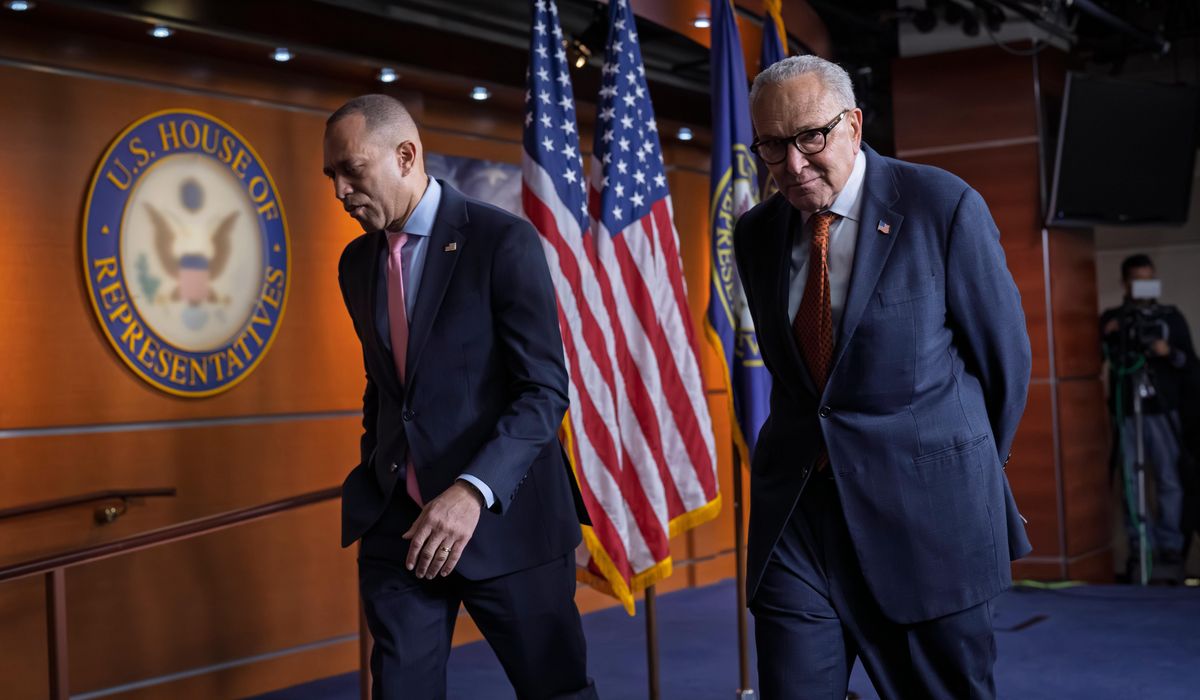
House Minority Leader Hakeem Jeffries called Thursday’s vote a “meaningful step” and said he has “every confidence” that his fellow New York Democrat, Senate Minority Leader Charles E. Schumer, and his caucus “are going to do all that they need to do to work to get the legislation over the finish line.”
“We’ll see what Republicans are willing to do to keep their word that they promised to lower the high cost of living in America,” he said.
Mr. Schumer is calling for Republicans – who he said are in a “total pretzel knot” on how to help Americans struggling to afford health care – to take up the bill as is.
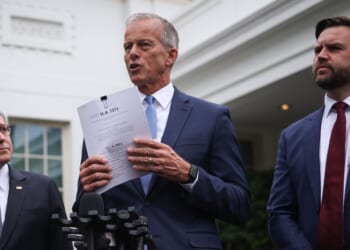
That will not happen. But Senate Majority Leader John Thune, South Dakota Republican, is willing to use the House-passed bill as a legislative vehicle for a potential bipartisan bill, which senators are currently negotiating.
“We think we have a skeleton of a deal,” said Sen. Bernie Moreno, Ohio Republican who has been leading the bipartisan Senate talks.
That skeleton still needs to get some meat on the bones, but the group of 12 senators – half Republicans, half Democrats – is hoping to solidify a deal and introduce legislation next week, then sell it to their broader party caucuses.
The senators are proposing a two-year extension of the COVID-era bonus subsidies, which cap Obamacare consumers’ out-of-pocket premium costs at 8.5% of household income, with several modifications, including an income cap and fraud guardrails.
The House vote on a clean three-year extension of the enhanced subsidies stemmed from a Democrat-led discharge petition, which, with signatures from 218 House members, a majority, forced a vote over GOP leaders’ objection.
Four Republicans joined Democrats in signing the discharge petition because House Speaker Mike Johnson, Louisiana Republican, would not bring any of the bipartisan bills they proposed to the floor.
Ultimately, 17 House Republicans voted for the bill on final passage, but not because they support the clean three-year extension of the enhanced Obamacare subsidies. Rather, they wanted to provide momentum for the bipartisan Senate deal.
“My vote today was to keep negotiations alive and prevent premiums from skyrocketing for 28,000 people in my district,” Rep. Rob. Rob Bresnahan, Jr., Pennsylvania Republican, said on social media. “Now, we need to roll up our sleeves and get to work to find a bipartisan solution that extends these tax credits and makes commonsense reforms.”
Some of the House members met with the bipartisan Senate group on Thursday ahead of the vote to discuss the latest details of the plan.
Rep. Brian Fitzpatrick, Pennsylvania Republican, said it largely tracks with the bipartisan bill he introduced last year.
However, the Senate is hung up on whether to add language to further restrict the taxpayer-funded subsidies from being used to pay for abortions. Obamacare already included that language, known as the Hyde Amendment, but Republicans believe some states are ignoring the law.
Mr. Fitzpatrick said he did not include further Hyde language in his bill and personally thinks the Senate should leave it out of their deal.
“I think the Senate is going to figure out a way to work it out,” he said. “They’re smart people. They want to get to a yes.”
Mr. Moreno said there is some disagreement among Democrats and Republicans about whether the law is currently being broken and thus what, if any, language they can include to address it.
There’s plenty of skepticism that the bipartisan talks will yield a result because of the abortion issue, even as Democrats in the group agreed to Republican changes to the enhanced subsidies to prevent waste and fraud.
The senators’ plan would reinstate an income cap that the pandemic expansion removed, but at 700% of the federal poverty line, higher than the pre-COVID cap.
It will also require consumers to make a minimum premium payment of $5 a month, or $60 for the year if paid up front.
That is designed to ensure that no one is enrolled in Obamacare without their knowledge and crack down on fraud that has occurred since the subsidies were expanded to allow the lowest-income households not to pay any out-of-pocket premiums.
In the second year, Obamacare consumers could choose to put some of the subsidy into a tax-exempt Health Savings Account to help pay for deductibles, copays and other expenses.
The proposal would also fund cost-sharing reductions that help subsidize deductible costs for silver-level Obamacare plans in the second year.
Everything in the bipartisan bill would expire after two years, giving lawmakers an incentive to work on a broader health care overhaul.
“It is very encouraging that people are working together on a bicameral and bipartisan basis,” said Rep. Tom Suozzi, a New York Democrat who worked with Mr. Fitzpatrick on his bipartisan bill. “I think you’re going to see more of this going forward, because people are just so sick and tired of the finger-pointing.”