House Republicans are pressuring the Senate to employ a risky procedural maneuver to force a vote on election integrity legislation.
The SAVE America Act would institute national requirements of proof of citizenship to register to vote, as well as photo identification to vote in federal elections.
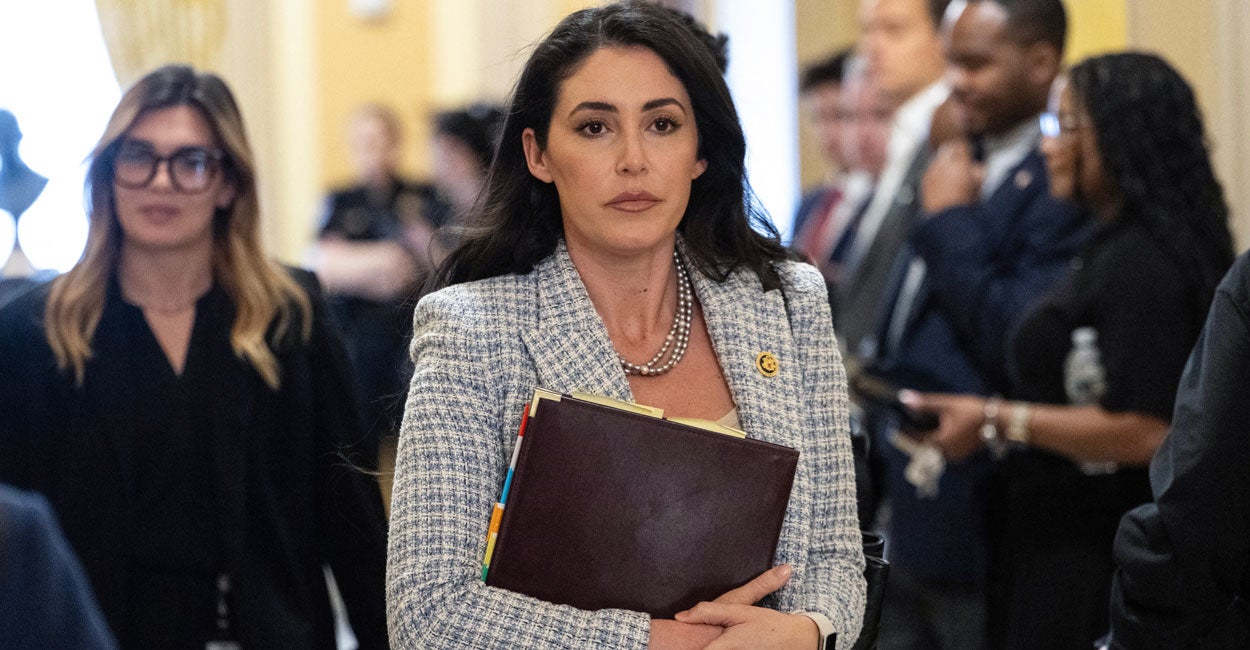
In recent days, Rep. Anna Paulina Luna, R-Fla., has publicly urged Senate Majority Leader John Thune, R-S.D., to force a “standing filibuster,” also known as a “talking filibuster,” in the Senate. This procedural maneuver could force Democrats to continue talking in order to stall the passage of bills, rather than just killing the bill by withholding their support indefinitely.
But Thune, a supporter of the SAVE America Act, has warned the approach would use up valuable floor time.
“We will vote on the SAVE Act, but… triggering a talking filibuster has ramifications, implications that I think everybody needs to be aware of,” Thune said.
The Daily Signal spoke to Republicans in both chambers of Congress who gave their opinion on the matter.
The House
Rep. Greg Steube, R-Fla., is one House conservative with little reverence for the Senate filibuster. For most legislation in the Senate, 60 senators must vote to end debate in order for a bill to come to a final vote.
“The bottom line is the only way the SAVE Act passes is if the filibuster’s [overcome], whether it’s the standing filibuster or just doing away with it all together,” Steube told The Daily Signal.
Steube also revealed Luna was trying to get House Republican signatures on a letter to Senate Republican leadership to overcome the 60-vote threshold.
A spokesman for Luna did not respond to a request for confirmation of whether she was circulating a letter.
How Would the Talking Filibuster Work?
The idea of a talking filibuster is to enforce rule 19 of the Standing Rules of the Senate, which states, “no Senator shall speak more than twice upon any one question in debate on the same legislative day without leave of the Senate.”
Under the rule, Senate Republicans would refuse to adjourn and would force Democrats to talk in order to filibuster the bill. Once the Democrats ran out of speeches on the question of the bill, it would come to a vote and pass by a simple majority.
However, under this procedure, Democrats could use up hundreds of hours of floor time on just one legislative question.
Forcing the talking filibuster is distinct from “nuking the filibuster,” which involves changing Senate rules.
Then-Senate Majority Leader Chuck Schumer, D-N.Y., strongly considered the talking filibuster approach in 2022, in order to pass the John Lewis Voting Rights Act.
Senate Democrats ultimately tried another way to exempt the bill from the 60-vote cloture requirement, but failed with bipartisan opposition.
Are Senate Republicans on Board?
Senate Republicans have taken notice of the pressure from the House.
On Wednesday, Sen. John Kennedy, R-La., told The Daily Signal that the matter of forcing a talking filibuster “came up in our luncheon today and we’ve agreed to set aside time to discuss it.”
Sen. Rick Scott, R-Fla., a supporter of the SAVE America Act, told The Daily Signal he appreciated House Republicans’ advocacy of the talking filibuster.
“I completely agree with them. I want to thank Anna Paulina for her focus on that,” said Scott.
Sen. Mike Lee, R-Utah, one of the bill’s authors, has also pushed for the procedure, and Sen. Ashley Moody, R-Fla., has similarly called for a “return to tradition” to force debate of the bill.
Sen. Josh Hawley, R-Mo., told The Daily Signal of using the procedure, “I’m very warm to it, but I don’t know, I can’t speak for others.”
However, any change to the typical 60-vote threshold would be a major culture shock in the Senate.
Sen. Thom Tillis, R-N.C., who is not seeking reelection in 2026, outright rejected the idea.
“We all know that people try to stick their nose under the tent to erode the filibuster,” Tillis told The Daily Signal. “Anything that convinces me that we’re nuking the filibuster, I’m not going to support.”
Tillis continued, “I’m happy to talk about it, but every time we’ve discussed it before it really did sound like it was another back doorway, kind of like Harry Reid did. I don’t want to be like Harry Reid. Rest in peace.”
In 2013, under the tenure of the now-deceased Senate Majority Leader Harry Reid, D-Nev., the Senate lowered the 60-vote cloture threshold to a simple majority for confirming presidential nominees other than Supreme Court justices.
A few years later in 2017, the Senate Republican majority would lower the cloture threshold for Supreme Court nominees, as well.