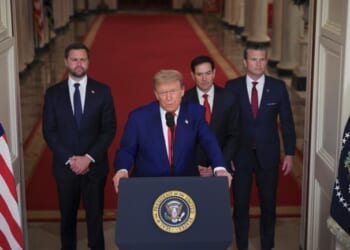

The SBA 8(a) Business Development Program, a long-standing federal initiative to support small businesses owned by “socially and economically disadvantaged” individuals, has come under intense scrutiny. On Jan. 16, 2026, Secretary of War Pete Hegseth announced a major crackdown on the program’s use in Pentagon contracting. He described it as “the oldest DEI program in the federal government” and vowed to take a “sledgehammer” to it, citing concerns over waste, fraud, and deviation from merit-based principles.
Established in 1978 under Section 8(a) of the Small Business Act, the program helps certified small businesses — typically those majority-owned by individuals deemed socially and economically disadvantaged (including certain racial or ethnic groups, tribes, or others meeting SBA criteria) — gain access to federal contracts. Key benefits include sole-source (non-competitive) awards up to certain limits; training, technical assistance, and mentoring; and set-aside or preference in federal procurement to build capacity and competitiveness.
The program’s goal has historically been to level the playing field for underrepresented entrepreneurs, fostering economic inclusion and growing the pool of capable small suppliers to the government, including in defense and other sectors. The Pentagon is the largest user of 8(a) contracts, accounting for a significant portion of the roughly $100 billion in annual small business federal contracting.
In a widely shared social media video, Hegseth argued that while supporting small businesses is “laudable,” the 8(a) program has “morphed into swamp code words for DEI race-based contracting.” He claimed it has become a “breeding ground for fraud,” where many certified firms act as intermediaries: winning sole-source contracts (sometimes worth $100 million or more) without competitive bidding, then subcontracting most or all of the work to larger firms (often called “Beltway Bandits”) while collecting fees of 10-50% for minimal involvement.
Hegseth said the program distracts from the military’s core mission of lethality and readiness. He said taxpayer dollars should build the defense industrial base with mission-aligned businesses, not “line the pockets of beltway fraudsters” or advance “DEI apologists.” Effective immediately, the Department of War is launching a “line-by-line review” of every sole-source 8(a) contract over $20 million (and smaller ones too). The test for continuation: Does the contract make the military more lethal? If not, “it’s gone.”
This move aligns with broader Trump administration efforts since early 2025 to dismantle DEI-related policies across federal agencies, including executive orders eliminating race-based preferences in contracting.
Bruce de Torres, Director of Communications for the American Small Business League, hopes Secretary Hegseth reads “An Open Letter to Sec. Hegseth” by Holly Mathnerd on her Substack, a clear and concise appreciation of the 8(a) program, which, de Torres says, “deserves a patient and mature evaluation of its merits based on facts, not comedian Gallagher’s sledgehammer splattering a watermelon all over the front row.”
For legitimate 8(a)-certified small businesses — especially those in defense, IT, logistics, or professional services—this review could have mixed effects. Potential positives include the fact that if fraud and pass-through schemes are curtailed, genuine performers may face less unfair competition from shell-like entities. Contracts could shift toward merit, performance, and actual capability, potentially benefiting efficient small firms that do the work themselves.
But it comes with some potential challenges. Sole-source opportunities (a major draw for many 8(a) participants) could shrink or disappear for non-competitive awards, forcing more businesses into open bidding where they compete against larger, established players. This might reduce access for disadvantaged-owned firms, particularly in defense-heavy sectors.
It may also carry implications for the broader small business ecosystem. The Pentagon’s actions (as the biggest 8(a) spender) could set precedents for other agencies. Combined with ongoing SBA audits (requiring thousands of firms to submit years of financial records) and related investigations by Treasury and Justice, the program faces heightened compliance burdens and potential reforms.
Small business owners in the 8(a) program should monitor updates closely, review their subcontracting practices, and prepare for possible shifts toward competitive procurements. While the administration frames this as rooting out waste to prioritize lethality and efficiency, critics may view it as reducing vital support for underrepresented entrepreneurs. Small businesses navigating federal opportunities may need to adapt to a more scrutinized, performance-driven environment in an era that will reward those who use taxpayer dollars to grow their businesses, not enrich themselves.
Like what you’re reading? There’s a lot more where that came from.
PJ Media VIP members get deeper dives, exclusive columns, and commentary you won’t see on the public side. Best of all, you can get 60% off right now with the promo code FIGHT.
Sign up for PJ Media VIP and help us keep telling the stories that matter.