Yesterday was another chaotic day in markets.
The situation in the Middle East once again deteriorated. Iran’s capital Tehran was struck by missiles all day. It won’t be exporting oil anytime soon. And the threat of another refugee crisis looms.
Iran and its proxy forces struck back, hitting oil infrastructure and U.S. bases throughout the Gulf region, though at a slower pace than the first days of the war.
Qatar shut down much of its natural gas production and liquefaction. Natural gas prices absolutely soared in Europe.
Due to the lack of natural gas, Qatar was forced to shut down its aluminum smelting. They called it a “controlled” shutdown.
But now that the smelter is shut down, it will take 6-12 months to restart. Our friend Byron King explains, “When you cool off the refining pots, you wind up with useless pots filled with unusable solid alumina-gunk. Gonna have to rebuild the facility once things settle out.“
Qatar is responsible for producing around 9% of global aluminium. That’s going to spike metal prices quite a bit on its own.
Inflationary signals are popping up everywhere. And yet…
Gold and Silver Smashed
Despite the chaos and supply disruptions, gold and silver sagged yesterday. Silver dropped 9% at one point, while gold fell 5% from its daily high.
Both metals have rebounded since, with gold trading at $5,155 and silver at $84.26 as I write at 1:00 pm ET.
Miners fell yesterday, but are still near all-time highs. The GDX gold miner ETF is only down 11% from its peak, which was just reached on Monday March 2nd. Two whole days ago.
The SILJ silver miner ETF is only down about 12% from its all-time high, which was reached back on January 26.
So once we put things in perspective, it’s really not that bad.
Still, the dip in precious metals during pure chaos seemed strange. But I think the explanation is simple. The entire market sold off yesterday, and gold and silver were innocent bystanders.
Hedge funds and quant traders had built large positions in precious metals and miners, and quickly sold them off as markets sank. Jane Street, a huge quantitative (algorithmic) trading fund is likely a big part of the problem. They had built a gigantic position in the SLV physical silver ETF.
The following warning was posted by our friends over at ZeroHedge back on Feb 26.
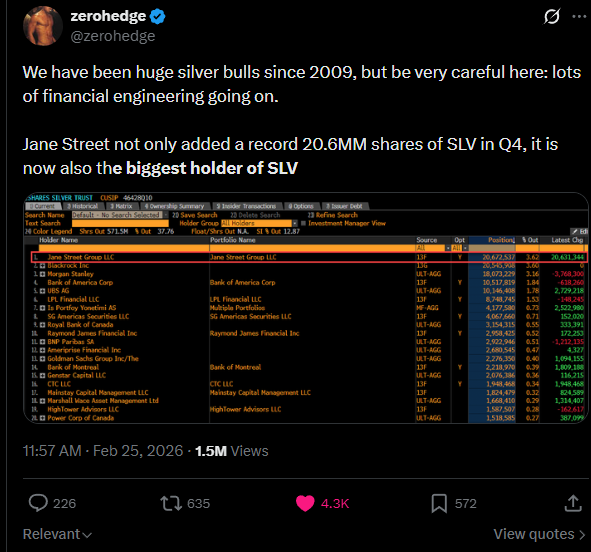
Source: ZeroHedge on X
That’s ok. These funds were only in precious metals for a quick trade.
I’m still sitting tight in my precious metals positions. The world is moving into a new, even more chaotic period, and owning precious metals will remain a key way to protect our portfolios.
The King of Safe Havens
Even before war broke out with Iran, money was flooding into gold ETFs at a record pace. See the chart below, courtesy of Bank of America Research.
It shows that in 2026 investors are on track to pump $148 billion into physical gold ETFs:
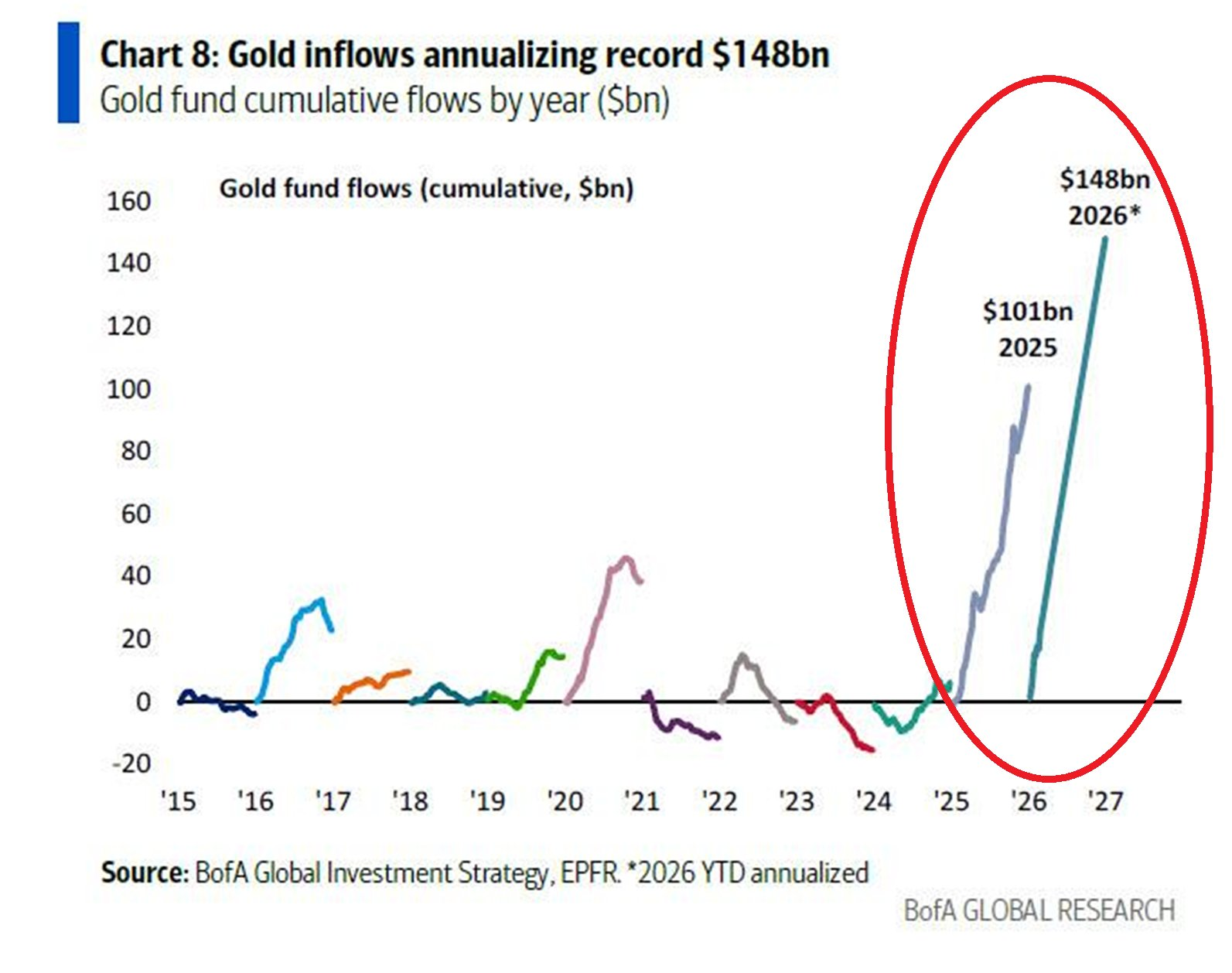
That’s almost 50% higher than 2025, which was also a record year. Look at the scale of 2025 and 2026 compared to prior years.
Investors ignored precious metals for so long, and are now making up for lost time.
Gold Allocations Still Low
Billionaire hedge fund legend Ray Dalio says investors should have 15-20% allocations to gold. Our distinguished colleague Jim Rickards says at least 10%.
Morgan Stanley analysts say 20% is reasonable these days. And shockingly, Bank of America strategists say 30% is not unreasonable.
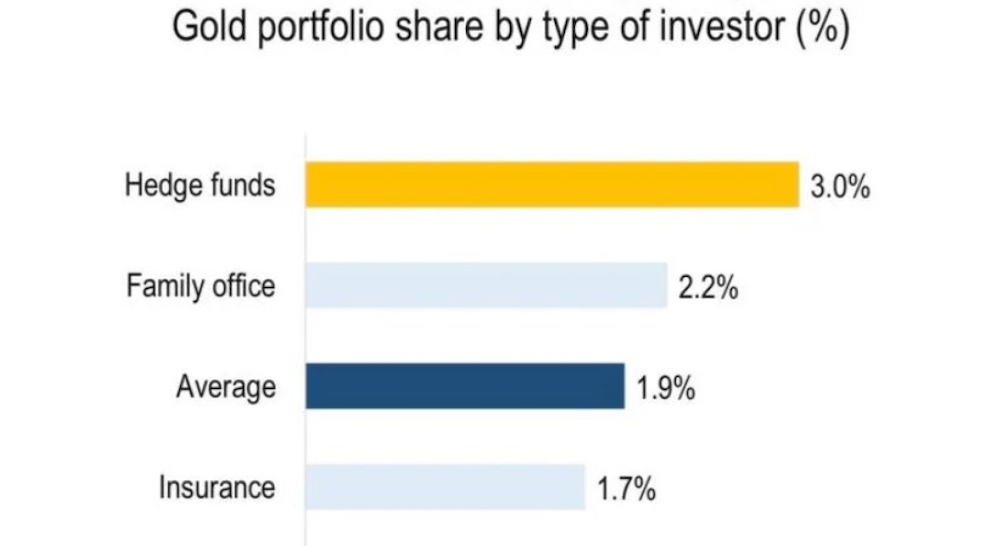
Yet investors own far less gold than that. The chart below tells the story:
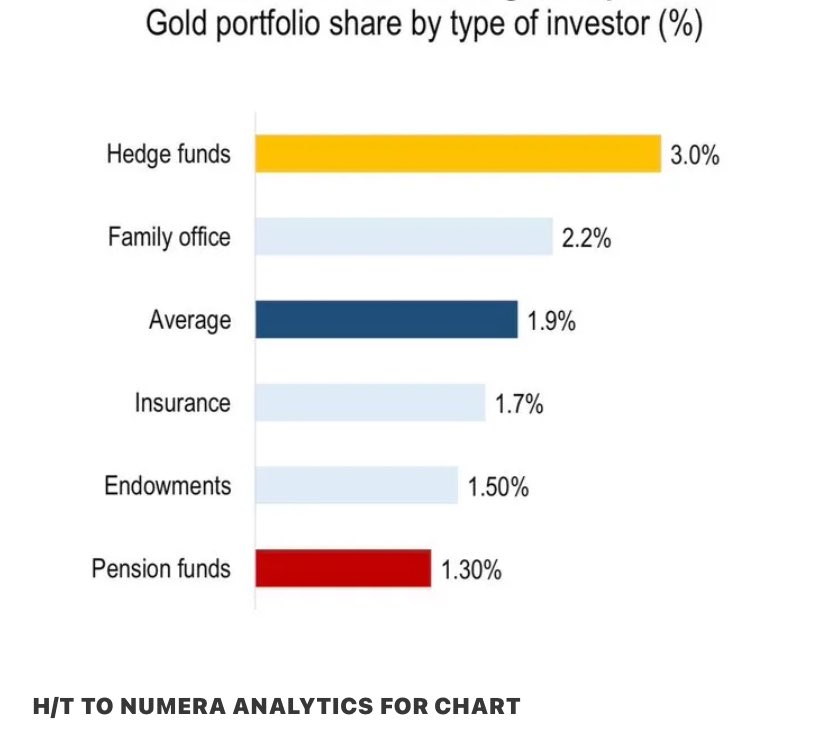
The vast majority of investors and firms out there don’t have nearly enough exposure to gold.
And what about silver? It’s harder to find data on allocations to silver, but my guess is that it’s far below 1% for the average investor. And institutions have virtually none.
So yes, there’s still plenty of room for gold, silver, and miners to run higher. Up until recently, this bull market has been driven by central bank buying. Private investors are just now getting in the game.
This new war, combined with tariff uncertainty, will almost certainly spike the American budget deficit.
Money will be printed. Stimulus checks will be handed out. It’s even possible we see export controls on oil to keep prices lower at home.
The Federal Reserve will likely lower rates in the near future, and ramp up QE.
With a new war in the Middle East, and the prospect of severe supply disruptions, this is not the time to sell gold, silver, or miners.