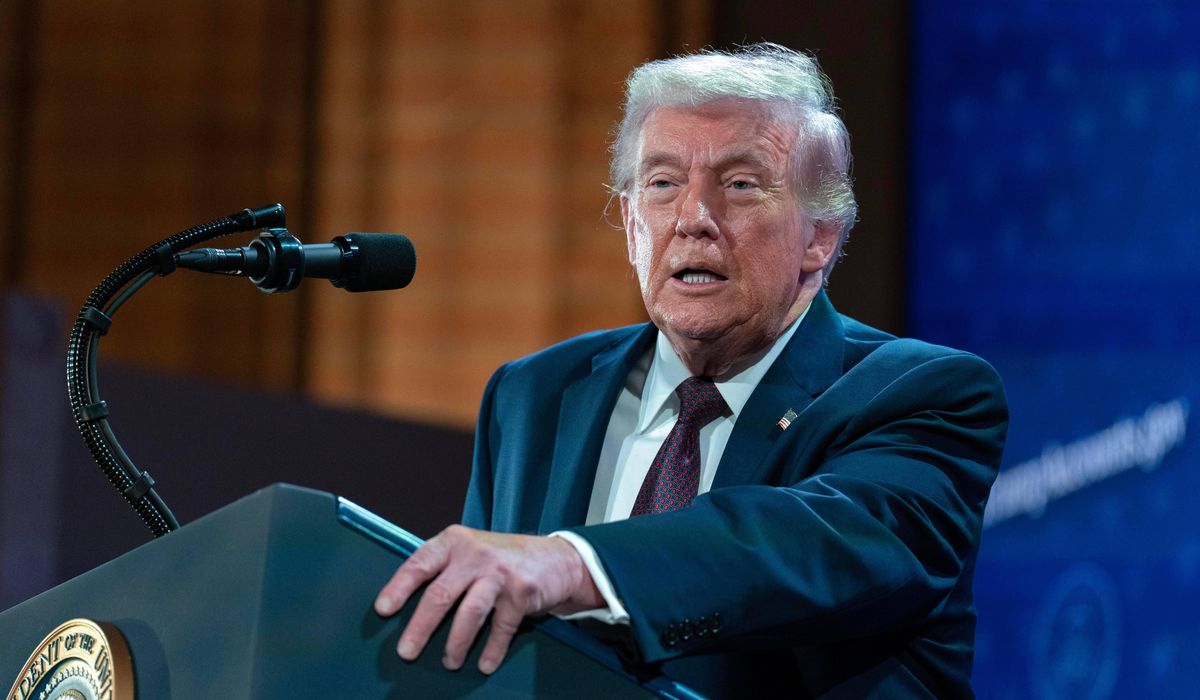
President Trump said Friday he is nominating Kevin Warsh as chairman of the Federal Reserve, calling him reliable and straight out of “central casting.”
Mr. Warsh, 55, is familiar with the central bank, having served on its board of governors from 2006 to 2011.
“I have known Kevin for a long period of time, and have no doubt that he will go down as one of the GREAT Fed Chairmen, maybe the best,” Mr. Trump said.
Mr. Warsh served as the Fed’s liaison to Wall Street during the financial crisis, and his recent calls for “regime change” and lower interest rates at the Fed likely appealed to Mr. Trump.
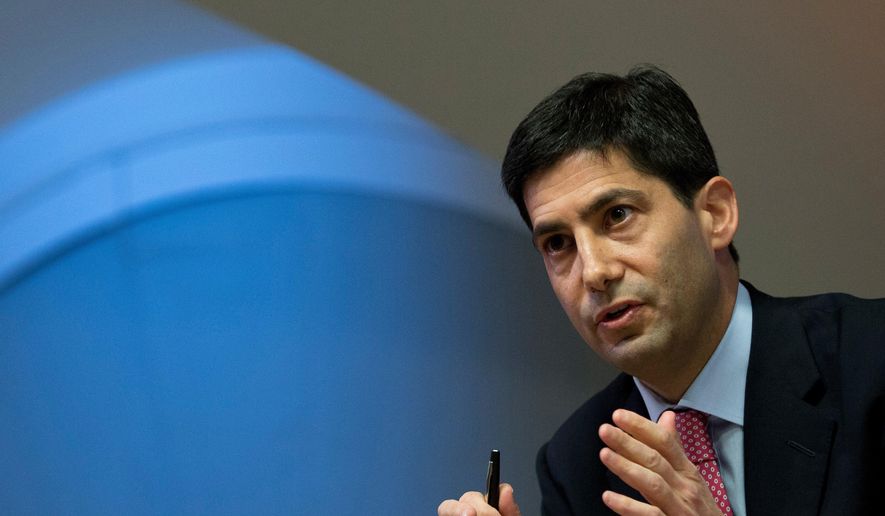
Kevin Warsh speaks to the media …
more >
The Senate must vote to confirm Mr. Warsh as chairman of the Fed, a powerful institution that sets monetary policy and interest rates that impact terms for savings, loans and investments.
Republicans will likely show deference to Mr. Trump’s pick, given Mr. Warsh’s GOP resume and the president’s sway over the party. However, Mr. Warsh could face sharp questions about Fed independence as Mr. Trump lobbies the central bank over policy.
The president wants to reshape the Fed so that it takes a bold approach to cutting interest rates. For months, he’s slammed current Chair Jerome Powell, whose term ends in May, as “too late,” or behind the curve in responding to economic conditions.
Mr. Trump argues his tariff framework did not result in the type of inflation that many economists expected. However, inflation remains above the Fed’s target of 2%, so central bankers are cautious about cutting too aggressively.
The Fed authorized three rate cuts at the end of 2025 to help along a sputtering job market, though it kept rates steady at its January meeting.
Appointed by President George W. Bush, Mr. Warsh was the youngest Fed governor ever when he joined the board of governors at age 35.
Mr. Warsh, who went to Stanford University and Harvard Law School, is the Shepard Family Distinguished Visiting Fellow in Economics at the Hoover Institution and a lecturer at the Stanford Graduate School of Business.
Notably, he is a partner to billionaire Stanley Druckenmiller at the Duquesne Family Office, a high-powered investment firm.
He is married to Jane Lauder Warsh, a wealthy heiress of the Estee Lauder cosmetics company.
Mr. Warsh’s deep resume and Wall Street pedigree speak to why Mr. Trump thinks of him as a “central casting” pick. Perhaps more importantly, Mr. Warsh’s recent views on interest rates align with the president’s.
Mr. Warsh had been more of a hawk during his term as Fed governor, fearing rate-easing would lead to inflation.
He evolved in his thinking, saying lower rates can be paired with deregulation and artificial intelligence to unleash productivity.
Kishore Kulkarni, a distinguished professor of economics at the Metropolitan State University of Denver, said Mr. Warsh had an impressive career and a valid point about lowering rates.
“Interest rates should come down by at least 1% because inflation is stable,” he said.
Mr. Warsh won the Fed nomination after an interview process overseen by Treasury Secretary Scott Bessent, who whittled down a long list of candidates to four finalists.
White House National Economic Council Director Kevin Hassett was considered the front-runner for a period, though Mr. Trump publicly declared he would like to keep him in his current job.
Fed Governor Christopher Waller was on the short list alongside Rick Rieder, a top executive at the BlackRock investment firm.
Mr. Rieder was considered the favorite on betting markets such as Polymarket and Kalshi.
However, Mr. Rieder donated to Democrats in the past, and some conservatives balked at BlackRock’s past embrace of so-called “woke” investing policies, which could have complicated his path to confirmation.
The Senate Banking Committee will schedule a hearing to vet Mr. Warsh and advance him to the full Senate.
Committee Chairman Tim Scott, South Carolina, pledged to lead a “timely” confirmation process.
“As a former Federal Reserve Governor, Kevin has deep knowledge of markets and monetary policy that will be essential in this role,” Mr. Scott said. “Federal Reserve independence remains paramount, and I am confident Kevin will work to instill confidence and credibility in the Fed’s monetary policy.”
There is a potential hurdle.
Sen. Thom Tillis, North Carolina Republican, has said he will put a hold on any nominees to the Fed until the Department of Justice resolves a criminal inquiry into cost overruns at a Fed renovation project in Washington.
“The Fed noms are not going to change until the investigation or potential indictment of Chair Powell is completed,” Mr. Tillis told Capitol Hill reporters. “The DOJ has got to decide whether or not to lift those holds. It gets lifted the day that case is adjudicated or withdrawn. That’s their choice.”
Mr. Tillis confirmed on social media Friday that his position had not changed and he would oppose the chairman nomination until the Powell inquiry is resolved.
• Lindsey McPherson contributed to this report.