This story may have slipped under the radar with all of my Christmas shopping and, in the spirit of the new holiday season, my last-minute attempts to get up to speed on Sharia law as it will be instituted soon enough in the West.
According to the news website Campus Reform (CR), publicly funded Kent State University has decided to ban white students from solo auditions to become a part of the school’s Vocal Intensity a cappella group. Does this sound too on the nose that it gets you angry until you learn the full story? I mean, there has to be something missing here. It can’t be that in 2025, a state university in Ohio would ban white students from a student program solely on the basis of race, right?
Literally a gross violation of their civil rights. https://t.co/cSnjSF3EQ1
— James Woods (@RealJamesWoods) December 7, 2025
Campus Reform, which says it has the emails to back the claims up, is reporting that the school-sanctioned singing group “restricted certain solos strictly to ‘people of color’ over ‘cultural appropriation’ concerns.” Apparently, a white student was allegedly disciplined for the mere act of objecting to the racially charged selection policy.
The report reveals that a three-year member of the a cappella group named Mark Phillips contacted a board member to ask how the school could justify a discriminatory process like this and still think it was adhering to its own anti-discrimination policies. His point was that the restrictions appear to be “‘at odds with equal opportunity’ in his message to the executive board.”
He went on, “I fully respect concerns about authenticity, but I also believe that whoever gives the strongest performance should be given the chance… Art, music, and culture are meant to be shared and celebrated, not gatekept.”
Naturally, instead of explaining itself and engaging in fair and open dialogue, the board then accused Phillips of violating the university’s anti-discrimination policy. It put him and his membership in the group on probation, and then it made arrangements to hold a disciplinary hearing that put the burden on him to “plead his case” before the entire group.
According to screenshots of some of the email exchanges that Campus Reform shared on its website, the board told Phillips, “an executive motion has been made for a full group discussion regarding your permanent removal from the group.”
Upon review of the alleged emails, it appears the deck was stacked against Phillips. There appears to be no presumption of innocence or such language in the communications that were shared. But it was made clear that Phillips was facing expulsion from the group if he couldn’t change the board’s collective mind.
Kent State’s own guidelines prohibit discrimination, yet the a cappella group followed a process that included a closed board hearing, the potential for permanent removal from the group, and the potential for suspension.
CR reported that the “board later reaffirmed its position, confirming that the solos would remain restricted to black students unless overturned by a vote.”
Phillips then decided not to follow the process to its apparently inevitable conclusion and resigned from the group. He framed the process as a “performative ambush designed as a hearing.” Afterward, Phillips said he was penalized simply for opposing discriminatory behaviors.
“My only crime was advocating for equality for everyone, regardless of skin color. I raised a valid concern, discussed the definition of discrimination and held a mirror up to what they were doing. In their eyes, anti-white discrimination is okay, but challenging that precedent isn’t,” he told CR.
On the official Kent State website, Vocal Intensity is described as “a co-ed acapella group created in 2015. We strive to provide an inclusive environment for all individuals who have a passion for music.”
According to Vocal Intensity’s current constitution, it “is subject, as a registered student organization, to the rules, regulations, and policies of Kent State University and the laws of the State of Ohio. The rules, regulations, and policies of Kent State University shall hold precedence over any and all rules, regulations, and policies applying to Vocal Intensity, including those of national organizations with which Vocal Intensity may be associated.”
The university’s president, Todd Diacon, has been silent on the whole situation, leaving the casual observer to assume he either endorses the double standards at play or he lacks the backbone to stand up for consistent application of his university’s own guidelines.
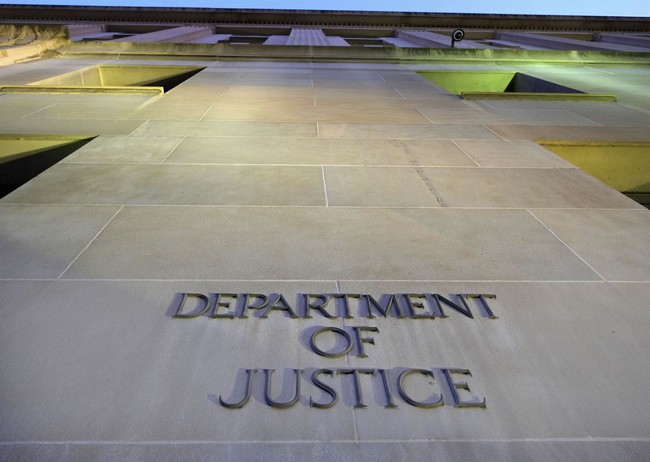
While there have been calls for a Department of Justice (DOJ) investigation of this matter, look, and you will not find any evidence that the DOJ or Assistant Attorney General Harmeet Dhillon has launched an official civil rights investigation into Kent State over this — at least for now.
Even though this is a story about just one campus group at just one state school in Ohio, this is how the culture rots. It’s just too easy to overlook it as “small potatoes” and let go. But if the DOJ were to key in on this situation, it would send a message that no matter who you are, you are not above the actual law, and discrimination won’t stand.
It’s the Christmas season, and there’s no better way to tell someone what they mean to you than giving them the gift of enlightenment! PJ Media VIP memberships are on sale! Get 60% off of an annual VIP, VIP Gold, or VIP Platinum membership! PJ Media’s VIP memberships give you the best way to arm yourself with some great arguments if you find yourself in a friendly debate with your leftist coworker or brother-in-law this holiday season. Join the fight! Use promo code FIGHT to get 60% off your VIP membership!