
During my research for my column yesterday on the potential future leaders of Iran, I encountered one of the dangers of X: sometimes, you see one or two posts which make reasonable points. For example: Iranian women should be free. Who could disagree? I might repost that.
Then you read more of this person’s posts, read the bio, dig further into the poster’s background, and realize there’s much more here than a call for freedom.
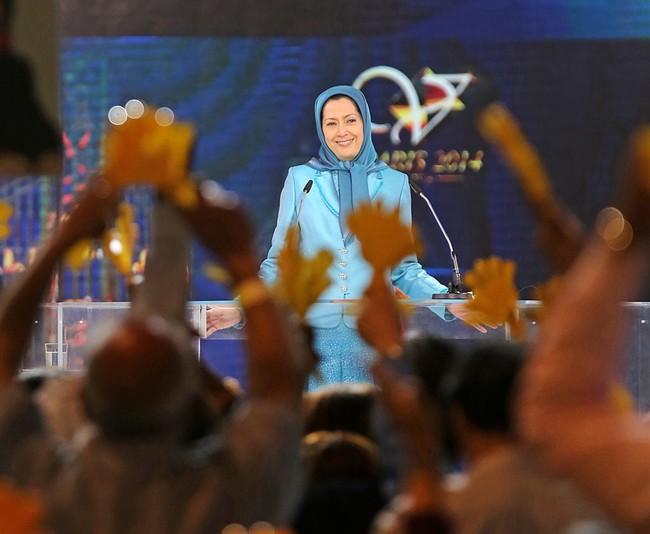
Let me introduce you to Maryam Rajavi, the president-elect of the National Council of Resistance of Iran (NCRI). She has positioned herself as a contender for leadership in a new Iran, free of mullah rule.
Background
Born in 1953, she grew up in a middle-class family in Iran. She graduated from Sharif University of Technology with a metallurgical engineering degree in the 1970s. During her university days, she protested the Shah’s dictatorship by joining the student movement People’s Mojahedin Organization of Iran, or PMOI. It’s also known as the Mujahedin-e Khalq, or MEK.
Her family was involved in political protest, and she experienced tragedies that Americans today cannot imagine. The shah’s secret police, SAVAK, killed her older sister in 1975. The shah also held her brother as a political prisoner.
MEK
It’s understandable that she would protest any regime that did this to her family. MEK, though, is an organization that is pro-Marxist and has a violent history. After forming in 1965 to protest the Shah, the group facilitated attacks that wound up killing Americans, both military and civilian, working in Iran in the late 1970s. The MEK worked with other groups to help bring about the Iranian Revolution – and some U.S. analysts say they supported the taking of the American hostages from the embassy in 1979.
In 1980, Maryam ran for parliament in Iran, but lost. The Ayatollah Khomeini’s regime turned against MEK, seeing them as potential political opponents, and expressing disgust with the MEK’s ideology. (For all their violence, MEK believed in women’s rights, which didn’t go over well with the clerics.) The regime executed Maryam’s other sister while she was pregnant. MEK members fled Iran to France and Albania in 1981. Before they left, the MEK established the NCRI as their “parliament in exile.”
Continued Controversy
Critics accuse the MEK of being a cult, and their actions don’t dispel that image. In the 1980s, MEK leaders ordered couples to divorce and send their children into foster care. In a 2005 interview with the New York Times, Rajavi said of the order: “Our members can’t have, because of the circumstances, the normal marital status in life that everyone else in the world can enjoy.”
Further, the group sided with Iraq, Iran’s enemy, in the Iran-Iraq War. After that war ended, the MEK kept a base in Iraq and used it to launch attacks against Iran and elsewhere. The MEK’s original leader, Maryam’s husband Massoud Rajavi, was last seen in Iraq in 2003 prior to the American invasion.
Terrorist Designation
The MEK’s violent attacks led to the United States, United Kingdom, and the European Union to declare the MEK a foreign terrorist organization. This designation lasted in the United States from 1997 to 2012; it was lifted earlier in Europe due to the MEK’s lobbying and insistence they had renounced violence. The group left its Iraq base in 2013 and settled in Albania.
Today
Maryam is based in France and has spent the intervening years leading the NCRI. She gives speeches and attends international panels on women’s rights and freedom for Iran. She issued a message on March 1, after the death of Ayatollah Khamenei, with the following declaration:
Based on the Ten-Point Plan for transferring sovereignty to the people of Iran, the National Council of Resistance of Iran (NCRI) has announced the formation of a provisional government. The precedent of announcing a provisional government dates back to October 1981.
The NCRI’s 10-point plan covers topics that sound fine to anyone educated in Western common law: rejection of clerical rule; freedom of speech, assembly, political parties, the press and internet; removing censorship; freedom of religion, and women’s rights. In addition, specific points cover the abolishment of Sharia law and creation of an independent judiciary, autonomy for Iranian Kurdistan, and a non-nuclear Iran.
Conclusion
It all sounds wonderful – but will the NCRI have such completely altruistic goals? Per the non-profit group National Union for Democracy in Iran, no. Per NUFDI, the claim that MEK would be just a transitional government, returning power to the people within six months, is misleading.
“However, under her plan, this so-called transitional government would oversee the formation of a Constituent Assembly. While the MEK would technically be dissolved, it would still maintain control through the assembly, ensuring its continued grip on power.”
We must wait and see what will happen in Iran. Will the next government to come truly be for the people, by the people, and of the people of Iran?
Learn more about the stories behind the stories. Join PJ Media VIP with the code FIGHT for 60% off, and get more: in-depth reporting, commenting rights, and an ad-free experience.