
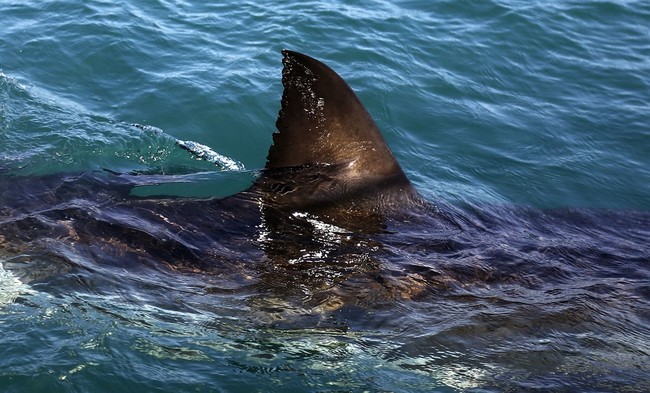
Researchers found cocaine in the blood of sharks near the Bahamas. Biologist Natascha Wosnick led an international team of researchers that tested 85 sharks around Eleuthera Island.
Lead researcher on the study Natascha Wosnick told Science News that the substances are the result of human pollution.
“We’re talking about a very remote island in the Bahamas,” Wosnick, a biologist with the Federal University of Paraná in Brazil, told the outlet. “It’s mostly because people are going there, peeing in the water and dumping their sewage in the water.”
Nearly one-third carried traces of caffeine and common painkillers such as acetaminophen and diclofenac. One baby lemon shark tested positive for cocaine. The team believes the animal likely bit into a floating package dumped at sea by traffickers.
“While the detection of cocaine—an illicit substance—tends to draw immediate attention, the widespread presence of caffeine and pharmaceuticals in the blood of many analyzed sharks is equally alarming,” Wosnick told CBS News. “These are legal substances, routinely consumed and often overlooked, yet their environmental footprint is clearly detectable. This underscores the need to critically reassess even our most normalized habits.”
That discovery grabs attention, but the real story runs deeper. Drug trafficking routes cut through Caribbean waters on the way north. When smugglers need to move fast or avoid capture, they dump cargo. Sharks investigate, swallowing what they find, but a decision made in seconds doesn’t stay contained; it moves through the water, into wildlife, and across the food chain.
The sharks were captured around popular diving and tourist cruise spots, and the suggestion is that untreated wastewater from boats may be contributing to these results—as well as greater wastewater from urban development and tourism more generally.
It’s an issue that experts are increasingly worried about. In a study published last year, cruise ships visiting the Arctic—essentially moving, floating mini-cities—were found to be releasing antibiotics, pharmaceuticals, and other substances into the water.
More sharks have tested positive for several substances, pointing to another problem tied to human activity. Wastewater from coastal towns and tourist areas carries traces of everyday drugs into the ocean. Those chemicals don’t disappear; sharks absorb them through their gills or by eating contaminated prey. The study marks the first recorded detection of caffeine in any shark species and the first confirmed case of cocaine exposure in sharks swimming in Bahamian waters.
Marine biologist Tracy Fanara has studied similar contamination and has warned how closely human activity now overlaps with marine ecosystems. Tourism, pharmaceutical waste, and trafficking routes all converge in the same waters, resulting in wildlife carrying chemical traces tied to both daily habits and criminal networks.
“What makes this study notable is not just the detection of pharmaceuticals and cocaine in nearshore sharks, but the associated shifts in metabolic markers,” says Tracy Fanara, an oceanographer at the University of Florida in Gainesville, who was not involved with the study. While the researchers couldn’t isolate the effects of individual drugs, contaminated sharks showed changes in markers tied to stress and metabolism.
The risks go beyond headlines; even in small amounts, these substances can affect how sharks behave. Changes in hunting patterns, rest cycles, and interaction with other species could follow. Scientists have raised concerns about long-term effects on immune systems and migration. When apex predators shift, the balance beneath them shifts, too. Coral reefs, fish populations, and the broader ecosystems depend on that balance.
The bigger picture quickly comes into focus. Drug trafficking decisions made far from these waters don’t stay in one place. Weak controls on pharmaceutical waste add another layer. Together, they create outcomes no one involved planned for, yet the effects are real and measurable.
The story also connects back to policy. The flow of drugs through international routes, the handling of wastewater, and the enforcement of environmental safeguards all intersect here. Each gap creates an opening, and each opening carries consequences that move far beyond their starting point.
President Donald Trump’s administration has continued to push for stronger interdiction efforts and tighter controls aimed at limiting both trafficking and environmental spillover. Those efforts target the source while working to reduce downstream damage. It’s a simple goal: stop the flow before it spreads further.
Studies like these cut through abstraction; they show how decisions made in one place show up somewhere else, often in ways nobody expects. Sharks swimming off Eleuthera Island didn’t create this problem; they reflect it.
It’s not a complicated lesson: actions carry consequences, and those consequences rarely stay contained. When policies fall short, the effects don’t disappear; they move, spread, and eventually surface in places that force people to pay attention.
After reading this, however, I can’t wait to see Cocaine Bear 2, the Great White Reckoning
If you want more straight reporting that cuts through noise and focuses on what actually affects people, consider joining PJ Media VIP. Use promo code FIGHT to save 60% today.