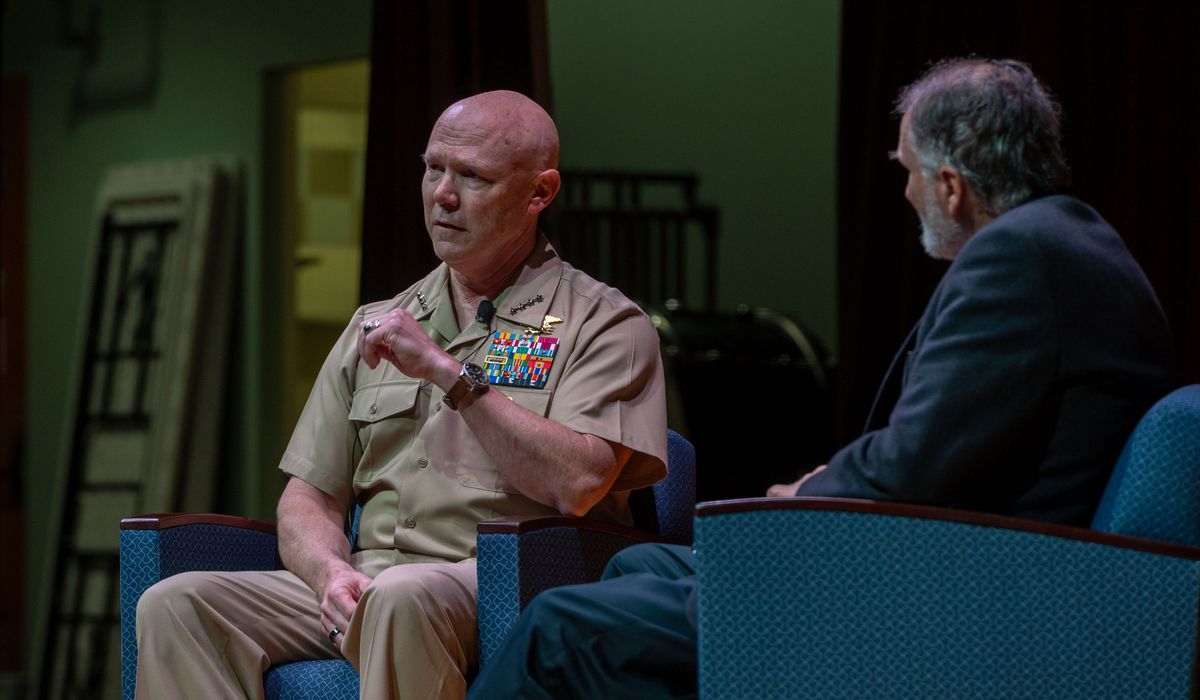
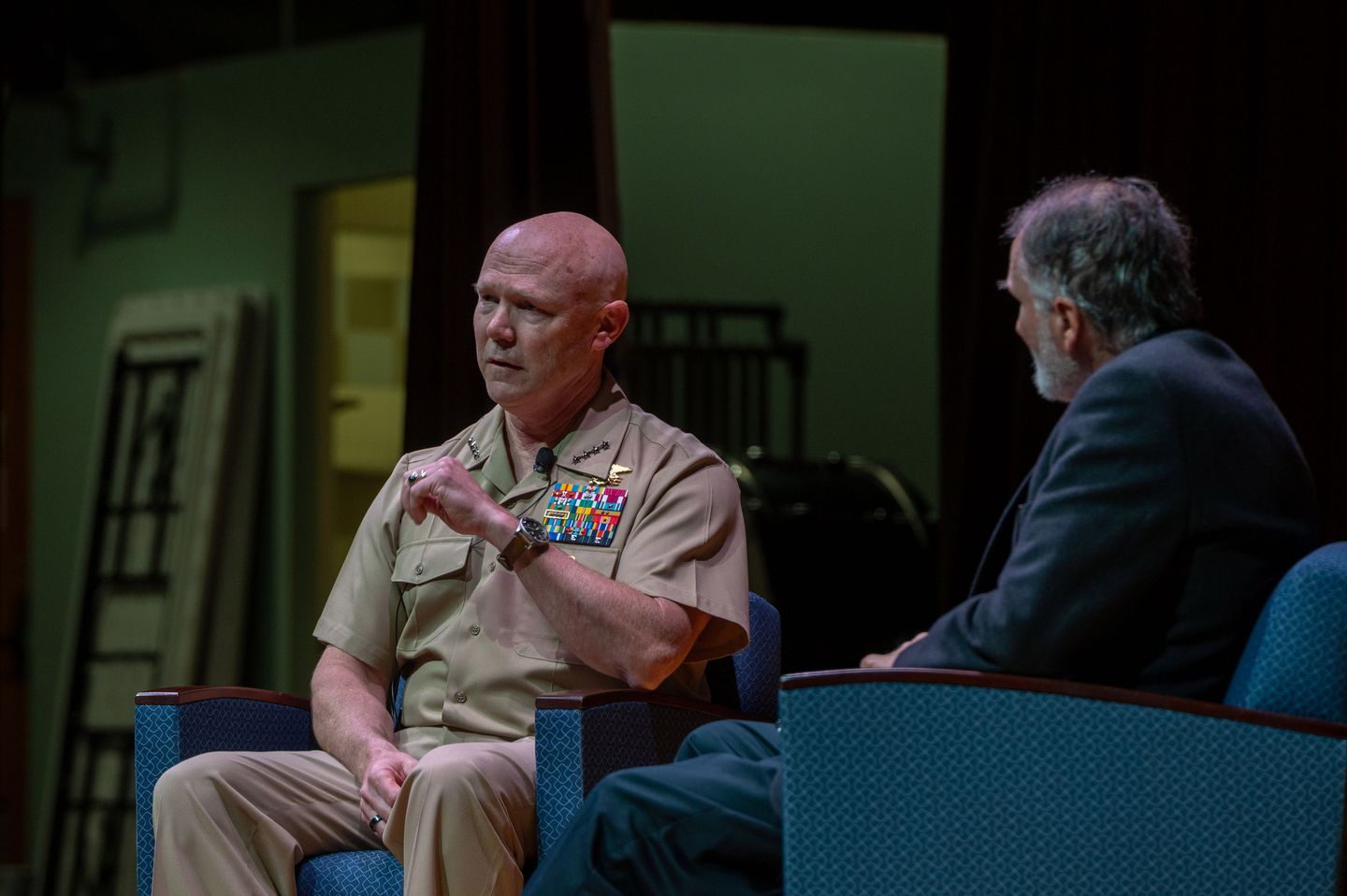
The commander of the U.S. Special Operations Command is set to meet with Congressional oversight committee leadership on Thursday as pressure builds over the military operations in the Caribbean Sea against suspected drug traffickers.
Lawmakers from both parties expect to hear from Adm. Frank “Mitch” Bradley what “rules of engagement” were issued for strikes on alleged drug boats and if any of the actions violated international laws.
“To me, it just demonstrates kind of a naivete of what we’re up against,” Sen. John Cornyn, Texas Republican, told The Washington Times. “Let’s face it, for forever, we’ve sort of accepted the cartel moving these drugs into the United States as normal, and it’s not normal.”
Some lawmakers have accused Defense Secretary Pete Hegseth of war crimes after a second military strike on an alleged drug boat in September reportedly killed survivors after the boat was rendered inoperable.
It’s unclear from a tactical video feed of the strike initially released by the government if the people in the boat attempted to continue their task, potentially posing a continued threat.
President Trump has said he supports releasing the entire tactical video of the strike itself.
Republicans on the Senate Armed Services Committee are mixed in their reactions to the accusations against Mr. Hegseth and his department.
Mr. Hegseth said that Adm. Bradley, who took charge of the U.S. Special Operations Command just two months ago, made the final decision during the operations in question.
He added that he supports Adm. Bradley “100%” in a post on X.
“I stand by him and the combat decisions he has made — on the September 2 mission and all others since,” Mr. Hegseth said in his post.
Members of the military community have responded quickly with jokes and sarcasm suggesting Mr. Hegseth’s post is more a blaming of Adm. Bradley than support for him.
Regardless of the culture interpretations, Congressional probes of these strikes will involve Adm. Bradley directly and not Mr. Hegseth, as members of the committee said he hasn’t been scheduled for a hearing to address the strikes.
The specific details aren’t as much of a concern to Mr. Cornyn.
“I’m not too concerned about the protocols and procedures. I’m more concerned with the result,” Mr. Cornyn said.
Sen. Markwayne Mullin said that the actions by the committee are normal oversight actions.
Mr. Mullin sees it as a straightforward matter, because of the designation of drug cartels as terrorist organizations by the White House and subsequently the State Department.
“We’ve already been briefed on the program,” Mr. Mullin told The Times. “The committee has said very clearly, we don’t have a problem with a program as long as they’re following the same rules that we’ve used in the past.”
The Geneva Conventions, which the U.S. has signed, does have a section concerning “shipwrecked persons.”
It describes those that have been shipwrecked from a boat or airplane, from any type of damage, as non-combatants. Prior military manuals have gone on to say that “it is immaterial whether the peril was the result of enemy action or nonmilitary causes.”
But as soon as someone might take a “hostile action,” that person would lose that non-combatant status.
It’s a scenario that’s routinely discussed at the U.S. Naval War College, part of the Navy’s professional education program.
The law was tested in a British war-crime trial in 1945 over a German U-boat shot and threw grenades at the survivors of a sinking ship, a case reviewed as part of the college’s ethics curriculum.
Three of the stranded sailors survived and testified in what’s known as the Peleus War Crimes Trial.
The five German submariners on trial were all found guilty of war crimes for their roles in firing on the survivors; three were executed and two sentenced to prison.
Democrats aren’t satisfied with the justification that the White House and Pentagon have given thus far for why a second strike against the alleged drug boat took place.
Neither are some Republicans, who want Adm. Bradley to tell them exactly what happened and what the rules of engagement (ROE) were during the strike. That number include Reps. Mike Rogers, Alabama Republican and chairman of the House Armed Services Committee, and Mike McCaul, Texas Republican and senior member of the House Foreign Relations Committee.
Sen. Mark Kelly, who has had frequent harsh exchanges with Mr. Hegseth, said he expects Mr. Hegseth may still be responsible for the fallout based on Adm. Bradley’s description of events to committee leadership.
“I’m concerned because just a month before you have the Secretary of Defense on a stage basically saying ‘To the hell with the ROE,’” Mr. Kelly told The Times. “We are not Russians, or Iraqis, we’re the United States of America. We’re supposed to take this stuff very seriously. We’re supposed to be moral, ethical and methodical.”
Mr. Kelly went on to say that in his understanding “the rules at sea are pretty straightforward,” describing that while follow-up strikes on targets were not uncommon during land operations in Afghanistan, the law of war isn’t the same on the ocean.
“In the DOD manual on this, I think they give one example of an unlawful order,” Mr. Kelly said. “It’s this. I mean, Pete Hegseth managed to find the quintessential example of what an illegal order is.”