
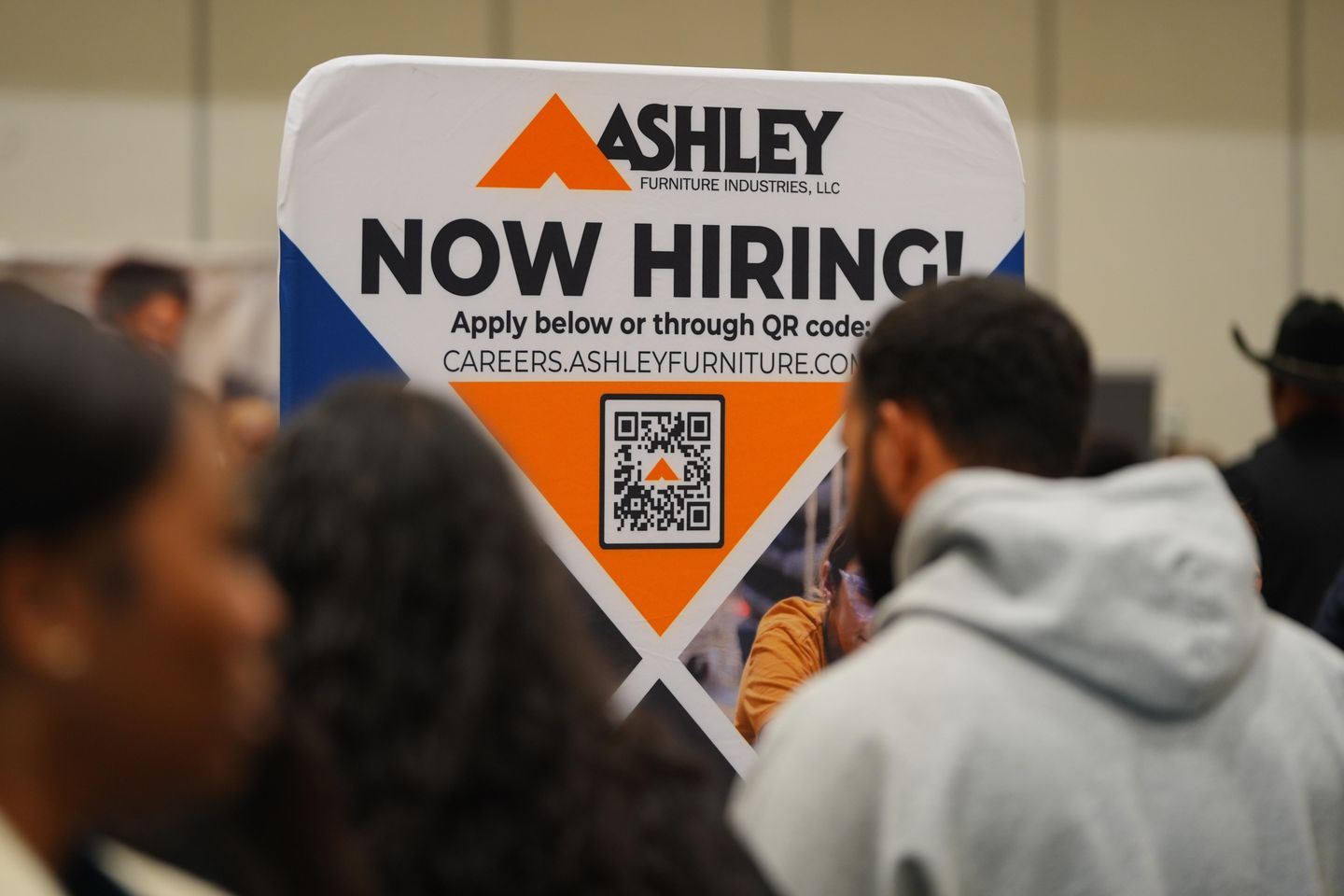
The U.S. job market rebounded in March as employers added 178,000 jobs, far surpassing expectations.
The jobless rate also ticked down slightly to 4.3% in the monthly jobs report issued Friday by the U.S. Bureau of Labor Statistics.
Nonfarm payrolls were expected to increase by just 59,000 in March, and the unemployment rate was expected to hold at 4.4%, according to the Dow Jones consensus estimate.
The job gains were seen in health care, warehousing, construction and transportation, but federal government employment continued to decline.
Health care took credit for a significant amount of growth, adding 76,000 jobs in March, as 35,000 returned from a strike at health care provider Kaiser Permanente in February. The industry added an average of 29,000 jobs per month over the past year, reflecting strong gains in March.
Construction increased by 26,000, while transportation and warehousing added 21,000 jobs, down by 139,000 since reaching a peak in February 2025.
Federal government employment continued to decline, losing 18,000. Since reaching a peak in October 2024, federal government employment is down by 355,000, or 11.8 percent.
Payroll services ADP reported Wednesday that private payrolls grew by 62,000 last month, slightly above expectations, though nearly all the growth came from health care, which added 58,000 jobs.
February was rocked by the health care strike and severe winter weather, prompting an optimistic outlook ahead of the March jobs report.
Jobs were lost in February, marking the third time in the past five months that payrolls declined. The U.S. economy lost 92,000 jobs in February 2026 — shattering the over 50,000 consensus estimate, and marking the fourth monthly job loss in nine months.
Average hourly earnings, however, rose 0.4% for in February and 3.8% from a year prior.
March saw wages rise less than expected, as average hourly earnings were up just 0.2% for the month and 3.5% from last year.
The last 48 days have been marred by the ongoing partial shutdown of the Department of Homeland Security, causing employees to miss paychecks and over 500 Transportation Security Administration agents to call it quits.
The Iran war, beginning Feb. 28, has raised energy prices, adding costs across industries and straining Americans’ pocketbooks at the pump.
A preliminary benchmark revision showed 911,000 fewer jobs were created from April 2024 to March 2025 than originally estimated by the U.S. Bureau of Labor Statistics — meaning the jobs picture was weaker than it looked.
And yet, applications for unemployment benefits fell from 211,000 to 202,000, the Labor Department reported Thursday.
The U.S. stock market is closed Friday in observance of Good Friday.