A 17-year-old boy lay dead in the street on Chicago’s Northwest Side. Police found him around 12:50 a.m. in the 6700 block of West Grand Avenue in the Montclare neighborhood.
Passersby came across the boy lying in the street in the 6700 block of West Grand Avenue at around 12:49 a.m. and flagged down a patrol car, believing he had been struck by a vehicle. Officers who responded initially shared that assessment, but a subsequent investigation determined he had been shot.
Surveillance footage pulled by officers in the local district’s surveillance room showed a gray Volkswagen SUV traveling north on Normandy Avenue, with a gunman firing from the back seat, according to preliminary information. No one called 911 to report gunfire in the area.
The boy, shot in the chest and arm, was transported to Loyola University Medical Center, where he was pronounced dead.
Nobody called 911. Police only learned about the body after someone finally reported an unresponsive male lying in the street.
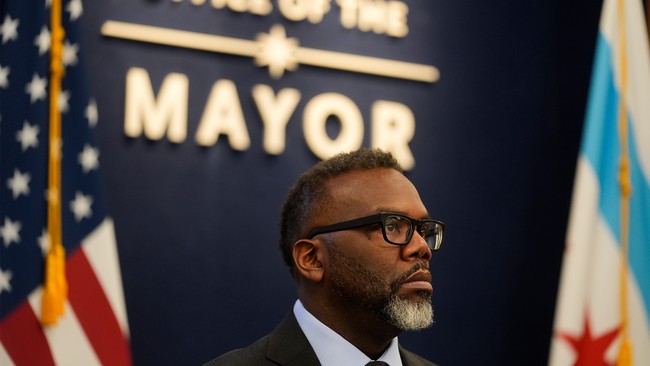
The silence surrounding the shooting didn’t happen in a vacuum. Chicago doesn’t have ShotSpotter, the gunshot detection system that would alert police within seconds. Chicago Mayor Brandon Johnson canceled the contract in 2024 and has held that line ever since.
Moving forward, the city of Chicago will deploy its resources on the most effective strategies and tactics proven to accelerate the current downward trend in violent crime,” according to a statement released by the mayor’s office. “Doing this work, in consultation with community, violence prevention organizations, and law enforcement, provides a pathway to a better, stronger, safer Chicago for all.”
After the contract expires Friday, “law enforcement and other community safety stakeholders will assess tools and programs that effectively increase both safety and trust and issue recommendations to that effect,” according to the mayor’s office.
Without it, shootings go unnoticed longer, and response times stretch. Neighbors who once relied on immediate alerts now wait, and sometimes they don’t even know a shooting happened until it’s too late.
Drive-by shootings haven’t slowed. The tools that helped police respond faster are gone, even after officers warned about the risks. Some city council members pushed to keep the system, but that didn’t matter. The decision stood, and now families deal with the result: a teenager dies in the street, and the city doesn’t even know about it right away.
It’s a familiar pattern: shots are fired, nobody calls 911, minutes pass, and then more minutes. The first moments, the ones that decide whether somebody lives or dies, slip away. Police still respond, but it’s many times too late.
Chicago residents see what’s happening; they live it. A system that once detected gunfire in seconds has been turned off, replaced by silence. Sadly, that silence reaches leadership, who treat it as acceptable.
Johnson leads a city where violence keeps claiming young lives, and one of the few tools designed to speed response time is gone. Removing ShotSpotter didn’t reduce shootings; it reduced awareness and delayed response.
What stands out to me is the absence of a 911 call, but it fits into a larger problem. When people stop calling 911 and systems stop alerting, the entire chain breaks. Information stalls while help doesn’t arrive, and accountability fades into the darkness of night.
A mayor sets priorities, choices that shape how a city responds when something goes wrong. Turning off a detection system and watching response gaps widen sends a message. It tells people faster response is no longer a priority.
Families on West Grand Avenue don’t need a policy briefing to understand that. They saw what happened: a young life ended in the street, and nobody stepped in fast enough to change the outcome.
The loss of this teenager isn’t isolated. Data tracked by CWB Chicago shows the pattern clearly.
Since ShotSpotter’s contract expired, CWB Chicago has identified 80 shooting victims who received significantly delayed emergency responses because nobody reported the gunfire, or the gunfire reports were too vague for emergency personnel to locate the victims. While about 25% of gunshot victims die citywide, among the 80 shooting victims who received delayed assistance, the fatality rate is 58%.
Every delayed response adds to the ongoing pattern, and every missed alert reinforces it. Chicago can’t afford to continue normalizing that kind of violence.
If you want more straight reporting that cuts through noise and focuses on what actually affects people, consider joining PJ Media VIP. Use promo code FIGHT to save 60% today.