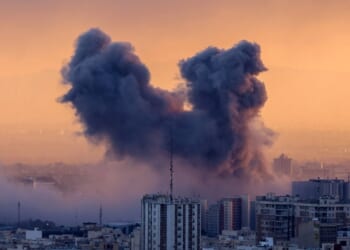
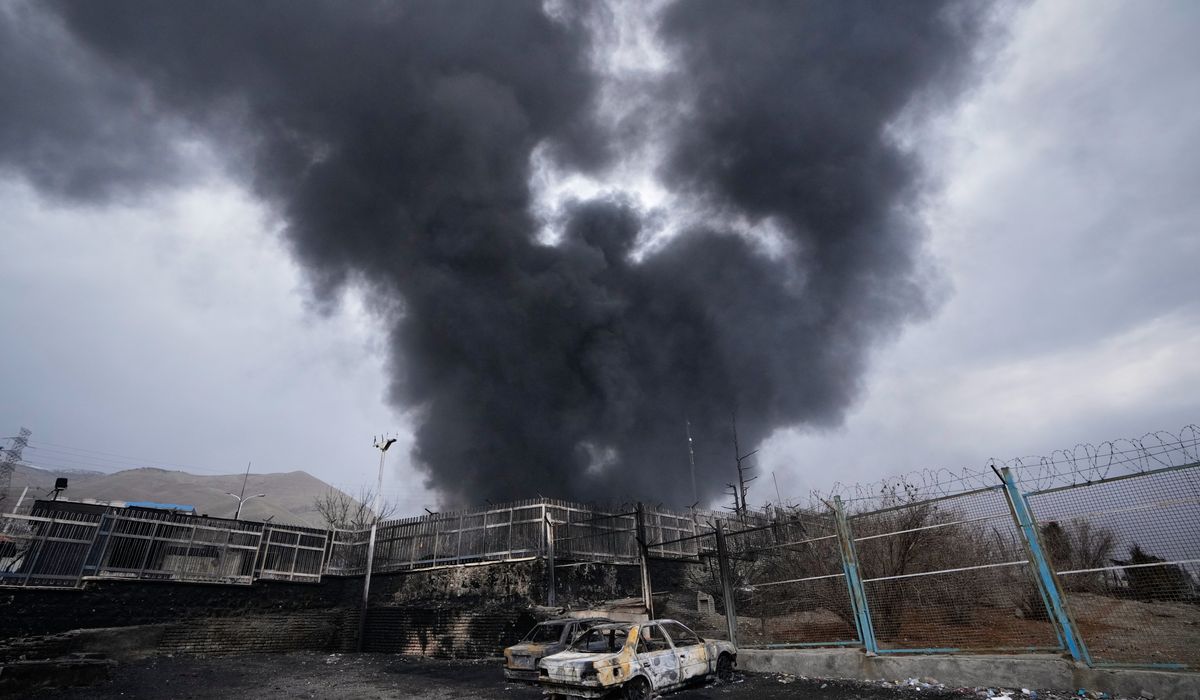
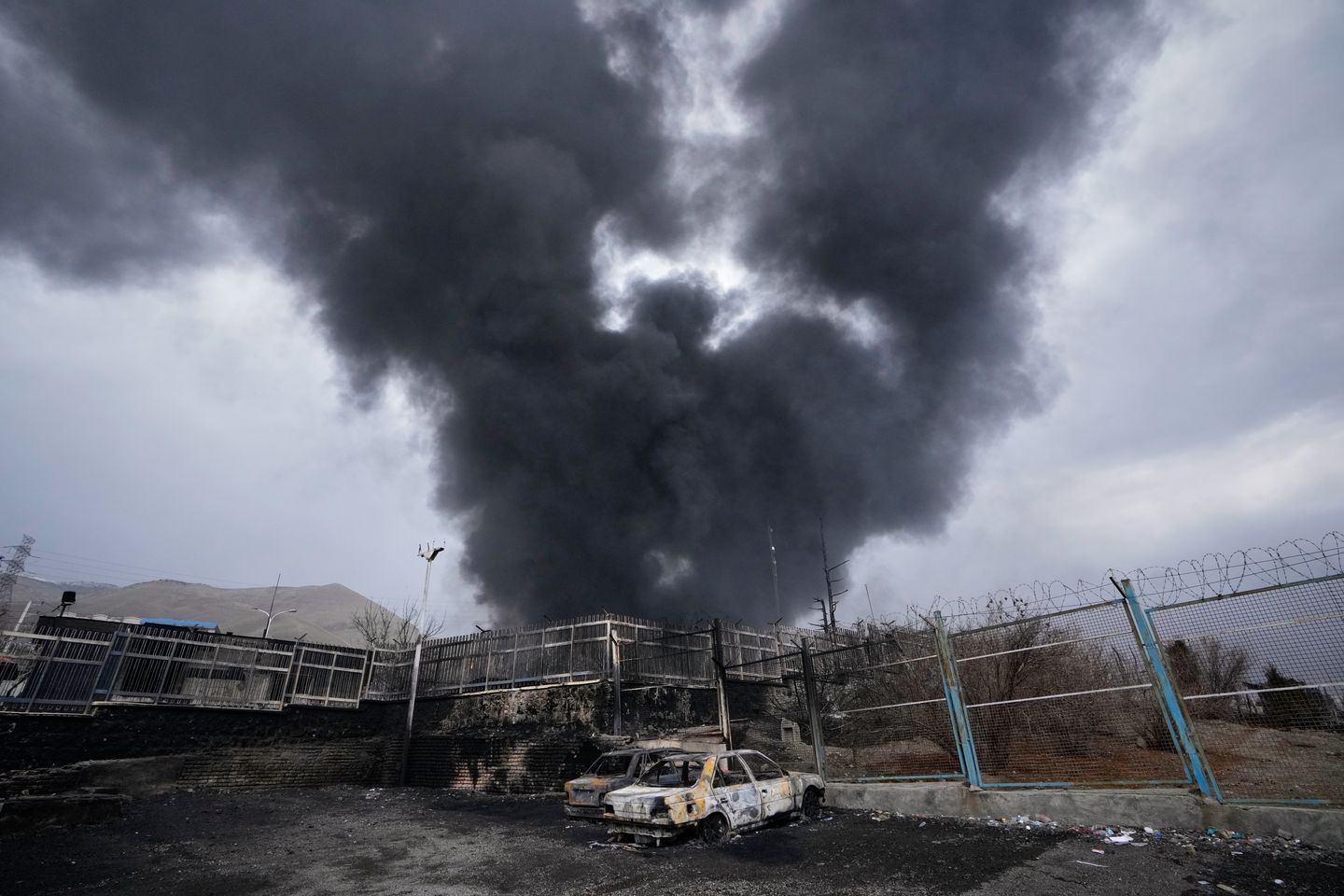
CAIRO — Countries around the Persian Gulf are scrambling to mediate an end to the Iran war.
Pakistani intermediaries delivered Iran’s rejection of the American 15-point ceasefire proposal and have proposed hosting direct talks that Vice President J.D. Vance could attend. Egypt’s foreign minister told the press that Egypt is carrying messages between Washington and Tehran. Turkey is running its own track.
But all of them have picked a side in the conflict. Oman is the only country that is mediating while holding firm to its longtime neutrality doctrine.
“The Muscat channel exists precisely because Oman is trusted by both Iran and the United States,” said Abdullah Baabood, an Omani scholar in Gulf security and international relations and visiting professor at Waseda University in Tokyo. “Washington using it and then escalating anyway doesn’t automatically collapse it — but it does degrade its credibility. Tehran will now test whether Muscat can still guarantee meaningful de-escalation. The architecture isn’t broken. But it’s no longer a bridge. It’s a narrow corridor under pressure.”
Iran in rejecting the U.S. proposal said the shipping-critical Strait of Hormuz “will not return to the past” and formally demanded sovereignty over the strait as a condition for ending the war. Tehran also wants explicit recognition of Iranian control over the waterway, war reparations and a guarantee against future attack. It refuses to discuss its ballistic missile program or its support for Hezbollah, Hamas and the Houthis.
“Permission for transit will be determined by us,” said Ebrahim Zolfaghari, spokesman for Iran’s Khatam Al-Anbiya Central Headquarters, in remarks carried by state-run Mehr News Agency.
Each condition is a non-starter for President Trump.
Mr. Trump said Thursday that Iran had provided 10 oil tankers as a goodwill gesture during talks, saying Tehran told negotiators it wanted to show it was “real” and “solid.” He said he believed the vessels flew Pakistani flags.
Egypt’s foreign minister said Cairo, in addition to carrying messages between the warring nations, is coordinating with regional partners to prevent what he called “comprehensive chaos” and global economic recession.
Egypt simultaneously declared full solidarity with Gulf states against Iranian aggression and staked out a position that Red Sea governance must be limited to coastal states. Egypt is already feeling the economic strain of the widening conflict. Revenue from the Suez Canal, a critical source of hard currency, has declined sharply as shipping routes shift away from the Red Sea amid the regional instability. Rising oil prices are increasing Egypt’s import bill and putting additional pressure on its currency and inflation. Tourism has shrunk as regional insecurity deepens.
Meanwhile, Oman’s foreign minister spoke by phone with his Iranian counterpart this week to discuss the strait. Iranian drones have struck Omani ports three times this month, killed two foreign workers in an industrial zone and set fuel tanks on fire. Muscat has not changed its diplomatic position once. The difference between Oman and every other country now carrying messages is that Oman has not declared a position. That restraint kept both parties answering.
Whether it still does is the question the Egyptian declaration has now opened.
Every other Gulf state hit by Iranian fire has moved toward deterrence. Saudi Arabia intercepted drones over Ras Tanura and signaled military options. The United Arab Emirates volunteered for a military coalition to reopen the strait. Bahrain declared force majeure after its refinery burned. Oman was the only Gulf state that did not attend a foreign ministers’ meeting in Riyadh last week to discuss Iran’s attacks. It absorbed the strikes, kept its communication channel to Tehran open and said nothing about joining anyone.
Iraq’s Foreign Ministry said Thursday it rejects the use of its territory to attack neighboring countries, responding to Gulf state complaints about Iran-aligned militia strikes launched from Iraqi soil. Oman has said nothing.
Trying to reopen Strait of Hormuz
Israel added a new dimension to the Hormuz campaign on Thursday, announcing it had killed Alireza Tangsiri, commander of the Islamic Revolutionary Guard Corps Navy. U.S. and allied officials had identified Tangsiri as the Iranian officer responsible for mining and blockading the strait. Israeli Defense Minister Israel Katz described the strike as “important for our American partners” in opening the waterway and framed it as a direct contribution to the coalition effort the UAE has been lobbying Washington to join.
Mr. Zolfaghari framed Iran’s chokehold as leverage over markets as well as militaries.
“The fire beneath oil prices has been ignited, and its level is in our hands,” he said. Strait traffic has collapsed 95% since the war began Feb. 28, according to S&P Global Market Intelligence. Gulf exporters have lost an estimated $15 billion in revenue.
Iran has announced plans to impose a $2 million transit fee per tanker and is building a ship-by-ship vetting system, conducting direct talks with India, Pakistan, Iraq, Malaysia and China on approved corridors.
Oman has no pipeline bypass, unlike some neighbors. The UAE moves its Murban crude through the Abu Dhabi Crude Oil Pipeline to Fujairah, east of Hormuz, avoiding the strait entirely. Oman has no such exit. Its ports, its fishing industry and its Vision 2040 economic plan all depend on the same waterway Iran is now mining and monetizing. London’s Lloyd’s Joint War Committee added Omani waters to its list of high-risk areas on March 3, triggering mandatory additional premiums on every vessel transiting the region.
The costs are not abstract. On March 11, the Royal Navy of Oman pulled 20 of 23 crew from the burning Thailand-flagged bulk carrier Mayuree Naree and brought them ashore at Khasab, on the northern Omani coast. Three engineers remained below decks, trapped. Omani vessels stayed in the area but did not board — getting back on the ship, officers told Thai counterparts, would require broader international coordination.
U.S. Joint Chiefs Chairman Dan Caine announced that A-10 Thunderbolt jets — the low-flying tank-killers known as Warthogs — are “hunting and killing fast-attack watercraft in the Strait of Hormuz,” and that AH-64 Apache helicopters have “joined the fight on the southern flank.” Arabic-language broadcasters have increasingly framed that southern flank as Omani-administered territory. American warplanes are conducting combat operations there. Muscat has said nothing about it.
Iran’s parliament speaker, Mohammad Bagher Ghalibaf, warned Wednesday that an unnamed regional country is helping Iran’s adversaries prepare to seize one of Iran’s islands in the strait. “All the vital infrastructure of that regional country will, without restriction, become the target of relentless attacks,” he said. He did not name the country, but the UAE has been the most vocal Gulf state calling for a military coalition to reopen the strait.
The push to reopen the strait is moving to the United Nations. Mahdi Ghuloom, a Bahraini researcher and junior fellow in Geopolitics at ORF Middle East, said Bahrain has circulated a draft resolution at the U.N. Security Council and that France has submitted its own resolution that may avoid a Chinese or Russian veto.
“Right now the focus is on gaining international legitimacy,” Mr. Ghuloom told The Washington Times. “At the moment it doesn’t seem to be a U.S.-led effort. It’s going to be an internationally led effort.”
Sultan Al Jaber, chief executive of Abu Dhabi National Oil Company, told Mr. Vance on Wednesday that free passage through the Strait of Hormuz is the only durable solution to stabilizing global markets. Iranian strikes have hit the Shah gas field, the Habshan processing complex and the Ruwais refinery hub.
“Our defenses have been tested. Our resilience has been tested. Our character has been tested. And we withstood,” he said this week.
Oman’s carefully built neutrality
Muscat spent 10 years building the only sustained back channel between Washington and Tehran in the Arab world. It hosted the secret Obama-era talks that produced the 2015 nuclear deal. It brokered the negotiations that brought U.S. and Iranian diplomats back to the table in February. It carried messages between Riyadh and the Houthis when no one else would. Oman shares a 186-mile border with Yemen, where Iran has waged a proxy war since 2015.
Since 2015, Oman has brokered every round of diplomacy between the U.S. and Iran. Omani Foreign Minister Mr. Busaidi declared a breakthrough on the morning of Feb. 28, saying peace was within reach.
Operation Epic Fury began that afternoon.
Mr. Ghuloom said Oman’s neutrality doctrine remains structurally useful for the Gulf as a whole. “Not all Gulf countries will maintain a neutrality doctrine with regards to Iran going forward,” he said. “Oman maintaining it will remain a useful toolkit for the [Gulf Cooperation Council] to have at least one Gulf state that maintains a neutrality doctrine with regards to Iran and the U.S. Not just viable — ever more important.”
On the Hormuz coalition, he said Muscat’s coordination would be required regardless of its formal membership. “Even if Oman doesn’t join that coalition, I don’t think any Gulf country, including UAE and Bahrain, would join it without coordination at the very least with Oman.”
Sultan Qaboos built Oman’s foreign policy doctrine over 50 years on one principle: talk to everyone, commit to no one. Qaboos died in 2020. Sultan Haitham inherited the doctrine but not the relationships that made it run.
On Oman’s western border, Saudi-backed forces are pressing into Yemen’s Mahra governorate, territory tied to Muscat’s tribal networks for generations. On March 23, the U.S. Embassy told American citizens in Oman to shelter in place. By Tuesday it had lifted the order for Muscat but kept it in effect for the rest of the country.
Sen. Lindsey Graham, South Carolina Republican, warned in January that Oman’s refusal to support military action against Iran would force a rethink of U.S. alliances. The war started anyway.
Mr. Busaidi has since proposed a path out: resume the Muscat channel, tie it to a Gulf-wide nuclear transparency process and work toward a regional non-aggression treaty.
“Oman’s neutrality makes it valuable,” Mr. Baabood said. “But that same neutrality makes it vulnerable when the rules break down. The system is now testing whether a state can remain a bridge at a moment when all sides prefer leverage over dialogue.”
• Waseem Abu Mahadi reported from Cairo. Jacob Wirtschafter reported from Istanbul.