Forget nuclear waste dumps like the now-abandoned site at Nevada’s Yucca Mountain.
The federal government is pushing for the development of “nuclear lifecycle innovation campuses” across the U.S. that will reuse much of the spent fuel from nuclear reactors to generate additional energy and eliminate the need for a single, massive underground storage site for radioactive waste.
Recycling allows 97% of spent fuel, most of it uranium, to be reused as fuel in nuclear reactors. Plutonium in spent fuel can also be recycled for use in conventional nuclear reactors. France, Japan, Germany, Belgium and Russia recycle plutonium from nuclear fuel waste.
The new program, outlined by nuclear energy experts at a recent Senate Energy and Natural Resources hearing, marks a significant shift away from the decades-old plan to utilize a single location for storing the nation’s radioactive waste.
The plan to use Yucca Mountain as the nation’s nuclear waste repository was all but abandoned due to public and political opposition, even though Congress designated it in 2002 as the nation’s sole location for burying high-level radioactive waste and spent nuclear fuel.
President Trump, who was once in favor of building a national nuclear waste repository at Yucca Mountain, made a pivotal shift at the end of his first term as he sought to maintain support for his reelection bid in the swing state of Nevada. Democrats and many residents in the state sought to block the project, and Mr. Trump sided with them months before the 2020 election.
“Nevada, I hear you on Yucca Mountain and my Administration will RESPECT you,” Mr. Trump said on social media in February 2020.
Mr. Trump’s post ended any chance of reviving the Yucca Mountain nuclear waste disposal project. He promised at the time to explore “innovative approaches” for dealing with leftover radioactive material.
Though he lost the 2020 election, Mr. Trump’s nuclear waste disposal plan is advancing rapidly in his second term, Assistant Secretary of Energy for Nuclear Energy Theodore J. Garrish told Senate lawmakers.
Two dozen states have signaled interest in serving as areas for industrialization, an all-inclusive designation that would require building campuses with infrastructure that can fully support nuclear power — from enriching uranium to enabling the recycling of radioactive waste and storing what is left.
The campuses could house advanced nuclear reactors and power-hungry data centers, which, if located together, would save significant amounts of money, Mr. Garrish said.
In exchange for hosting the campuses, states will receive federal funding and assistance to attract nuclear power investments.
Of the 24 states that have signaled interest, up to 15 are “very serious,” and four or five have submitted detailed proposals for the campuses, Mr. Garrish said.
There won’t be a need for a huge nuclear waste dump because innovations in nuclear technologies produce less waste, and advancements in recycling nuclear waste have greatly reduced the need for a massive long-term storage facility.
“The final fuel stream is substantially less than what we were anticipating in Yucca Mountain. So this is a major change in how we would approach this. But this is a very positive development and very well received by the public,” Mr. Garrish told the committee.
Nuclear waste disposal has been a central problem that has stalled the advancement of nuclear energy programs in America.
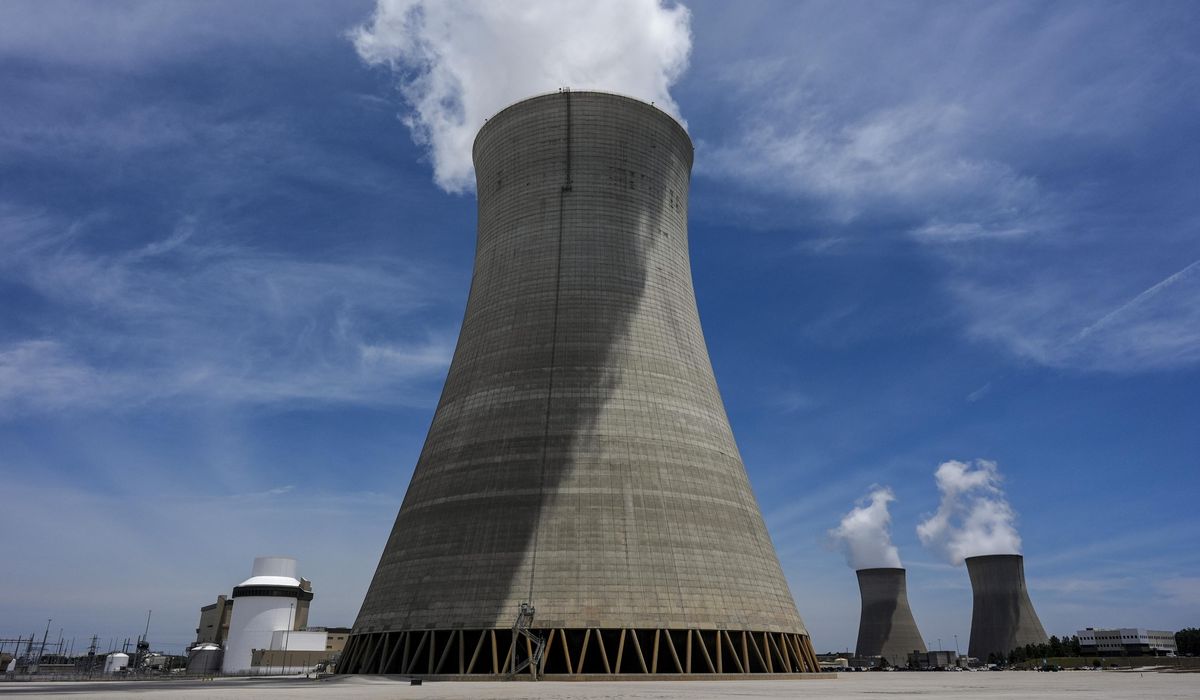
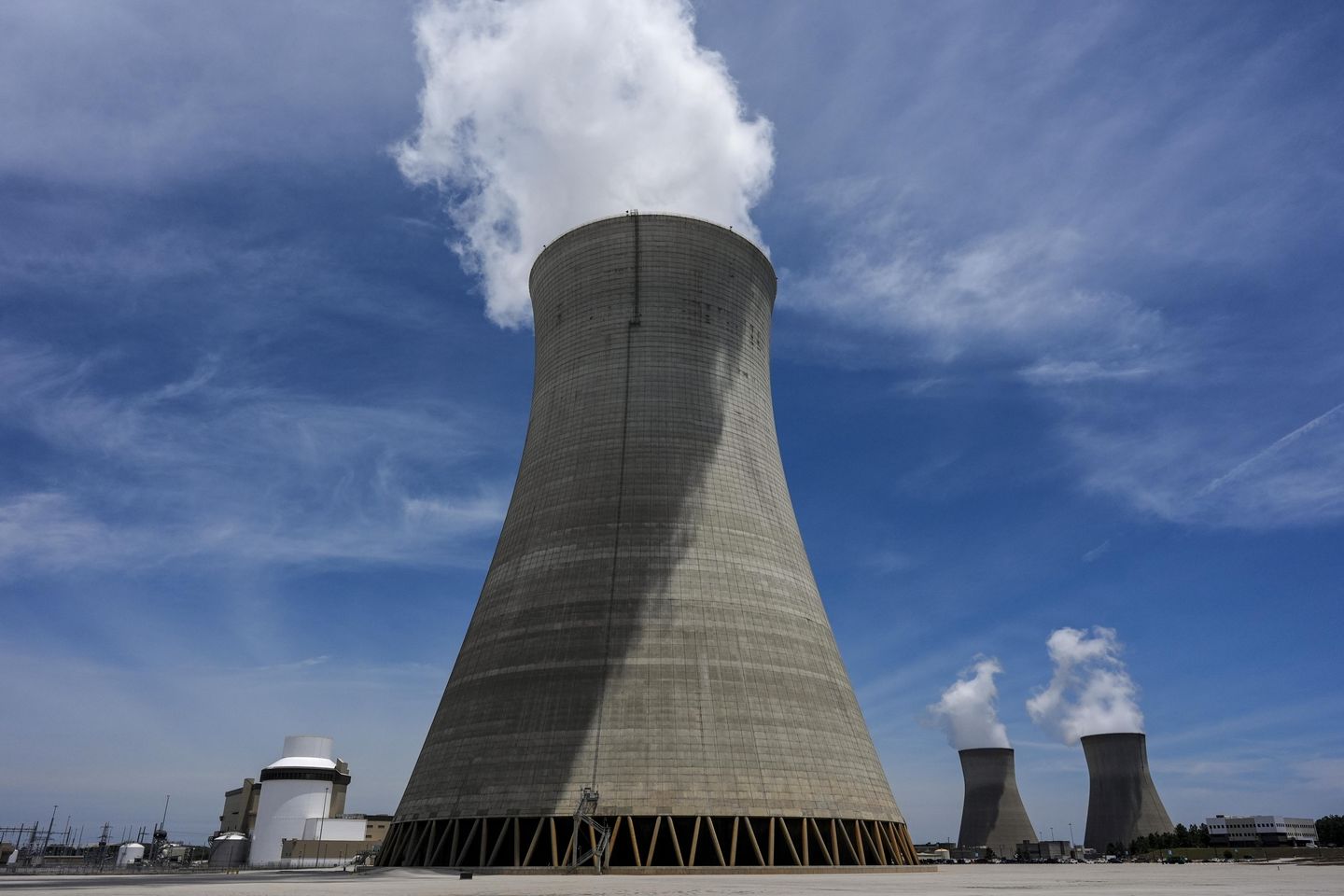
Spent nuclear fuel is now primarily at the nation’s commercial nuclear power plants, first in cooled water pools for up to a decade and later in underground steel-and-concrete tanks.
Nuclear energy development has also been set back by safety fears after the 1979 accident at Three Mile Island in Pennsylvania that caused a partial nuclear meltdown.
The number of U.S. nuclear reactors has decreased from 111 in 1990 to 94 today, according to the U.S. Energy Information Administration. The reactors power 54 plants located in 28 states. Nuclear power generates about 20% of the nation’s electricity.
President Trump has sought to jump-start nuclear energy production in the U.S. and set a goal of quadrupling it by 2050.
New-generation nuclear reactors are smaller, cheaper to build, more efficient and have built-in safety systems that make accidents like the one at Three Mile Island far less likely to occur.
Earlier this month, the Nuclear Regulatory Commission issued the first-ever construction permit for an advanced, commercial-scale nuclear power plant in Kemmerer, Wyoming. The permit was awarded to TerraPower, which plans to begin construction in the coming weeks and will use a sodium-cooled reactor and a molten salt-based energy storage system that produces far less waste than a conventional nuclear reactor. It will be operational as early as 2030.
“The race for AI, fundamentally, is a race for energy. I think whoever secures affordable, reliable electric power is going to have a big head start, and the advantage in the race for AI, nuclear energy has to play a key role,” Sen. John Barrasso, Wyoming Republican, said.
The new demand for nuclear energy, coupled with advanced nuclear recycling technology, will require Congress to modify the 1982 Nuclear Waste Policy Act, which calls for the use of deep geologic repositories, such as Yucca Mountain, for storing radioactive waste, nuclear experts told lawmakers.
“I feel strongly modifications are required,” said John C. Wagner, Director of the Idaho National Laboratory. “There are advancements in recycling technology. A lot has changed. Now we are talking about quadrupling nuclear power by 2050, we now have a very different future in front of us that was not foreseen in that time period.”
Some lawmakers are demanding that nuclear waste disposal be fully addressed before the U.S. quadruples its nuclear energy output.
“This, to me, is the issue we deal with first — how we address the waste — so we don’t end up where we are today with an old policy from the 80s, and we’re still addressing the waste in this country,” Sen. Catherine Cortez-Masto, Nevada Democrat, said. “This is a priority for us to move forward with nuclear technology.”
Even with advanced nuclear reactors, she said, nuclear waste will be produced, and new technologies will create a new type of waste that, along with spent fuel from conventional nuclear power plants, must be handled and stored.
Recycling will solve most of the waste disposal problem, Mr. Garrish said.
“We are in the process of analyzing how that is to be done,” Mr. Garrish said. “But each of those end products does have value, and we are attempting to make sure we get that value.”