I woke up this morning expecting markets to be tanking.
But despite the overnight chaos, markets just shrugged.
Investors appear to believe that everything will be solved in short order. I don’t.
To be clear, the war itself may not last much longer. Americans don’t want another drawn-out war in the Middle East. And Iran, despite its tough talk, surely wants this to end soon as well. Israel may be the wild card here, but that’s a separate discussion.
Even if the war does end soon, much can happen in a short time. As we saw over the past 24 hours.
The consequences of this conflict will last well beyond when the fighting stops.
I had initially hoped we would avoid major damage to oil and gas infrastructure in the region.
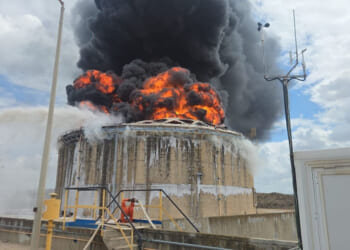
But that ship sailed when Israel struck a major Tehran oil hub back on March 7.
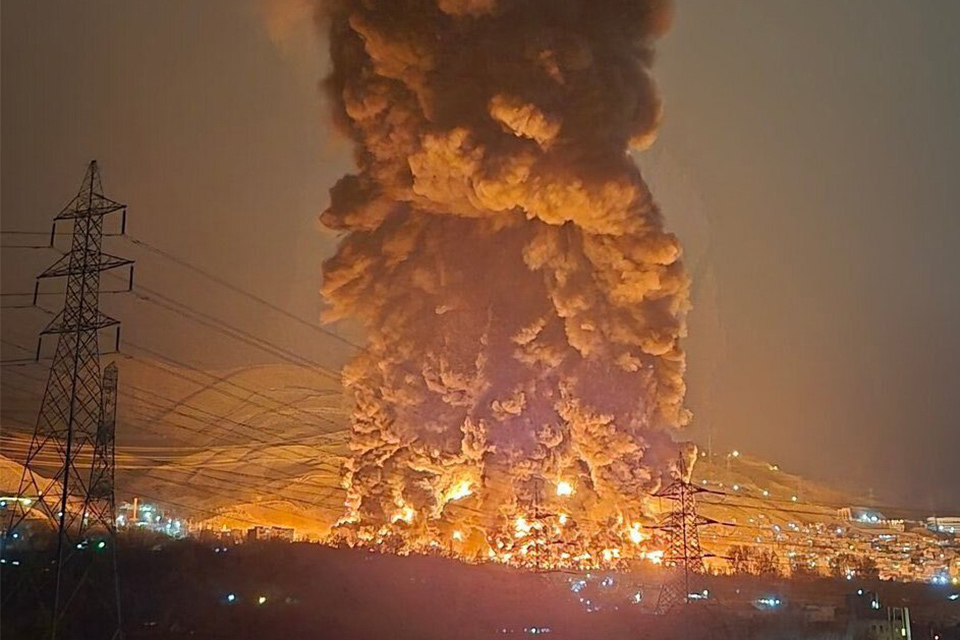
The aftermath of Israel’s strike on Tehran’s oil facilities
Since then, things have accelerated. Yesterday Israel struck the South Pars natural gas field, hitting facilities that Iran relies on for about 75% of its electricity generation. We don’t know the extent of the damage yet. But due to the volatile nature of fossil fuels, it’s probably substantial.
President Trump was not happy with Israel’s attack on energy. In a response to a reporter question about the strikes, he said (via WSJ):
President Trump said he told Israel Prime Minister Benjamin Netanyahu not to attack oil and gas fields in Iran. “I told them, don’t do that. We didn’t discuss. You know, we do–we’re independent. We get along great. It’s coordinated, but on occasion, he’ll do something,” Trump said.
“We’re not doing that anymore,” Trump said of attacks on energy sites.
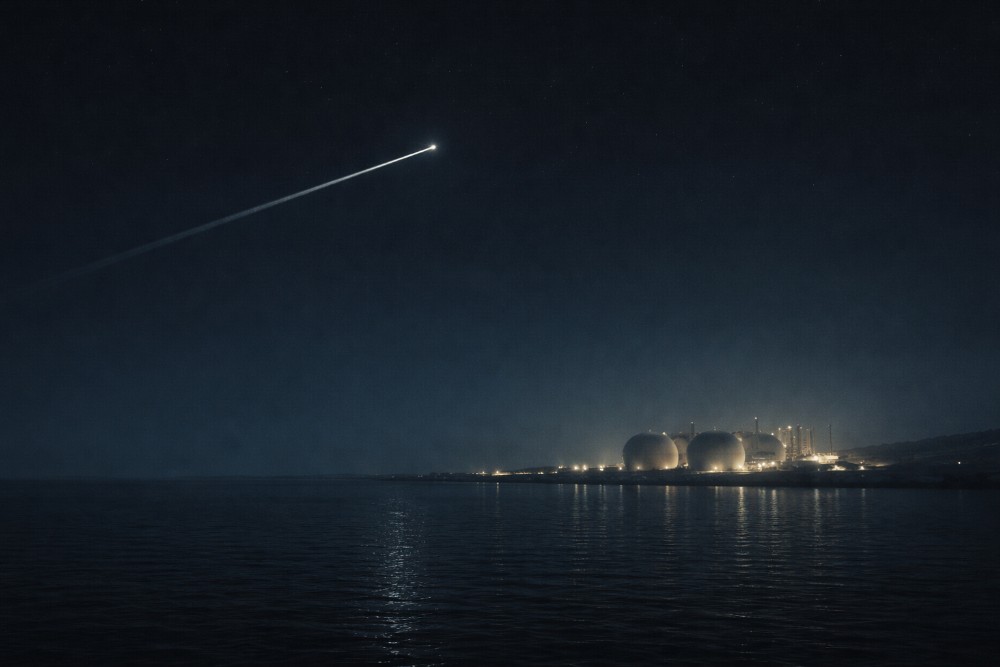
Why was Trump not happy about Israel’s strikes on Iranian energy? Because last night, Iran responded. An Iranian missile struck Qatar’s giant liquified natural gas (LNG) facility.
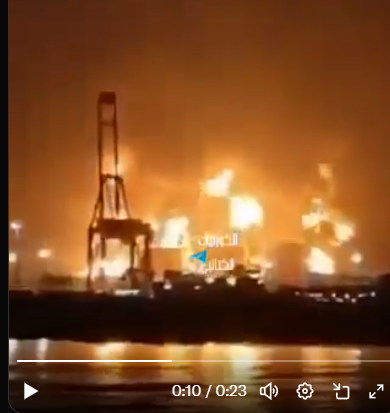
Qatar’s massive Ras Laffan LNG hub. Source: Drop Site News
It took out at least 17% of the country’s LNG capacity. That’s the initial estimate, and my guess is it’s low.
One Iranian missile took out around 3% of global LNG capacity. Clearly, the regime has saved some of its best missiles for just such a scenario. We cannot assume they’re defeated.
Qatar says the damage will take 3-5 years to repair. With a few more missiles and drones, Iran could absolutely devastate global LNG markets. Europe, India, and Asia rely heavily on LNG for heating, cooking, fertilizer and chemical production, and power generation.
Overnight, Iran also struck a refinery in Saudi Arabia, an Israeli refinery, and critical UAE energy facilities. As well as numerous U.S. and Israeli bases.
Iran’s Foreign Minister stated:
Our response to Israel’s attack on our infrastructure employed FRACTION of our power. The ONLY reason for restraint was respect for requested de-escalation.
ZERO restraint if our infrastructures are struck again.
Any end to this war must address damage to our civilian sites.
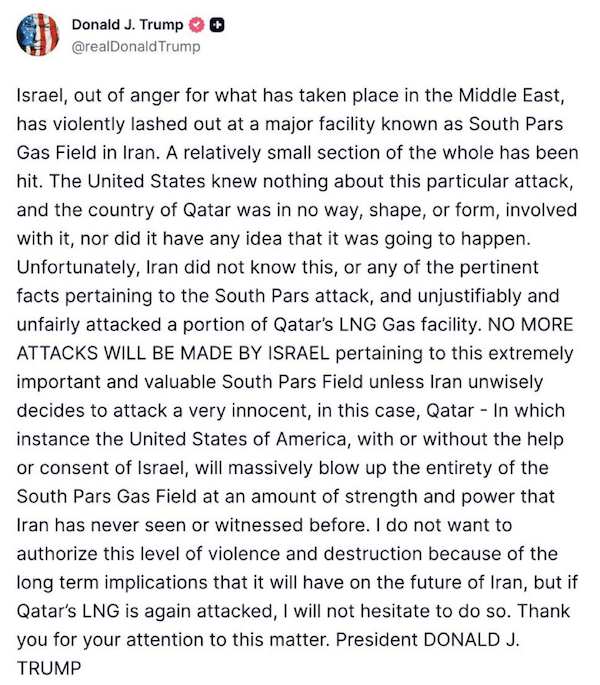
President Trump stated that if Iran strikes Qatari LNG again, the U.S. and Israel will “blow up the entirety of the South Pars Gas Field at an amount of strength and power that Iran has never seen or witnessed before.”
Trump’s full statement, via Truth Social:
Let us hope the war does not escalate from here. Trump has said that he and Israel will not strike energy sites going forward. Whether Israel abides by this remains to be seen.
The stakes couldn’t be much higher.
The regional countries involved in this war (Iran, Iraq, Kuwait, UAE, Saudi Arabia, Qatar) produce about 28% of global oil, 22% of LNG, and 10% of natural gas. Removing this much energy from the market, even for a few months, would be catastrophic.
We would see an unprecedented energy crisis, a global stock market crash, famine in many areas, and possibly even nuclear strikes.
This is mutually-assured destruction, without even involving nuclear weapons (hopefully).
Let’s hope it doesn’t get there. But if it does, here’s what we can expect.
Escalation Ladders
Yesterday the International Atomic Energy Agency (IAEA) confirmed that a building 350 meters (1,150 feet) from Iran’s Bushehr nuclear reactor was destroyed in a strike.
The IAEA can confirm that a structure 350 metres from the Bushehr NPP [nuclear power plant] reactor was hit and destroyed.
It was almost certainly an Israeli drone or missile that struck the nuclear site. 480 Russian nationals work at the plant, according to AP. Needless to say, Putin was not happy.
At Busher, there are roughly 72 metric tons of active and fresh uranium fuel. More concerning is the spent fuel, of which there are perhaps 210 tons (462,000 lbs).
Spent fuel is a nasty mix of different radioactive isotopes produced during fission. Many are hundreds or thousands of times more radioactive and poisonous than uranium.
I suspect this was Israel sending a message. If you don’t back down, we’ll strike the reactor and/or spent fuel pools. And that’s a scary thought. It could result in a nuclear fire, which would spread fallout far downwind.
But Israel has a nuclear plant too. The Dimona site, which it uses to produce weapons-grade plutonium and nuclear weapons. However, if Iran strikes Dimona, Tehran may get nuked. So hopefully we can eliminate nuclear strikes from the equation.
The point is that everyone is vulnerable. But so far, nobody is backing down. A dangerous combination.
It’s important to understand what’s at stake here. It’s oil and gas, yes. But it’s also much more than that.
I put together a rough list of escalation steps which we could see play out if things don’t calm down soon. They are listed in the order that I estimate they could play out, if things continue to devolve.
Israeli Escalation Ladder:
- Disable Iran’s electrical grid
- Destroy remaining Iranian oil and gas infrastructure
- Target the nuclear plant at Bushehr (Russian built and staffed)
- Tactical nuclear missile strikes
Iranian Escalation Ladder:
- Target Intel’s fab in Israel (chip plant, value ~$10b)
- Israel’s grid
- Gulf desalination plants (they rely on desalination for up to 90% of water)
- Saudi/Qatar/UAE energy infrastructure (the big one)
- Israel’s Dimona nuclear plant (nightmare scenario)
Markets Yawn
Despite energy chaos and potential for further escalation, markets have barely dropped. This may not last.
Today I freed up more cash, selling a few long-term positions. I am still holding my gold and silver miners, but it’s been a brutal few days. I feel like these will bottom out soon.
I added some new hedges over the past few days. Put options, mostly. On indexes, banks, and overpriced consumer stocks that offer cheap downside protection.
The market clearly expects everything to be fine. This is far from certain.
The oil and gas facilities being damaged and destroyed cost tens of billions of dollars and some took 15+ years to complete. This is not infrastructure which can be easily repaired or replaced.
Let’s pray things calm down in the near future.
Because as last night proved, a single volley of missiles can change everything.