
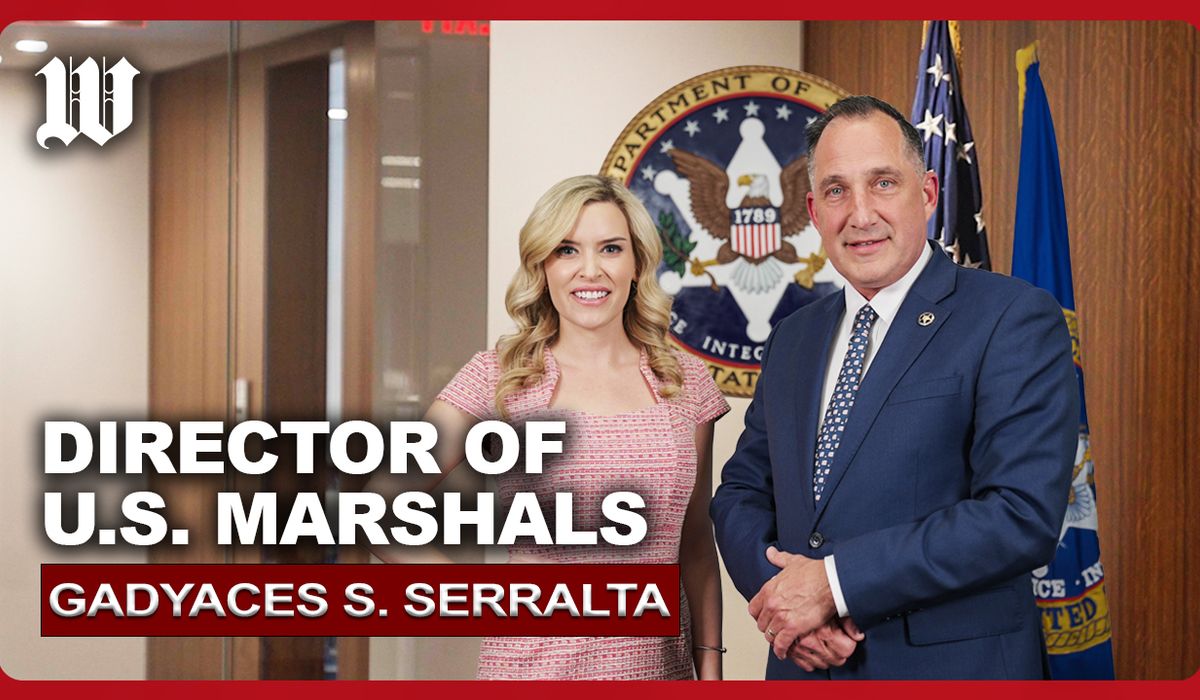
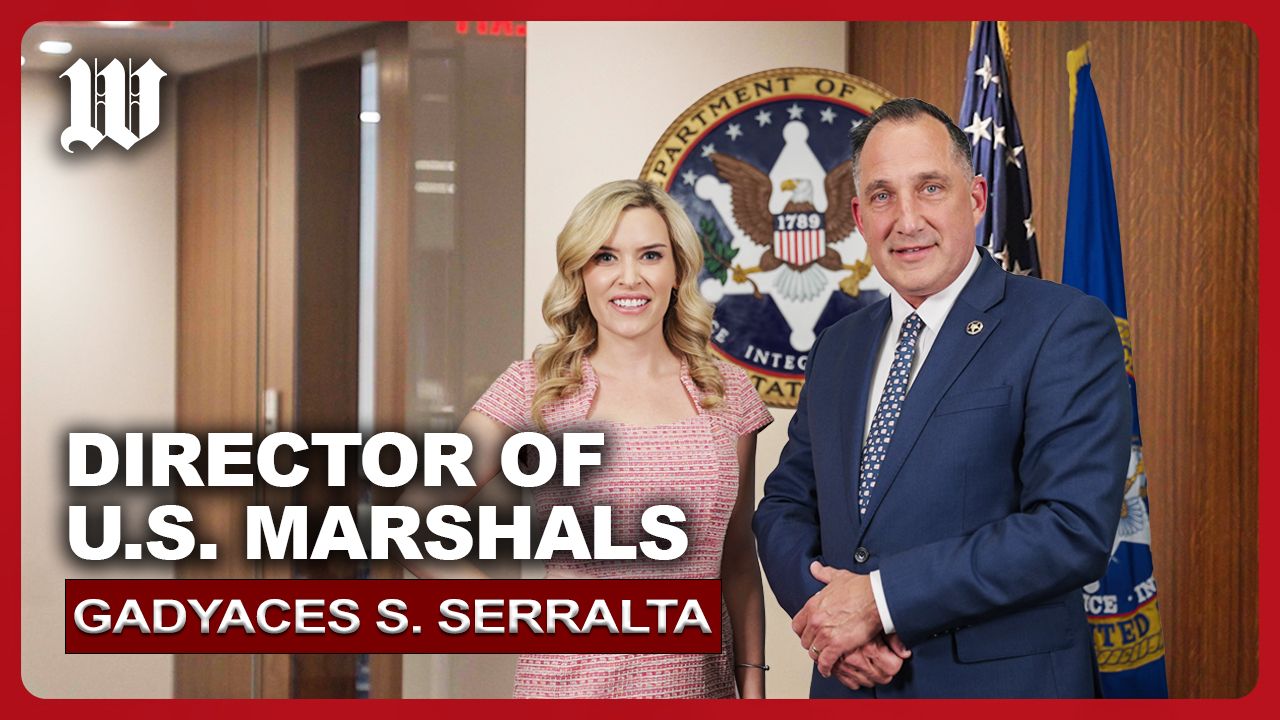
In this episode of The Sitdown with Alex Swoyer, U.S. Marshals Service Director Gadyaces S. Serralta offers a rare inside look at the agency responsible for protecting the federal judiciary, hunting the country’s most dangerous fugitives, and leading the charge on President Trump’s crime surge task forces.
Serralta has been sworn in since last August. He was nominated by President Trump and has been in this role as the 13th permanent director, taking on the president’s crime surge for seven months. He joined the agency after more than 30 years of law enforcement experience.
[SWOYER] I covered the courts for years, and judicial security is something that constantly came up. What are you seeing?
[SERRALTA] The United States Marshals Service’s primary role is judicial security. And although the Marshals Service does a lot of things, to include lead the president’s task force in both D.C. and in Memphis, our primary role is the security of the judiciary. That being said, you know, we have judicial threats. We’ve had that for years. They have been on the rise for the last four or five years.
[SWOYER] I covered a judicial conference, some of the judges mentioned that it seems like — I don’t know if they were talking about their funding that was needed — but they said there seems to have been a surge. There’s political rhetoric, there’s online, there’s the social media aspect. Do you think that plays a role?
[SERRALTA] I absolutely do think so. I think we have more avenues to say stupid things, and that’s what folks do, right? They think that they hide behind a handle or a TikTok name or however they disguise their actual name. But know this — the United States Marshals Service is going to come after you if you make a threat to one of our judges. And we will not stop until we put you in prison.
[SWOYER] How do you discern what’s real versus — I don’t even want to say a fake threat, but do you get what I mean? How do you sort that?
[SERRALTA] I do. So there are veiled threats — you know, they’re not really saying what’s going to happen to the judge. Then you have the outright “I’m going to do X, Y, and Z to you.” That’s all we look for, right? If you have the method and the means to carry out a threat, we’re going to put you in prison. An example of an individual making a threat is they say, you know, “I’m going to go down to the courthouse and hang you.” OK, that is an actual threat. That is something that we would investigate, identify the individual, seek an indictment, as a warrant. And then we would execute that warrant, take that individual to jail, and then prosecute them, put them in prison.
[SWOYER] I covered the Supreme Court, and I know there were some people that were sending pizza boxes — pizza deliveries — as like a form of a veiled threat. Is that something that your agency would be able to follow up on? How does that work?
[SERRALTA] That, in particular, is an open investigation. But what I can tell you is I’m very satisfied with the work that the Marshals Service, together with many other three-letter agencies. We’ve gotten assistance from the FBI, CIA — you name the agency. This has been put on their radar. OK? What that has done for us is we’ve been able to expand our investigative leads tremendously. And we’re very satisfied with the progress that we have.
And I’ll tell you this — don’t send any pizzas.
[SWOYER] Is this happening across the country — and I don’t just mean pizzas, but threats — or is there an area of the country that you think is heightened?
[SERRALTA] I’ve been with the Marshals Service for eight years now. We’ve had threats since I’ve been here. Usually, the threats occur when a decision is made one way or another. So judges, they have a tough job, right? Because no matter what, somebody loses.
[SWOYER] That’s right. Someone’s going to be mad.
[SERRALTA] Exactly. Someone’s going to be mad. And the advice I have is: be mad, but don’t send any threats.
[SWOYER] One of the most famous cases was Nicholas Roske, right? The young man who came from California and the attempted assassination of Justice Kavanaugh. He was sentenced to eight years in prison. The judge at the end suggested that the threat wasn’t real, that he had turned himself in, turned away from his plot. What do you make of that reasoning? And I guess there were some people that I talked to — and I guess some of my readers were also concerned — that that lack of a harsh sentence would create copycats. Is that a concern that you all have?
[SERRALTA] So we’re always concerned about copycats. In Nicholas’s case — you know, I was not present for the whole hearing, for the whole trial, I just say — and therefore I can’t really opine on whether it was a harsh enough sentence or not. What I will tell you is this: our Supreme Court justices must be protected, like our federal and district judges, like all state judges, local judges. We should be protecting them to the fullest extent possible. That being said, is eight years for someone that had — I believe he had duct tape and twine to tie him up — I mean, that is quite premeditated.
[SWOYER] Yes. Traveling across the country.
[SERRALTA] So it certainly, to me, is a light sentence. I would have liked to have seen more. But, you know, having been a cop for 35 years, that’s probably where I would be on most prosecutions.
Watch the video for the full conversation.