
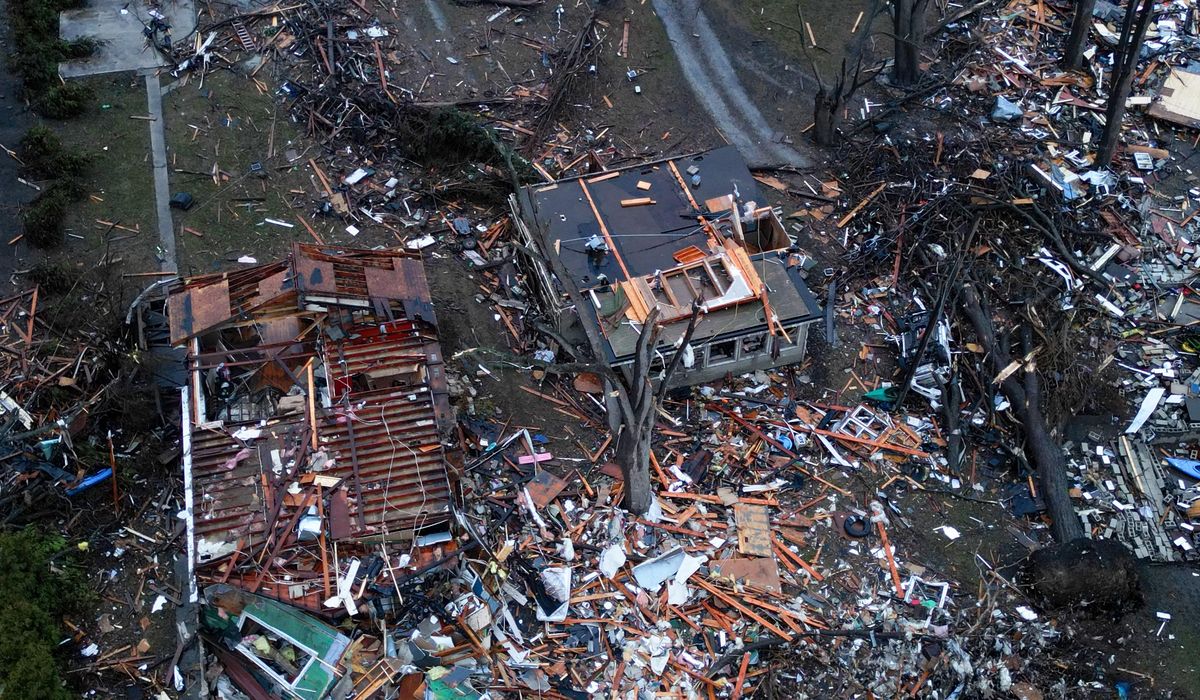
After a tornado damages a home, the dangers do not end when the storm passes. Unstable walls, gas leaks, downed utilities, and carbon monoxide from generators or cooking equipment can turn the first hours of cleanup into a second emergency, according to guidance from the Centers for Disease Control and Prevention, the Federal Emergency Management Agency, and the American Red Cross.
The first rule, the Red Cross says, is not to return to a damaged building until local officials have determined it is safe to do so. Once inside a cleared structure, watch for things that might fall, avoid exposed nails and broken glass, and do not use matches or lighters. If you smell gas or see anything flammable, the agency advises leaving immediately.
According to the CDC, homeowners should check walls, floors, doors, windows, and staircases for visible damage. Cracks in a foundation or missing support beams are signals to relocate to a shelter or other safe location. Officials say occupants should leave immediately if a damaged building shifts or makes unusual noises, which may signal that the structure could fall.
For utility lines, experts advise checking gas, electrical, and water connections for damage. If you smell gas or find a broken line, shut off the main valve from outside. If gas is turned off, the CDC notes, a professional must restore service — do not attempt to turn it back on yourself. If you see frayed wiring, sparks, or smell something burning, shut off the electrical system at the main circuit breaker. The CDC cautions that matches, lighters, appliances, and light switches should not be used until you are certain there is no gas leak, because a spark could ignite leaking gas and cause an explosion.
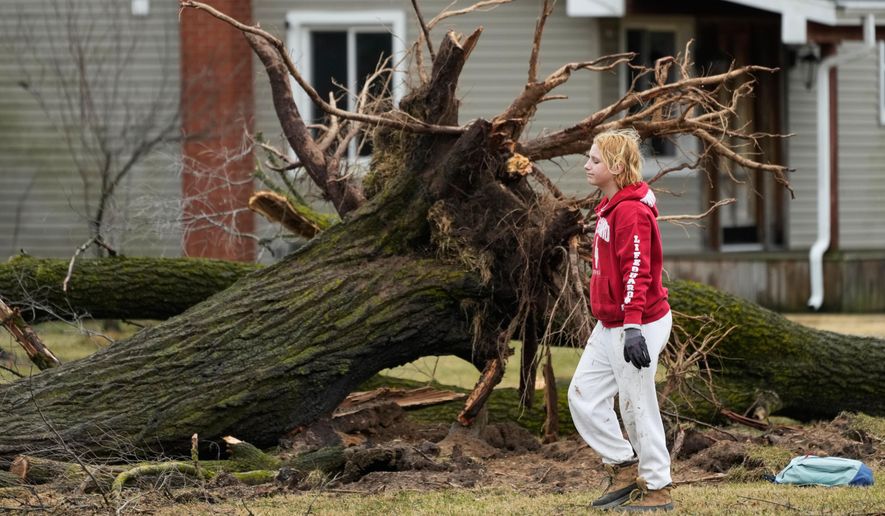
A volunteer works to clear debris …
more >
ALSO READ: Studies identify best places to take shelter in your home during a tornado
Carbon monoxide: an invisible threat
Power outages push many people toward portable generators, charcoal grills, and camp stoves. According to the CDC, carbon monoxide, an odorless, colorless gas, kills more than 500 Americans each year, and improvised use of generators, grills, and camp stoves after outages can produce it rapidly and fatally.
The CDC’s guidance is direct: never use any gasoline, propane, natural gas, or charcoal-burning device inside a home, basement, garage, or near an open window. Generators must be kept outside and at least 20 feet from any window, door, or vent. The CDC recommends using a battery-operated carbon monoxide detector any time a generator or other fuel-burning equipment is in use. If the detector sounds, the officials say to leave the home immediately and call 911.
Cleanup hazards
The Red Cross advises wearing thick-soled shoes, long pants, and work gloves during any cleanup work to reduce injuries from debris. Children should not take part in disaster cleanup work. If power is out, the agency recommends using flashlights or battery-powered lanterns rather than candles to reduce fire risk.
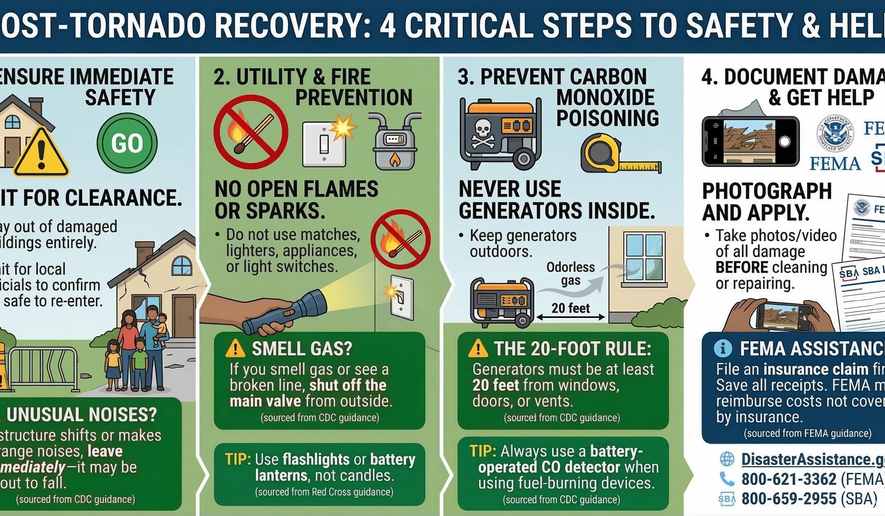
Be sure to review these critical …
more >
Food and water safety also require attention. The CDC advises throwing away perishable foods that have gone unrefrigerated during a power outage, as well as anything that may have come into contact with floodwater. Officials note that unsafe food can cause illness even if it looks, smells, and tastes normal.
For water, follow guidance from local officials. Until authorities confirm the supply is safe, the CDC recommends using only bottled, boiled, or treated water for drinking, cooking, and personal hygiene.
Document everything before making repairs
Before touching anything that can be repaired or replaced, take photographs and video of all damage. This documentation can be critical to both an insurance claim and any application for federal assistance.
FEMA advises filing a claim with your insurance provider as soon as possible. By law, FEMA cannot pay for losses already covered by insurance. People with existing coverage may still qualify for assistance if their policy does not fully meet their needs, but FEMA requires applicants to submit an insurance settlement or denial letter before it can determine eligibility for some forms of aid. Save all receipts for temporary repairs and emergency accommodations. FEMA officials note the agency may reimburse some of those costs even if repairs have already begun — but only for expenses not covered by private insurance or another source.
Applying for federal help
If your home is in a federally declared disaster area, you may be eligible for FEMA’s Individual Assistance program, which may cover, in some cases, temporary housing, home repair or replacement costs, personal property losses, and certain medical and other expenses not covered by insurance. Benefit categories and availability vary by disaster declaration.
There are four ways to apply: online at DisasterAssistance.gov, through the FEMA mobile app, by phone at 800-621-3362 between 6 a.m. and 11 p.m., or in person at a Disaster Recovery Center. FEMA says applying online is the fastest option. Applicants who have already filed with their insurance company and begun repairs should still apply — FEMA can only make a final eligibility determination after reviewing insurance documentation.
The U.S. Small Business Administration also offers low-interest disaster loans in some declared disasters to homeowners and renters whose losses were not fully covered by insurance or other sources. Information is available at sba.gov/disaster or by calling 800-659-2955.
Mental health in the aftermath
The CDC notes that strong emotions are common during and after a tornado, and that seeking help when needed is part of recovery. The Disaster Distress Helpline is available by call or text at 800-985-5990, with Spanish-language support available by pressing 2.
This article draws on guidance published by the Centers for Disease Control and Prevention, the American Red Cross, and the Federal Emergency Management Agency. It is intended for general informational purposes. Residents should follow all instructions from local emergency management officials, as conditions and specific guidance vary by location and event.
This article was constructed with the assistance of artificial intelligence and published by a member of The Washington Times’ AI News Desk team. The contents of this report are based solely on The Washington Times’ original reporting, wire services, and/or other sources cited within the report. For more information, please read our AI policy AI policy or contact Steve Fink, Director of Artificial Intelligence, at sfink@washingtontimes.com
The Washington Times AI Ethics Newsroom Committee can be reached at aispotlight@washingtontimes.com.