Republicans have spent years railing against a rigged political system. In Montana, one of their own is now accused of rigging a primary with President Trump’s blessing — and calling it a public service.
It’s a move that has become increasingly common on Capitol Hill, where leaders in both parties have quietly worked to clear the field for handpicked successors — sidestepping the very voters they represent and insisting the maneuver is in those voters’ best interest.
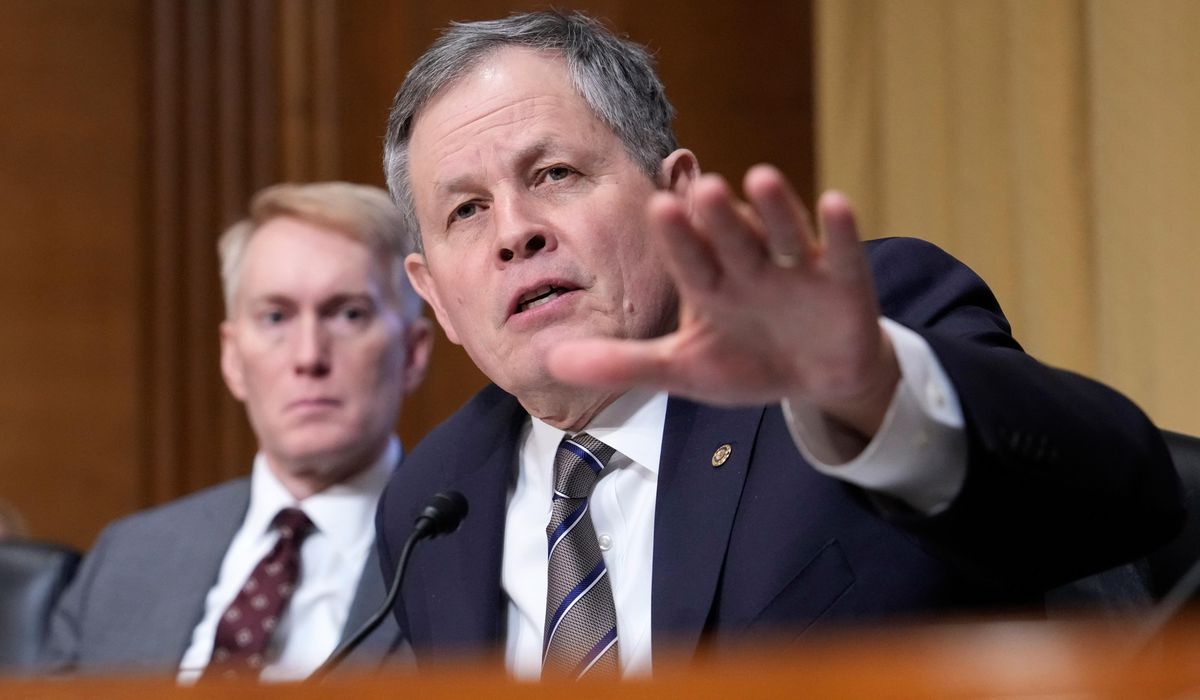
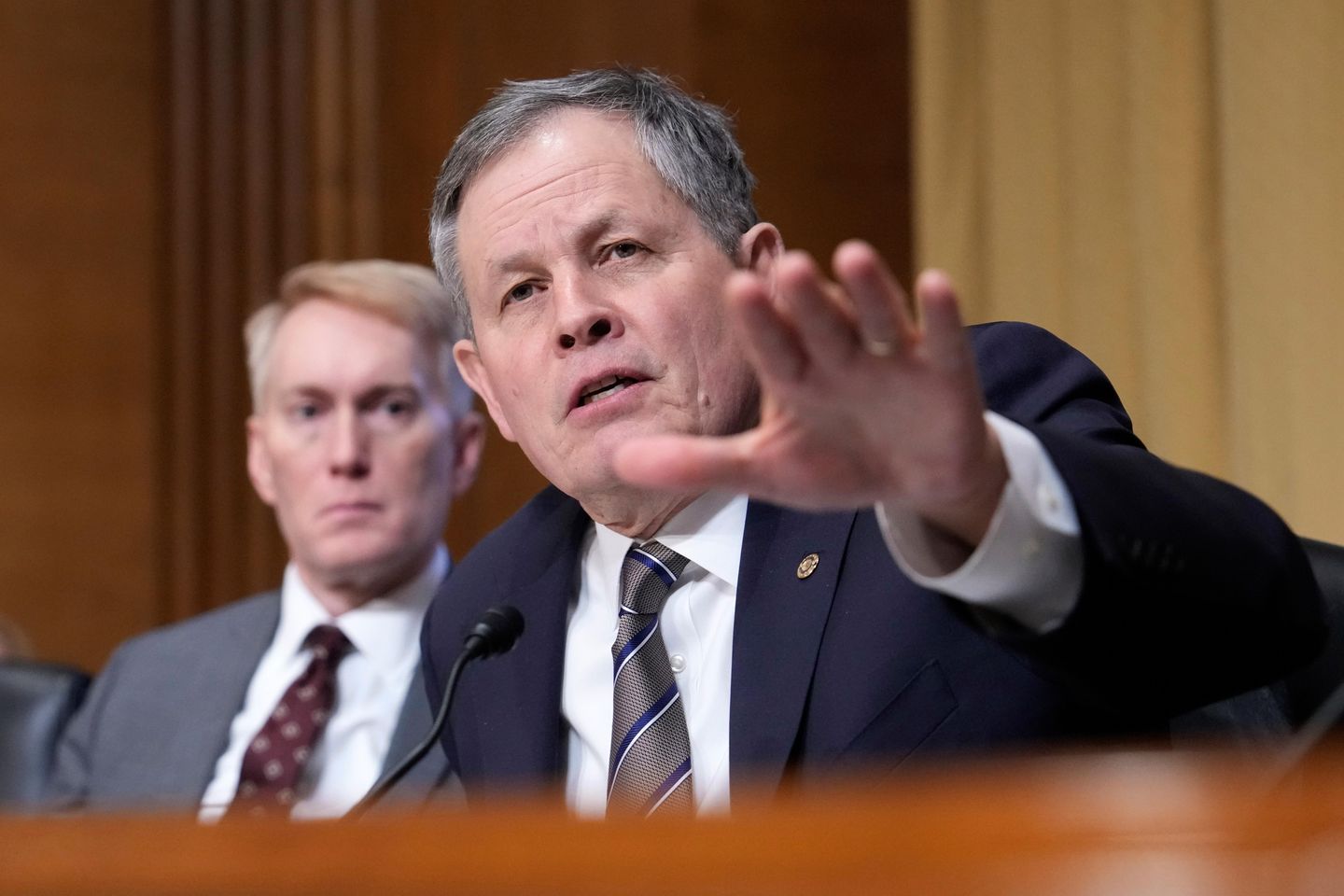
Sen. Steve Daines is the latest. Minutes before the candidate filing deadline in Montana last week, the two-term GOP senator announced he would not seek reelection and that U.S. Attorney Kurt Alme would run in his place — a move that effectively shut out any additional Republican contenders and positioned Mr. Alme to step into the seat, which comes with a $174,000 annual salary and a congressional pension.
Mr. Daines told The Washington Times he engaged in a “collaborative process” with Gov. Greg Gianforte, Sen. Tim Sheehy, and the White House to pick a “highly respected” candidate and spare Montanans from the “threat” of a costly and contentious battle for a reliably Republican seat.
“Montanans don’t want to see a massive multi-hundred-million-dollar type Senate race where our mailboxes are full, our airways are saturated,” he said.
President Trump blessed Mr. Daines’ decision to “pass the torch” and immediately endorsed Mr. Alme, saying the endorsement was “based on Steve’s strongest recommendation.”
Larry Sabato, the University of Virginia political scientist who has tracked congressional elections for decades, said he could not recall another Senate race matching the Daines scenario in modern times, though the House has seen similar moves.
“If this manipulation of the rules isn’t election rigging, then I don’t know what qualifies,” Mr. Sabato said.
Mr. Daines led the Senate GOP campaign arm last cycle and recruited Mr. Sheehy to run and oust incumbent Sen. Jon Tester, the last Democrat to hold statewide office.
He argued that his decision to drop out without giving Democrats enough time to recruit a candidate for the now open seat saves both parties from wasting resources in a race “where the outcome would be clear.”
Sen. Gary Peters, who served as Democrats’ campaign chair last cycle, said if Mr. Daines had announced sooner, “you’d have a better collection of candidates who are seeking office.”
“I think that’s always best,” he said.
Sen. Adam Schiff, California Democrat and former House member, said incumbents waiting until the last minute to make reelection decisions to prop up their preferred successors is a strategy “that, sadly, has been used by both Democrats and Republicans.”
“It is anti-democratic and it needs to be fixed,” he said, suggesting state or federal laws need to be changed to allow for a filing extension when incumbents decide not to run.
Most states treat their deadlines as firm cutoffs, but a few have built in exceptions to keep races competitive when an incumbent unexpectedly steps aside. California automatically extends the filing window for congressional and state legislative races if an eligible incumbent does not file for reelection. Texas goes further, allowing an extension when an incumbent seeking reelection withdraws or is ruled ineligible on the deadline day or the day after. Tennessee has a similar rule.
Mr. Sabato pointed to a 2003 case as one of the most egregious examples of abuse. Rep. William Lipinski of Illinois arranged for the local Democratic Party to select his son, Dan, as his replacement after he withdrew from the race past the filing deadline — bypassing a primary entirely in a district where Republicans posed no threat.
Last year, Rep. Jesus “Chuy” Garcia of Illinois drew a formal House reprimand after withdrawing from his race shortly after his chief of staff filed to run, essentially clearing her path to his seat.
Mr. Garcia filed nomination petitions last fall, scaring away potential rivals, then abruptly withdrew on the Nov. 6 filing deadline — one day after his chief of staff, Patty García, submitted paperwork to run, making her the sole candidate in the race.
Rep. Marie Gluesenkamp Perez of Washington forced a vote reprimanding Mr. Garcia for “undermining the process of a free and fair election,” a resolution that passed 236-183, with 23 Democrats joining 213 Republicans — including Montana Reps. Troy Downing and Ryan Zinke.
“This is not who we are as a country,” Ms. Gluesenkamp Perez said at the time. “People bled and died for the right to elect their own representative.”
Mr. Daines argued the Garcia situation was not relevant to his because the Illinois Democrat stepped aside to clear the way for his own chief of staff.
Mr. Zinke offered a softer version of the same playbook. He announced his retirement two days before the filing deadline, giving Aaron Flint — a conservative radio host and former Zinke staffer — just enough time to launch a polished campaign rollout with endorsements from Mr. Trump, Mr. Gianforte and Mr. Sheehy already in hand. Other potential candidates had two days to enter the race. Few did.
Mr. Daines took things a step further, withdrawing minutes before the candidate filing deadline and minutes after Mr. Alme filed his paperwork to run.
Seth Bodnar, an independent who announced his bid hours before Mr. Daines dropped out, said the senator and his allies were “rigging the system for themselves instead of letting Montana voters decide.”
“They must think we’re stupid, but we see this for what it is — a sleazy insider plot led by party bosses in Washington to rob Montanans of their voice at the ballot box,” Mr. Bodnar said. “Instead of letting Montana voters decide, D.C. politicians are trying to decide for us.”
Roger Koopman, president of the Montana Conservative Alliance, a right-leaning group focused on limited government, charged that “voters were denied a free market of candidate choice.”
“Democracy was made a sham,” Mr. Koopman said in an op-ed.
Montana’s GOP leaders, however, largely shrugged off the Daines maneuvering.
“We are not focused on how he retired, but on how a conservative Republican can replace him by winning the election against unqualified Democrats and Democrat-planted ’independents,’” said Montana GOP Chair Art Wittich.
Asked whether he was comfortable with Mr. Daines’ action, Mr. Sheehy said simply: “Did he break any rules?”