
President Trump assured American lawmakers Monday that the war with Iran was on track to end soon, even while Turkey shot down another incoming Iranian missile and Israel broadened its airstrikes to target Tehran’s oil production facilities.
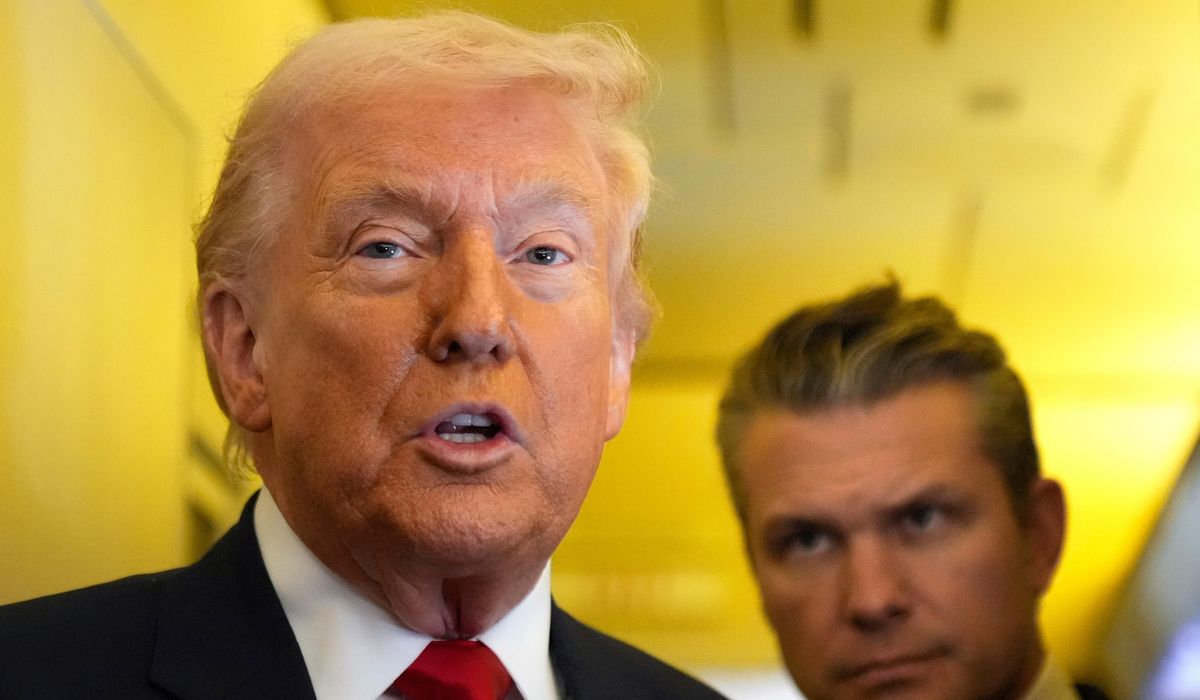
Mr. Trump opened his speech to Republican House members at their annual retreat by saying the U.S. “took a little excursion” to Iran “because we felt we had to do that to get rid of some evil.”
“I think you’ll see it’s going to be a short-term excursion,” he told the gathering in Doral, Florida.
He praised the U.S. military by saying he “rebuilt” it during his first term.
“I didn’t know I’d be using it so much in the second term, but we have a military like no other,” he said. “It’s not even close.”
Mr. Trump said that if the U.S. didn’t launch its strikes on Iran, “within a week” Iran would have attacked the U.S.
SEE ALSO: Markets rebound after Trump suggests war with Iran is nearing completion
“100% they were ready. They had all these missiles, far more than anyone thought, and they were going to attack,” he said.
“Now everybody understands it. Together with our Israeli partners, we’re crushing the enemy and overwhelming display of technical skill and military force. Iran’s drone and missile capability is being utterly demolished. The navy is gone. It’s all lying at the bottom of the ocean, 46 ships. Can you believe it?” he said. “Their terrorist leaders are gone or counting down the minutes until they will be gone.”
He said Iran “did so many bad things.”
The U.S. and Israel launched strikes on Iran late last month in a mission dubbed Operation Epic Fury.
Seven U.S. service members have been killed in the operation. Mr. Trump attended the dignified transfer of the soldiers in Dover, Delaware, on Saturday.
“But they all said one thing to me: ‘Make sure you win, sir. Make sure you win,’” Mr. Trump said.
SEE ALSO: After a revolution that rejected hereditary rule, Iran’s next leader inherits job from his father
The president and Defense Secretary Pete Hegseth said over the weekend that the deployment of U.S. ground forces to secure or extract Iran’s uranium remains a possibility.
The administration has cited the destruction of Iran’s ability to build nuclear weapons as one of the primary goals of the U.S.-Israeli war against Iran, in addition to crippling the country’s ballistic and drone programs.
U.S. strikes during Operation Midnight Hammer in June severely damaged Iran’s enrichment capacity but did not destroy the country’s stockpiles of enriched uranium.
Tehran possesses at least 990 pounds of uranium enriched to more than 60%; weapons-grade enrichment is 90%. Iran also possesses thousands of pounds of uranium enriched at a lower level that could be moved closer to weapons-grade.
Missing uranium
During the opening days of Operation Epic Fury, U.S. and Israeli airstrikes reportedly targeted the entrances of Iran’s top uranium enrichment sites, where the country’s stockpiles were buried during the June war.
However, it remains unclear whether Iran was able to retrieve any or all of the highly enriched uranium before or during the June war. Some estimates suggest that Iran was able to move some of the material out from under the rubble at the Isfahan enrichment facility, which was severely damaged. The International Atomic Energy Agency, which has routinely monitored Iran’s highly enriched uranium stockpile over the years, has not been able to verify its location or condition in nine months.
U.S. officials say most of Iran’s highly enriched uranium lies buried underground at three enrichment sites: Isfahan, Natanz and Fordow.
Launching ground operations at the three sites to destroy or extract Iran’s highly enriched uranium would be a high-risk operation. In addition to contending with Iranian armed forces, U.S. troops would need to uncover the buried material, which could be time-consuming and costly.
The risk of radioactive contamination in the surrounding regions would require nuclear experts to accompany the mission to ensure that the highly enriched uranium is handled or diluted properly.
Still, the Trump administration is no stranger to deploying special operations forces on consequential missions. U.S. Special Forces led the ground operation that captured Venezuelan President Nicolas Maduro in January without suffering casualties.
A possible ground incursion from U.S. forces is being discussed as the Trump administration faces intense scrutiny from lawmakers and critics over the war’s justification and conduct.
School hit
Reporting this week cast doubt on U.S. claims that it did not fire the missile that hit the Shajarah Tayyebeh elementary school in Iran on Feb. 28. More than 175 people, including many children, were killed.
A video released by Iran’s state-affiliated media outlet Mehr News shows an American Tomahawk cruise missile hitting nearby Islamic Revolutionary Guard Corps buildings, with the school shown smoldering in the background.
U.S. forces were reportedly targeting a nearby IRGC base at the time of the attack.
Mr. Trump told reporters this weekend that he believed Iran was responsible for the attack. He said the Iranian military is “very inaccurate, as you know, with their munitions.”
Mr. Hegseth said the Pentagon was investigating the attack.
Turkey targeted
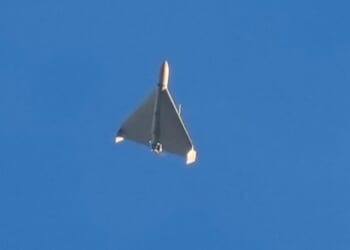
NATO defenses shot down an Iranian drone traveling in Turkish airspace on Monday, the Turkish Ministry of Defense said in a statement, marking the second time in one week that Iran has targeted a member of the alliance.
The missile was destroyed near Turkey’s southern border with Syria and caused no casualties. Iran has not claimed responsibility for the strike.
On Wednesday, NATO defenses intercepted an apparent Iranian missile traveling toward Turkish airspace. The missile was likely targeting Incirlik Air Base in southern Turkey, which houses a significant contingent of U.S. Air Force personnel.
Iran denied that it had launched the attack and instead blamed Israel for attempting to divide the region.
The attack was perhaps the most consequential escalation of the war so far, and the follow-up strike cemented Iran’s strategy of attempting to expand the conflict beyond the Middle East. Iranian missiles also have rained down on Persian Gulf nations such as Saudi Arabia, the United Arab Emirates, Bahrain, Qatar and Kuwait.
Turkey, much like some European countries, did not allow the U.S. to stage attacks against Iran from its territory, and Ankara has retained somewhat warm relations with Tehran over the years.
Lebanon crisis
Pro-Iran Hezbollah fighters in Lebanon likely launched drone attacks that targeted Cyprus, a member of the European Union.
NATO has responded aggressively to the strikes. It insists the incident shows the alliance’s capabilities when threatened with external attacks.
“NATO stands firm in its readiness to defend all Allies against any threat,” Allison Hart, a NATO spokeswoman, said in a statement.
The strikes also raised concerns that further attacks might trigger NATO Article 5, which would pull several other nations into a war with Iran. NATO Secretary-General Mark Rutte said last week that the attack was very concerning but would not trigger the mutual defense clause.
Israel attacks oil infrastructure
Israel targeted Iran’s oil facilities over the weekend for the first time since the war began, killing at least four people and triggering massive explosions across Tehran.
The strikes hit four storage sites and an oil production transfer facility in Tehran and the nearby province of Alborz. Reports from Tehran showed oil-filled black rain coating Iran’s capital, potentially contaminating the city’s water supply.
The Israel Defense Forces notified Washington ahead of the strikes and argued that they were necessary because the fuel was used by various parts of the Iranian government and supported its military.
The scale of the strikes on Iran’s oil infrastructure reportedly surprised U.S. officials and may have sparked the first major rift between Israel and the U.S. since the start of the war. The Trump administration is concerned that the attacks could severely limit energy access to regular Iranians, potentially fostering more intense anti-U.S. feelings in Iran.
The U.S. has also begun targeting civilian infrastructure by launching an airstrike on a desalination plant on Qeshm Island, cutting water supply to the surrounding region.
Iran responded forcefully to the strike Sunday. Foreign Minister Abbas Aragchi vowed that his country would respond in kind.
Iran targeted a desalination plant and a nearby residential area in Bahrain on Sunday, injuring more than 30 civilians. Iranian drones and missiles also attacked Bahrain’s only oil refinery, sparking a large fire.