
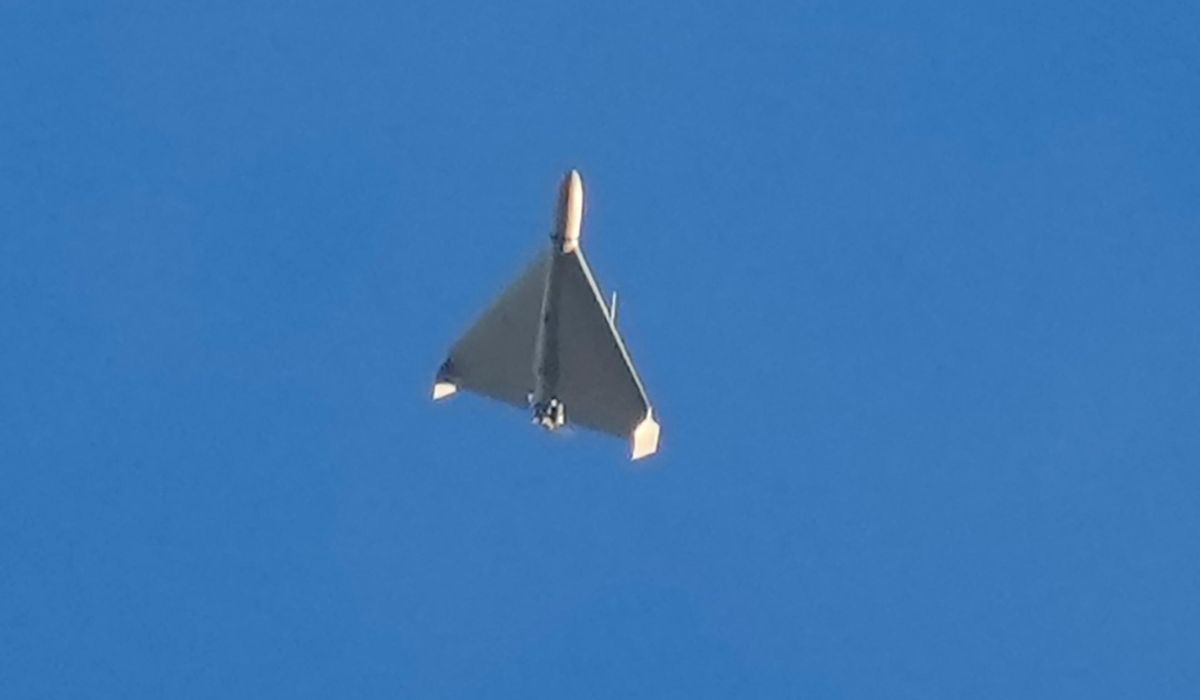
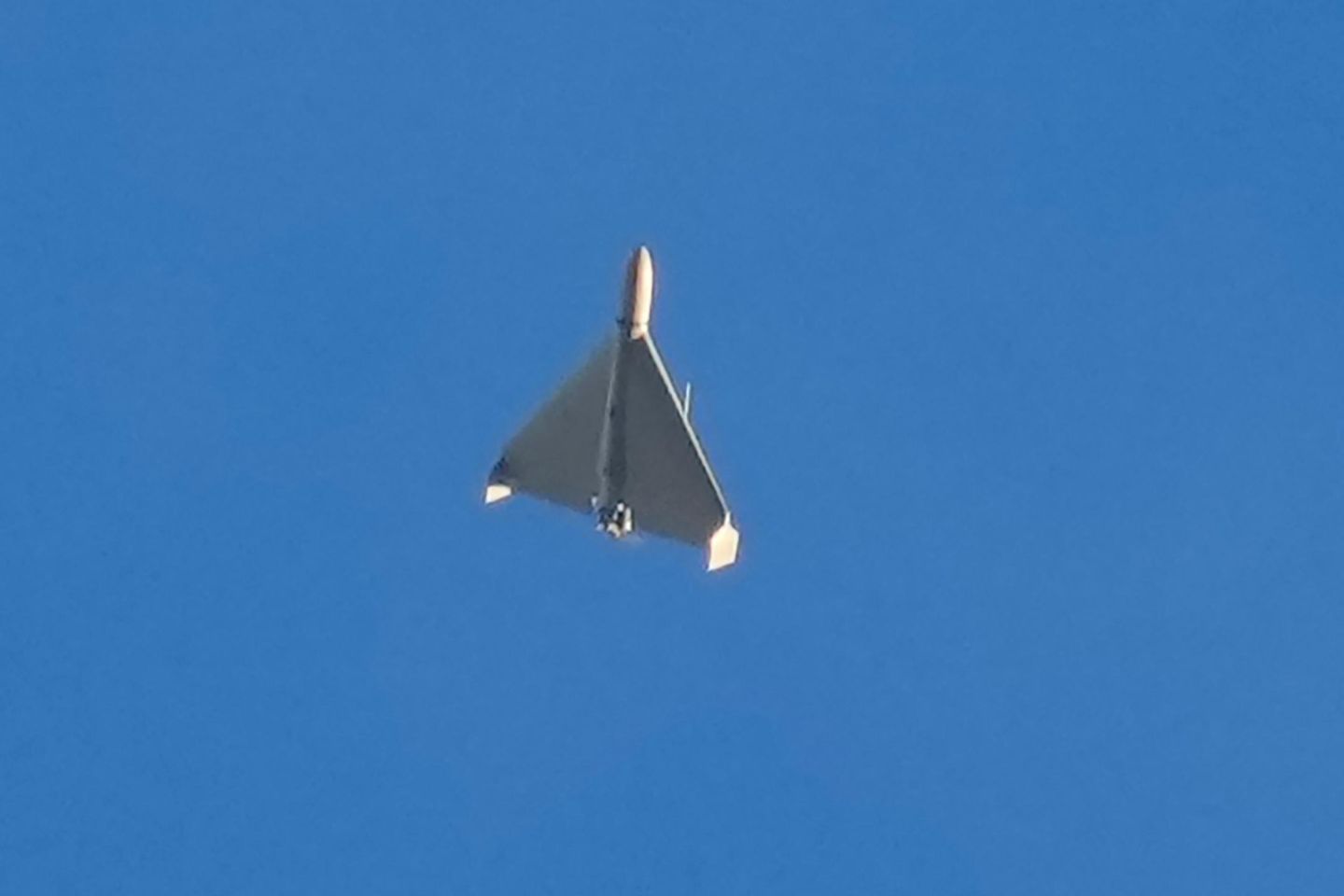
The war between the United States, Israel and Iran has produced one of the most intense exchanges of missiles and drones in modern military history. Iran has fired more than 500 ballistic missiles and more than 1,000 drones since hostilities began Feb. 28, according to U.S. military officials and independent tallies. Here are the weapons defining the fight.
WHAT IRAN IS FIRING
Shahed-136 suicide drone
At roughly $20,000 per unit with a 110-pound payload and a range often estimated at roughly 1,000 miles or more, the Shahed is cheap, plentiful and built for attrition. It flies slow and low — harder to detect than a ballistic missile and far cheaper to replace than the interceptors fired against it. Iran has deployed the drone in mass swarms across the Gulf, running the same playbook it supplied to Russia in Ukraine. Its battlefield credibility is such that the U.S. military has built its own copy.
Shahab-3 ballistic missile
Iran’s workhorse medium-range missile carries a warhead weighing roughly 1,700 pounds and can strike targets across much of the Middle East — enough to reach Israel and many major U.S. bases in the region. Tehran has supplied missile technology and components to Houthi rebels in Yemen and has fired Shahab-family missiles in coordinated waves alongside drone swarms to saturate air defenses.
Emad and Ghadr missiles
More accurate and longer-ranged derivatives of the Shahab-3, these advanced ballistic variants extend Iran’s strike reach to roughly 1,200 miles. Iranian state media reported their use in strikes against Israel during the region’s escalating missile exchanges in 2024. Documents seized by Israeli intelligence from Iran’s nuclear archive also indicated Iranian weapons designers studied fitting nuclear warheads onto Shahab-class missile systems, according to documents cited by Israeli officials.
Fattah — Iran’s contested hypersonic
Iran claims this missile travels at up to 15 times the speed of sound with an 870-mile range and says it has deployed the Fattah-1 in the current war. Whether it qualifies as a true hypersonic weapon remains disputed — neither U.S. nor Israeli officials have confirmed the classification, according to Washington Times reporting. A genuine hypersonic glide vehicle can maneuver unpredictably at low altitude, shrinking the interception window to seconds.
WHAT THE U.S. AND ISRAEL ARE USING
B-2 Spirit and the GBU-57 bunker buster
The B-2 stealth bomber is the only aircraft currently configured to deliver the GBU-57 Massive Ordnance Penetrator — a 30,000-pound bomb designed to burrow deep into hardened underground targets before detonating. In Operation Midnight Hammer last June, seven B-2s dropped 14 of the weapons on Iran’s nuclear facilities at Fordo, Natanz and Isfahan in the bomb’s first operational use. Both are active again in the current campaign.
Tomahawk cruise missile
U.S. naval forces opened Operation Epic Fury with Tomahawk land-attack missiles fired from surface ships, confirmed by CENTCOM video of the USS Thomas Hudner launching the weapons. During last June’s operation, more than two dozen Tomahawks were also fired from a submarine against a third nuclear site, demonstrating the missile’s reach from beneath the surface.
LUCAS drone — America’s Shahed clone
The U.S. is countering Iran’s signature weapon with a direct copy of it. The Low-cost Unmanned Combat Attack System, or LUCAS, is modeled on the Shahed-136 and has already been deployed against Iranian targets. U.S. Central Command described the strikes as an American response using low-cost attack drones.
THE INTERCEPTORS
Patriot, THAAD and Israel’s layered shield
Stopping Iran’s barrages requires multiple overlapping systems — Israel’s Iron Dome and Arrow 3 for missiles targeting the Jewish state, and U.S. Patriot and THAAD batteries defending American and Gulf State installations. The economics are brutal: each PAC-3 interceptor can cost several million dollars to fire against a drone that may cost tens of thousands. The U.S. burned through a significant portion of its THAAD interceptor inventory during last June’s 12-day war alone, and Israeli officials were already warning of unsustainable Arrow 3 usage rates by that conflict’s end.
Advanced Precision Kill Weapons System
One partial answer to the cost problem is the APKWS — a laser-guidance kit bolted onto a standard $3,000 Hydra rocket for a total cost of roughly $25,000. Fired from F-16s, F-18s or Apache helicopters, it offers a far more economical option for taking down low-flying drones than a Patriot interceptor.
President Trump has boasted the U.S. arsenal is “virtually unlimited.” Retired South Korean Gen. Chun In-bum sees a darker contingency: if American precision munitions run short, he warned, Washington may be tempted toward “unguided weaponry.” “Remember Operation Linebacker in Vietnam and how terrifying that was?” Gen. Chun said. “The Trump administration might consider using that kind of capability.” Linebacker flew B-52s in carpet-bombing roles, the last use of massed, non-precision, airdropped weapons.
The Associated Press contributed to this report.
This article is written with the assistance of generative artificial intelligence based solely on Washington Times original reporting and wire services. For more information, please read our AI policy or contact Steve Fink, Director of Artificial Intelligence, at sfink@washingtontimes.com
The Washington Times AI Ethics Newsroom Committee can be reached at aispotlight@washingtontimes.com.