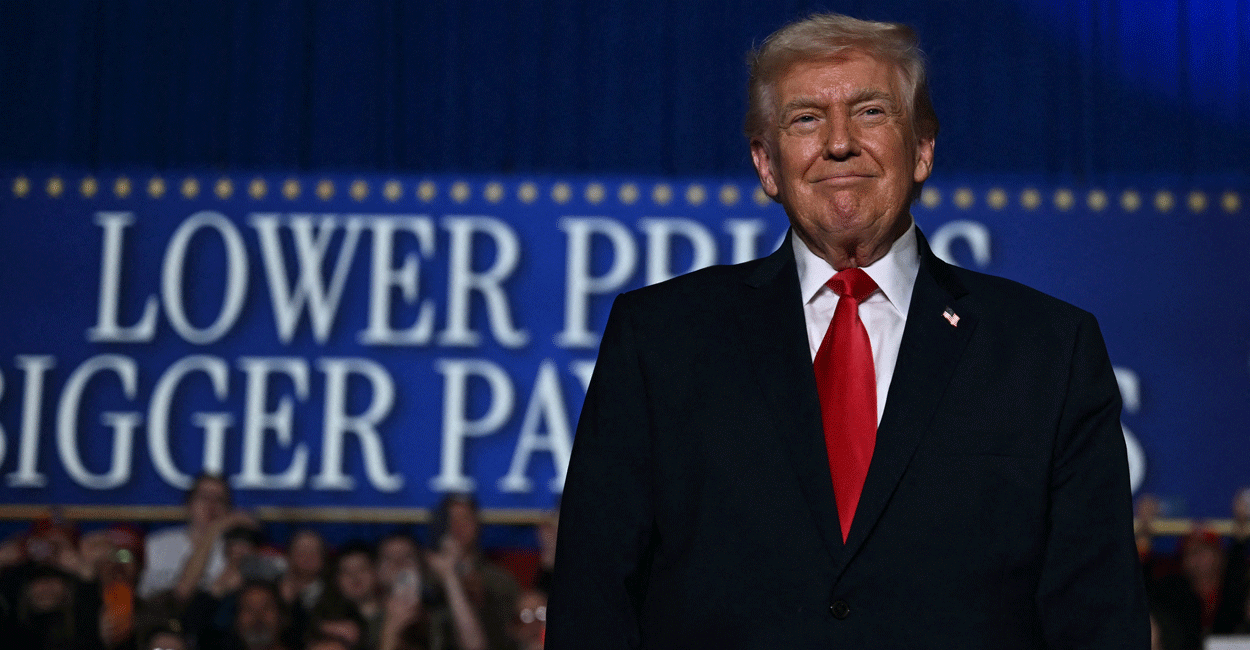
Pollster Scott Rasmussen of the Napolitan Institute told reporters on Wednesday that American’s optimism on their personal financial situation under President Donald Trump is increasing.
Americans’ optimism for their personal financial situation increased from 24% to 32% since November, according to polling from Napolitan.
“Since the depths of despair in the midst of that government shutdown a couple of months ago, 4 out of 5 polls have shown some improvement,” Rasmussen said.
Meanwhile, Americans’ pessimism has declined by 11%, from 41% to 30%.
Rasmussen’s finding comes over a year after Trump took office for the second time.
Trump entered office after four years of higher prices and high inflation.
Despite the increase in optimism however, Rasmussen stated that the poll numbers are still not significant enough for the Republican Party to lean on heading into the midterms.
The pollster noted that people’s previous feelings about their personal finances has harmed the president’s reputation with the public.
Rasmussen noted that the public outlook on their personal finances has slightly reduced Trump’s voting base by 7% this time last year, with a 5% decline in voters “who strongly approve” of Trump’s job as president. Yet, 97% of Trump base voters continue to approve of the president’s performance; 64% of them “strongly approve.”
“It is not that the base is being disenchanted,” he added. “It is simply just that the base is getting a little bit smaller.”
“While it’s impossible to define precisely why the base has been shrinking, economic perceptions are likely playing a part in it,” Rasmussen told The Daily Signal.
“People aren’t really connecting their better finances with Trump’s policies,” Rasmussen claimed.
“If the economy were to improve, it would be very important for the Trump administration to connect those improvements to the tax cuts that were passed last year,” Rasmussen continued.
Rasmussen added that current legislation to require government-issued IDs in order to vote, such as the Safeguard American Voter Eligibility Act, or SAVE Act for short, has broad support from the public.
Rasmussen noted that this could weigh heavily on political parties heading into the midterms.
Senate Minority Leader Chuck Schumer, D-N.Y., recently vowed to block the SAVE Act from passing the senate, as he described it as “Jim Crow Era” legislation.
Meanwhile, Senate Majority Leader John Thune, R-S.D., is under pressure to use the talking filibuster to escape the 60 vote filibuster in the Senate and pass the SAVE Act