“Why does it hit you so deeply?”
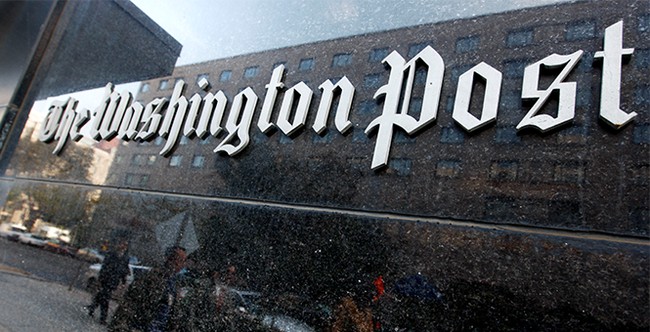
It was last November, and I was at Georgetown University being interviewed by a writer for Washingtonian magazine. She is doing a profile of me, and was asking me why I disliked the media, particularly the Washington Post, with such bitterness. Yes, there was their evil hit job on me and Brett Kavanaugh in 2018, which I detailed here and in my book The Devil’s Triangle. Yet the writer kept asking me questions, sensing it went even deeper.
That’s when I felt my voice catch and an adrenaline spike hit me. She was right. It’s so deep, I said because my father was a journalist his entire life at National Geographic. His office was a block away from the Post. My heroes growing up were journalists. They were men like my father, brave, athletic, patriotic men and women who loved America, hated communism and felt a moral duty to be fair and decent to the people they were covering. Dad put four of us through Catholic schools on a journalist’s salary. I loved H.L. Mencken, Joan Didion, and Woodward and Bernstein. Journalism was an honorable profession. Yes, my father wrote about the world, going to places like Africa, Israel, Ireland and Russia. Yet some of he favorite pieces were the ones about America – Williamsburg, Florida, Alaska, He loved Alaska.
Then it changed. There’s no need for a dissertation on the subject. We all know why. After Watergate the media was taken over by far leftists who didn’t care about honor or decency. I have often compared them to addicts; Watergate was the first hit, and they’ve been chasing that big high ever since. Every story had to be Watergate. The hunt made them reckless and now has destroyed them.
I wrote for the Post in for a few years in the early 1990s, until they started changing my words – in editorials – to reflect the far left of the DNC. I bailed.
Conservative friends from Hot Air and other places have known that I have written about the media, particularly the Post, and the Kavanaugh hit frequently, some would say obsessively, over the years. I apologize if I tested your patience. Yet with the Washington Post now officially in free fall, delivering the hammer blow of massive layoffs, I can see why, as the Washingtonian writer asked, it hit me so hard. In criticizing the Post I was trying to rescue an addict from himself. And sometimes they just can’t be saved. The Post became addicted to its aura and left wing politics and collecting Republican scalps. Chasing the high meant ignoring real stories – the Russiagate hoax, Biden’s dementia, my claims made against the paper.
Some addicts are not beyond hope – but you have to search away from the Washington Post to find them. In 2024 a New York Times reporter named David Enrich apologized – sort of – to me. When I confronted Enrich about his abysmal coverage of me during the 2018 Brett Kavanaugh circus, Enrich wrote the following: “I’ve spent a lot of time thinking about my role in the Kavanaugh coverage, and I would be happy to talk to you about it at some point. For now, I will just say that I have learned some lessons and would probably do certain things differently next time.” Then he added this: “I can’t imagine what it was like for you to go thru that.”
Last year Georgetown University held a symposium about the state of journalism. When asked what the main issue facing the press is, Eric Wemple, a panel member, offered an honest answer: journalists need to learn how to apologize when they make mistakes. Wemple’s comments (which can be found in this video):
News organizations, when they put out these big stories, they put their soul into these pieces, and when they turn out to be [expletive] up, they can never, ever – it takes them forever to come to grips with it. So people on the outside say, “Why can’t you just admit the thesis wrong?” No, no! We sweated over this, we edited this five times, it went through fifteen layers, we lawyered it. There is this emotional attachment to the work. When news organizations drag their heels, take the [fake] gang rape story with Rolling Stone at UVA, it took them months or years [to admit it was false].They finally had to commission an investigation, I think that is what is common to most media crises. It’s not just the first mistake. I think that is what is common to most media crises. It’s the refusal, the stubborn resistance to change or to correct. Editors will say when we make a mistake we’ll correct it, but that’s just not often the case.
Wemple spent years at the Post before leaving for the New York Times last year. He is one of the few mainstream media reporters who has admitted that Russiagate is a scam. It will be fascinating to see if challenges his new colleagues at the Times on their appalling lies about Russiagate. He might even think about asking David Enrich when I can expect that follow-up conversation about the Times and their ridiculous Kavanaugh coverage.
Whoever remains at the Washington Post, and even those who have been laid off – more than 300 reporters – can now confront the silence that arrives to addicts when they finally hit bottom. For some of them the truth, if faced, will be too much. On July 30, 1996, Kathy Scruggs, a reporter for the Atlanta Journal Constitution, broke a huge story. A security guard named Richard Jewell was the focus of the federal investigation into a bomb that killed one person and injured 100 at Centennial Olympic Park in Atlanta. A couple of days after the story ran, Scruggs told a colleague, “Yeah, we think he’s the guy.”
He wasn’t. Jewell was innocent. CNN reported the AJC article, and for the next 88 days Jewell was hunted by reporters. He was one of the first victims of what would become known as “trial by media.” When his name was finally cleared, Jewell, who died in 2007, sued the New York Post, NBC News, and CNN, and settled with all three. Jewell was cleared and sued The Atlanta Journal-Constitution other news outlets. Most of them settled. The AJC fought the suit and, in 1999, Scruggs was ordered to jail if she didn’t reveal her source for the story. She refused but avoided jail on appeal.
Scruggs is a symbol of the transition from one form of journalism to another—from the kind of responsible reporting that made her slow down long enough in 1996 to realize Jewell could not have been the bomber, to the modern age of death by a thousand social media accusations by people who are sociopaths. Scruggs went into a spiral of guilt and depression, finally dying of a drug overdose in 2001. “I think the Jewell case killed Kathy Scruggs,” her fellow journalist and friend Doug Monroe wrote in 2003. “Certainly, the stress that plagued her in the aftermath of the story contributed to the health problems that lead to her unspeakably sad death.” Monroe added this: “Critics later said the AJC failed to exercise healthy skepticism about information from law enforcement sources. And some cops and friends feel Scruggs became the scapegoat for errors of fact and judgement made by her editors.”
I’ve always felt badly for Kathy Sruggs, and even felt that she had integrity. While she always claimed that her story was accurate – in fact authorities were looking at Jewell, which is all she reported – her conscience bothered her and she wound up taking up the cross that should have been borne by the FBI and other journalists who hyped her story. In fact, one of them came right out and apologized. In what today would be considered an astonishing move, CNN producer Henry Schuster actually wrote an apology to Jewell: “I made Richard Jewell famous – and ruined his life.”
Russiagate, the Covington Catholic kids, Brett Kavanaugh, Kyle Rittenhouse, the conservatives who sound the alarm about Joe Biden’s health years ago and were mocked, the kid who dressed up in face paint for the Kansas City Chiefs and was accused of using blackface, my own PTSD – the list of those damaged by places like the Washington Post is long. Kathy Scruggs had enough of a conscience that the Richard Jewell story haunted her for the rest of her life. “She was never at peace or at rest with this story,” Mike Kiss, one of her editors, once wrote. “It haunted her until her last breath. It crushed her like a junebug on the sidewalk.”
So, yes, my feelings about the Washington Post are intertwined with my personal history, and run deep. Yet in purely objective, journalism terms, the paper fails to do its job. My family has been in Washington for over 100 years. My grandfather was a baseball player for the Washington Nationals. My brother won the Helen Hayes Award given to the best actor in Washington. I was at the center of one of the most explosive political events in the city’s history. The Washington Post never reviewed my book The Devil’s Triangle. That’s journalistic malpractice by any measure.
OK, enough. I’ve said what I need to, and done so frequently over the years. I’d be lying if I said the demise of the Washington Post didn’t bring me some joy. Yet it’s also sad. The reporters became addicts who, over and over, refused to accept help.
Say a prayer for Kathy Scruggs. Unlike the Washington Post, she has honor.
Editor’s note: The crisis in media isn’t just coming — it has arrived. The mainstream media has transformed itself into the propaganda arm of the Left, and they work hard to intimidate advertisers and pressure Big Tech into choking off access to competing points of view. We hope we can gather as many allies as possible to keep all of these issues in the public square – and indeed to preserve the public square at all.
Join us in the fight. Join Hot Air VIP and use promo code FIGHT to get 60% off your membership!