For as long as I’ve been instructing young cops on the intricacies of the job, I have most often boiled it down to four simple words: Focus on the mission.
God only knows how many disastrous outcomes might have been avoided had police officers simply focused on their mission and not had their attention diverted to tangential and inconsequential problems. However lengthy that list may be, today we can add the Alex Pretti shooting to it.
And here we are again, with a man dead, a city in chaos, and perhaps only a winter storm preventing that chaos from spreading across the country. Sadly, people on both sides of the political divide seem to have learned nothing from the death of Renee Good.
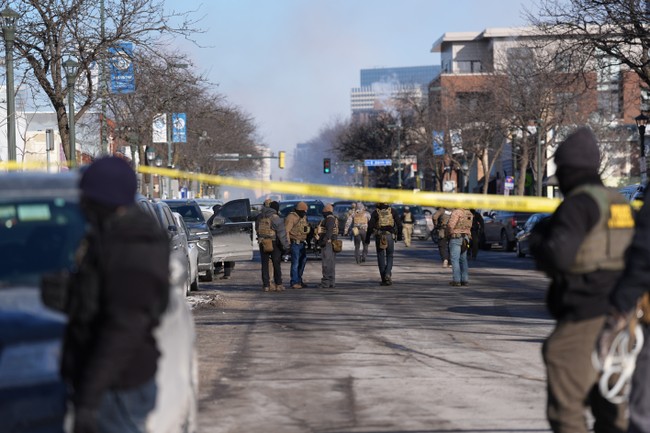
Here is what is known about the Pretti shooting as I write this on Monday: On Saturday, at about 9:05 a.m. local time, immigration agents were operating in the area of Nicollet Avenue and 26th Street in South Minneapolis, just over a mile from where Renee Good was killed on Jan. 7. Their target, according to a statement from Border Patrol Commander Gregory Bovino, was Jose Huerta-Chuma, whose criminal history was said to include domestic assault, disorderly conduct, and driving without a license. (The Minnesota Department of Corrections released a statement saying Huerta-Chuma has never been in their custody. This may mean one of three things: 1) Bovino’s information is erroneous; 2) Huerta-Chuma served time for these charges in another state; or 3) he served time in a county jail rather than a state prison.)
Huerta-Chuma escaped arrest on Saturday, reportedly by running into a donut shop where employees or others locked the door and refused entry to pursuing agents. In various videos shot by bystanders and compiled by CNN, it appears that the agents are preparing to drive off. Two unmarked SUVs are double-parked facing north on Nicollet, with an agent about to get into the back seat of the second one. Two protesters approach him in the street and appear to be blowing whistles and heckling him.
As the first SUV begins to drive forward, this agent engages with the protesters in what is at first a verbal confrontation. Pretti can then be seen in the street holding a cellphone and filming this interaction as he tries to wave a southbound car through the scene. CNN’s video does not capture what immediately follows between the agent and the two protesters, but Pretti loudly accuses the agent of pushing them into traffic.
We next see Pretti and the two protesters, who are now revealed to be women, on the west side of the street. The agent shoves one of the women, then shoves Pretti, and then shoves the other woman into the snow. Pretti steps between the fallen woman and the agent and raises his left hand in an apparent gesture of submission, but the agent sprays him in the face with some type of chemical irritant, most likely pepper spray.
Pretti moves to help the fallen woman but the agent grabs him tries to pull him away from her. Other agents join the fray, and when Pretti is forced to the ground, his jacket rides up to reveal a handgun in an inside-the-waist holster on his right side. As an agent moves in and removes Pretti’s gun, others shout, “He’s got a gun!”
Multiple shots are fired, some number of which strike Pretti and kill him.
His death is as inarguably tragic as it was avoidable. The agents and, yes, Pretti himself made mistakes which, had they been avoided, would have led to a different outcome.
And how might things have ended differently on Saturday? First, the agents failed to focus on their mission. Having failed to arrest Jose Huerta-Chuma, it appears that all of them were prepared to leave but one, who for some reason continued to argue with the two protesters in the street. Whoever was in charge of that team should have told him to load up with the rest of them so they could leave the area, either to find another way to arrest Huerta-Chuma or to search for someone else on their list of deportable illegal aliens. There was nothing to be gained – and as we now know, much to be lost – from remaining at the scene and dealing with people eager for a confrontation that would be filmed and used to discredit the mission and the agents themselves.
Instead, when the agent took it upon himself to move the protesters out of the street, his colleagues were obliged to come to his aid when the encounter escalated into a physical altercation. And in a matter of seconds a minor use of force turned into a fatal shooting.
Focusing now on the shooting itself: I have been in similar situations several times in my police career, situations that were already tense but in the blink of an eye became intensely fraught with the sudden discovery of a weapon. My blood pressure rises even now as I recall them, and I am fortunate that in every case an arrest was made without anyone being shot. It might easily have been otherwise.
I acknowledge how easy it is for me or anyone watching the videos to point out where things went wrong, but every tactical operation should be debriefed, especially those that go as horribly wrong as this one. An honest debrief of the Pretti shooting would begin with the agent’s decision to confront the protesters, but the few seconds leading up to the shooting deserve special attention. When the agent at the periphery of the altercation spotted Pretti’s gun and moved in to seize it, did he announce his intentions to his colleagues? And, having removed the gun from Pretti, did he make this known? Few outside law enforcement can imagine how hectic and confusing incidents like this one can be, but it might have made a difference had this agent communicated with those still struggling with Pretti.
During a struggle to control a resisting suspect, officers tend to focus solely on the limb they have a hold of and may be oblivious to the efforts of other officers, even those immediately next to them. An officer might be focused on, say, a suspect’s right hand, in which the officer can see no weapon, but when a colleague shouts, “He’s got a gun,” that officer has a decision to make in a split second: Do I maintain my hold on the right hand in the hope someone else is controlling the left, or do I break off contact, draw my own weapon, and shoot the suspect in the belief he may be prepared to fire?
I believe it was this very sort of confusion that led to Pretti’s death. Four agents were in direct contact with Pretti and trying to control him, none of whom was entirely aware of what the others were doing. The agent with the clearest overall view of the situation was the one who removed Pretti’s gun, but he apparently failed to let the others know he had done so. I can’t speculate as to what threat the agents who fired may have perceived, but we should not reflexively dismiss any claims that they feared being shot.
And what are we to make of Pretti’s mistakes? As unseemly as it might be to assign fault to him, an honest evaluation of the incident demands that we examine where he, too, may have erred. Yes, we are told he was licensed to carry a concealed firearm, but someone so licensed has an obligation to avoid hostile interactions with the police, through which his gun may be detected and his actions misinterpreted. Recalling once more lessons from my own career, one day while working undercover among violent protesters, I found myself being borne down upon by an entire squad of my uniformed colleagues. I knew some of them personally, but in the heat of the moment I had my doubts that I would be recognized and treated accordingly. I got out of their way as quickly as I could.
And consider: today we know that Pretti was a nurse at a V.A. hospital and licensed to carry a concealed handgun. There is nothing in his past to suggest that on Saturday morning he intended to be anything more than an annoyance to the immigration agents performing their mission in Minneapolis. The agents knew none of this. What they did know is that there has been a constant stream of death threats against them and that a man who at first appeared to be a mere annoyance was armed with a gun. If the agents mistook his intentions, it was not without some justification.
We are thus left with a tragic example of the Swiss cheese model, which teaches us that almost any mishap is the result of not just a single error or failure of judgment, but rather a series of them that so align, like the holes in slices of Swiss cheese, to allow misfortune to pass through.
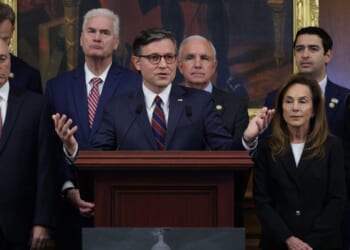
Regrettably, people on both sides of the political divide over immigration enforcement have failed to learn the lessons of the Renee Good shooting. Addressing reporters shortly after the Pretti shooting, Homeland Security Secretary Kristi Noem was characteristically hyperbolic. “An individual approached U.S. Border Patrol officers,” she said, “with a nine-millimeter, semi-automatic handgun. The officers attempted to disarm this individual, but the armed suspect reacted violently.” Not content with distorting the most basic facts of the incident, she went on to say that “[t]his looks like a situation where an individual arrived at the scene to inflict maximum damage on individuals and to kill law enforcement.”
It looks like no such thing, and Noem looked ridiculous in making this assertion.
One may appreciate Noem’s willingness to defend her subordinates, but doing so by making claims that are so clearly contradicted by video evidence only undermines public confidence in the mission her agents are trying to perform. It is a near certainty that agents in Minneapolis or elsewhere will soon come under attack from people who actually do intend to “inflict maximum damage” and to “kill law enforcement” (as expressed here, for just one of many examples). If Renee Good and Alex Pretti can be labeled as “terrorists,” what might remain of Noem’s credibility when her agents are attacked by genuine terrorists?
For every inanity uttered by a member of the Trump administration, one can find a mirror image among Democrats. Minnesota Governor Tim Walz, for example, has been incandescently disgraceful on this issue for weeks, but on Saturday he beclowned himself even further by describing immigration agents as “not law enforcement.” So, the governor seems to believe, if they’re not law enforcement, people are justified in resisting their efforts. Yes, Governor, that should calm things right down.
There has been talk of “lowering the temperature” in the immigration debate, but among Demorats and Republicans alike it has been only talk. People on both sides of the issue seem determined to keep things at a boil, thereby putting both the agents and the protesters in even greater danger. Can someone, anyone, please make them stop?
Please support PJ Media’s journalism. Join PJ Media VIP and use promo code FIGHT and get 60% off your membership.