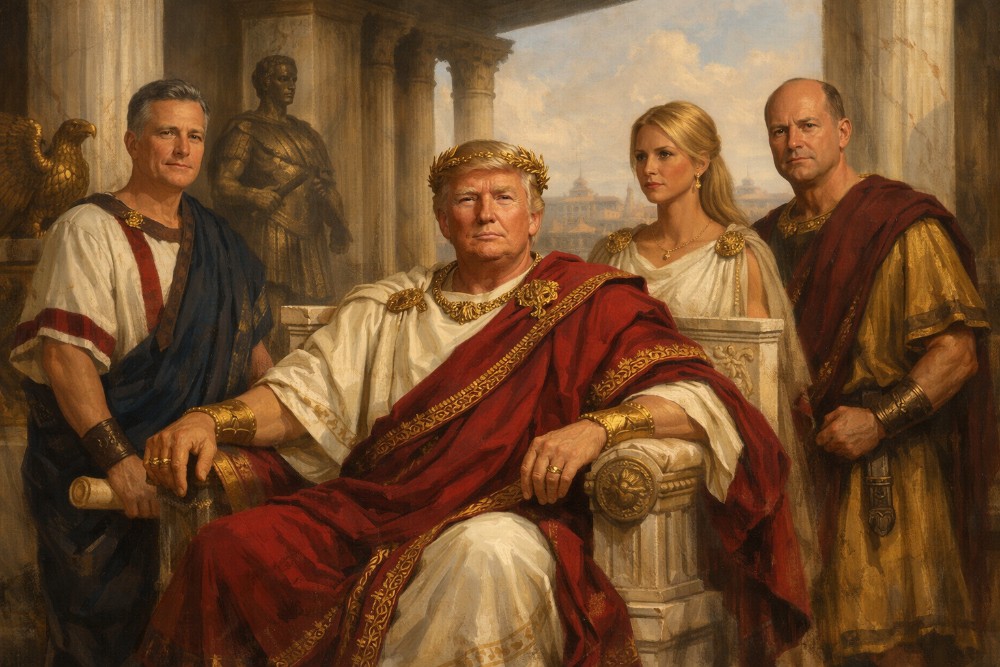
Is Donald Trump an emperor? Of course not. Still, the more interesting question is whether Trump personally rules like an emperor, at least the “good emperors” of Roman history. That question requires some in-depth analysis. The answer may surprise most readers. At the same time, the answer offers some valuable clues as to Trump’s policy choices over the coming years. That’s an invaluable aid to investors.
To be clear, we’re not referring to the “No Kings” protests against Trump staged recently with support from George Soros, the American Federation of Teachers, The Ford and Rockefeller Foundations, and far-left dark money groups like Arabella and Tides.
Trump is not a king, and the No Kings protestors just embarrassed themselves with their failed political theatre. In fact, the Trump administration has been highly transparent and has stuck closely to legally permissible approaches, even if they have creative lawyers who are breaking new ground in terms of legal precedents.
No King… But An Emperor?
The emperor analogy is far more interesting. Most students have at least a broad working knowledge of the outlines of the history of the Roman Empire. They’ve heard of Julius Caesar, Augustus, Nero, and perhaps Marcus Aurelius. Some are familiar with the mad Emperor Caligula. He preferred to be called Gaius by friends. Far fewer know his full name was Gaius Caesar Augustus Gemanicus. None of those long family names mattered for any of the emperors. They were all called Caesar. The title Caesar lived on through the twentieth century in variations such as Czar and Kaiser.
That said, surprisingly little is known about the day-to-day lives of the Caesars; what they ate, how they dressed and the like. A lot of what students believe they know is either false or salacious gossip by an emperor’s enemies rather than actual events. Historian Mary Beard has done an excellent job of discarding the myths and getting to the reality of being an emperor in her recent book Emperor of Rome (2023).
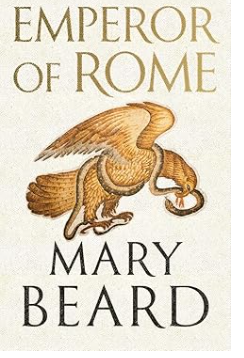
Historian Mary Beard discards the myths and shows the “job description” of being an emperor in her 2023 book.
Beard relies largely on two primary sources. The first is a speech given by Gaius Plinius Secundus (Pliny the Younger) in 100 AD in praise of the Emperor Trajan, known as the Speech of Praise.
Since Pliny repeated the speech for friends on various occasions, it was eventually written down and survives today. The second source was an essay by Emperor Augustus known as What I Did, which is a long list of his own accomplishments. What I Did was publicly displayed throughout the Roman Empire etched in bronze and copies have also survived and are readily available.
Many historians dismiss the Speech of Praise because it is fully of flattery for Trajan and casts Pliny in a very favorable light. They also dismiss What I Did for the same reason. Obviously, Augustus was bragging about his achievements and glossing over any failures or shortcomings. But Beard says it’s a mistake to dismiss these sources.
The Emperor Handbook
The two sources may be obsequious and self-congratulatory, but they contain invaluable information. In the course of praising emperors, the Speech of Praise and What I Did constitute a handbook on how to be a good emperor. If these sources focus on the successes of Trajan and Augustus, it follows that those successes were widely considered benchmarks by which emperors were measured by Roman citizens. Mary Beard calls it a “job description” for being emperor.
There’s a lot in these two sources, but they can be boiled down to a few key points. The successful emperor did the following:
- Win military victories
- Being a benefactor to everyday citizens and worthy causes
- Provide spectacles and entertainments (the famous “bread and circuses”)
- Sponsor new buildings and restore those in disrepair
Not every emperor lived up to this job description, but the best ones did. In truth, the Empire did not expand much after 100 AD, although some military victories could be won by fighting barbarians on the frontiers. The Roman dole was expected to be grain, and other staples were routinely distributed in the cities.
Julius Caesar expanded the ancient Circus Maximus around 50 BC and it was used for chariot racing and other spectacles until 549 AD. The Emperors Vespasian and Titus built the Colosseum in Rome between 70 – 80 AD. Spectacles at the Colosseum included gladiator fights and battles between wild beasts and defenseless Christian martyrs.
The Roman triumph was a parade through Rome featuring a victorious general (later only Caesar) with a laurel held over his head followed by defeated captives in chains and wagons full of the spoils of war. In short, the successful emperors lived up to their job description.
Which Brings Us To Trump
Is Trump using the emperor’s handbook to conduct his own administration? While staying within the boundaries of the U.S. Constitution, the answer appears to be: yes.
On the subject of military victories, while Trump has laid claim to the title Peace President (which seems well-deserved at least with respect to Gaza), he has also shown a militant side.
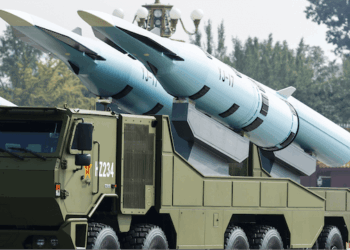
He re-named the Department of Defense as the Department of War. His intercontinental B-2 bomber raid on Iran’s nuclear bomb project, his ongoing support for the War in Ukraine, his attacks on ISIS in Syria and Islamic militants in Nigeria, and the capture of President Nicolás Maduro of Venezuela using one of the greatest armadas in history all reveal a Trump who seeks and achieves military victories.
As a benefactor to everyday citizens, Trump pushed through a major tax cut in 2025, which extended his original tax cuts from 2017 and added new ones. He now proposes a $2,000 tariff dividend check for every American below a threshold of about $200,000 per year in income.
Federal Reserve interest rate cuts are irrelevant when it comes to stimulating the economy, but fiscal policy is different. A Trump dole of $2,000 per citizen genuinely would stimulate the economy in the short-run (even if the long-run impact of higher debt levels would be negative).
When it comes to spectacles and entertainment, Trump has already staged a military parade on June 14, 2025 (the 250th anniversary of the U.S. Army) and has even larger events planned in connection with the 250th anniversary of the Declaration of Independence on July 4, 2026, the World Cup soccer competition hosted by the U.S. in 2026, and the Summer Olympics hosted by Los Angeles in 2028. When it comes to bread and circuses, no one compares to Donald Trump.
Trump is also unmatched in terms of monumental building projects and restorations. He is building an extravagant 90,000 square foot $400 million ballroom as part of the White House, after tearing down the dilapidated East Wing. Trump also plans a triumphal arch near Arlington Cemetery (already being called the Arc de Trump) similar to the Arc de Triomphe in Paris. And he has decorated the Oval Office in gold to the point where there is little room left for any additional ornamentation.
The ugly FBI headquarters in Washington DC opened in 1974 and done in the aptly named Brutalist school of design is now being abandoned and will probably be torn down in due course to be replaced by something more to Trump’s liking.
When it comes to the emperor’s handbook, Trump is four-for-four. He pursues military victories, he offers handouts to everyday citizens, he stages spectacles and he is erecting monumental structures around the nation’s capital while tearing down the ugliest of the lot. Pliny would be proud.
There’s no reason to expect any of this behavior will change. Eighty-year-old guys from Queens, NY don’t change their style under any circumstances and Trump is especially set in his ways.
We can leave the parades and monuments to the media and future historians. They do make a favorable impression on the general public (good taste is an entirely separate issue), but they don’t have a large economic impact and are not especially costly in terms of the overall federal budget.
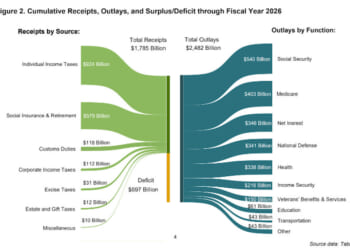
Handouts are another matter. A $2,000 “tariff dividend” check for every citizen making below $200,000 per year could cost up to $600 billion (depending on the exact cut-off point for eligibility). Trump’s tariffs may raise about that much in additional revenue in fiscal years 2025 and 2026, but that revenue gain will be lost in terms of deficit reduction if it is distributed as tariff dividends.
The tariff dividend checks will no doubt prove extremely popular and could tip the mid-term elections in favor of the Republicans. That’s a win for MAGA supporters, but it could come at the cost of slower growth in the future if annual deficits don’t shrink from the current multi-trillion-dollar level.
Trump’s role as a warrior is also a double-edged sword. Crushing ISIS and overthrowing Nicolás Maduro in Venezuela can be counted as wins for U.S. foreign policy. But Trump’s failure to end the War in Ukraine (which was always going to be on Putin’s terms short of complete Russian victory) runs the risk of escalation that could involve a wider war in Moldova and the Mediterranean Sea. Gaza remains a powder keg that can explode at any time despite Trump’s vision of a Miami-on-the-Med. Trump’s search for the source of fentanyl distribution to the U.S. could easily lead to attacks on Mexico.
Sector Winners
The clear winners as Trump follows the emperor’s handbook are defense stocks, minerals and mining, energy and the safe havens of gold and silver. U.S. Treasury notes are also attractive assets as interest rates plunge in the months ahead. Still, that interest rate plunge will be associated with recession or worse, rather than a stimulus-linked boom. Unemployment will rise, which will hurt consumption and give rise to more bad debts.
The emperor’s handbook is not foolproof. Popular programs may go hand-in-hand with slow growth and even recession. Mary Beard showed she was in on the joke when she wrote that Pliny’s speech was part of a plan to “Make Rome Great Again.” At least Americans will be entertained even if they are out of work. Bread and circuses still have their place.