A top Navy official said Tuesday that the proposed “Trump class” of battleships will fill a critical need for the military and enable the service to project more power on the seas.
Rear Adm. Derek Trinque, the Navy’s director of surface warfare, said the next generation of ships under development will fill gaps and add new capabilities beyond what the current Ticonderoga-class cruisers and Arleigh Burke-class destroyers can provide.
“We were approaching the limit to what we could add to the Arleigh Burke-class destroyer,” Adm. Trinque told an audience at the Surface Navy Association’s annual symposium in Arlington.
“We needed something newer and bigger that could have more power, accept more weapons and project more power,” he said.
The plan to build Trump-class battleships comes at a crucial moment for the service. The Navy’s surface force community is facing major challenges, including persistent maintenance backlogs, insufficient spare parts, a shortage of skilled maintenance personnel and a struggling industrial base for shipbuilding.
That means the Navy is faced with the prospect of simultaneously developing cutting-edge ships while overseeing a complex and expensive maintenance program for the existing fleet.
“We are building the future surface force and modernizing and maintaining the current surface force,” Adm. Trinque said.
The Arleigh Burke-class destroyers joined the fleet in 1993. The Navy has 74 in its inventory that will remain the backbone of its surface fleet into the 2060s. Adm. Trinque called it “the most successful class of surface ships ever built.”
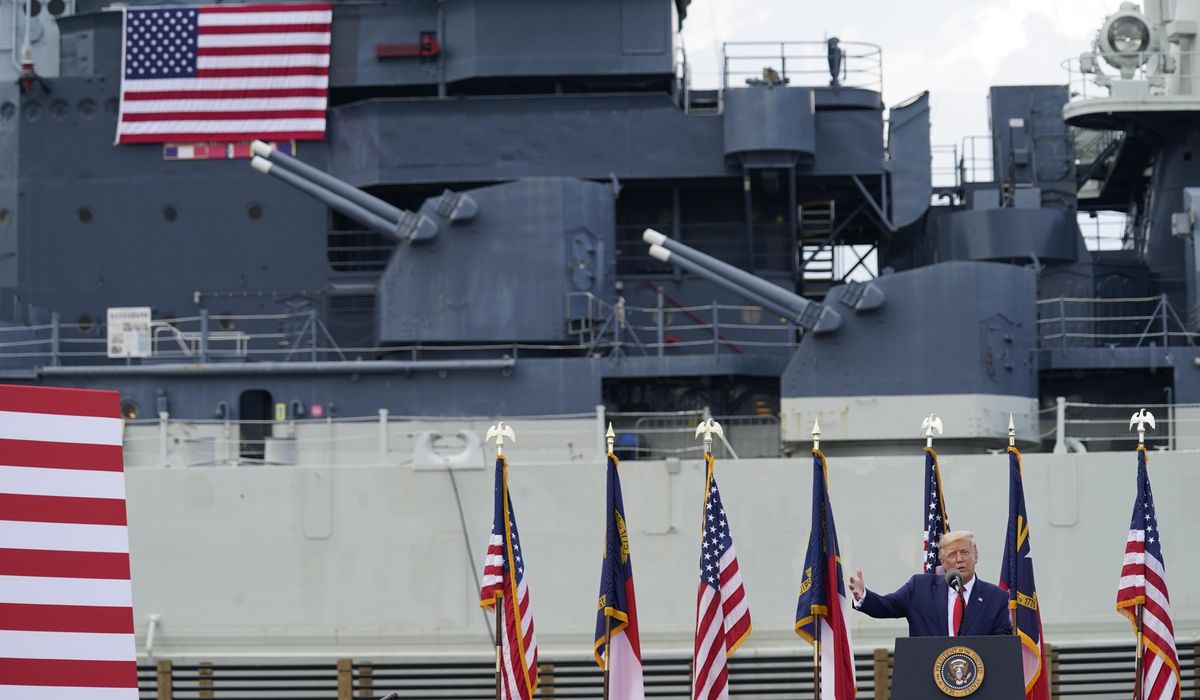
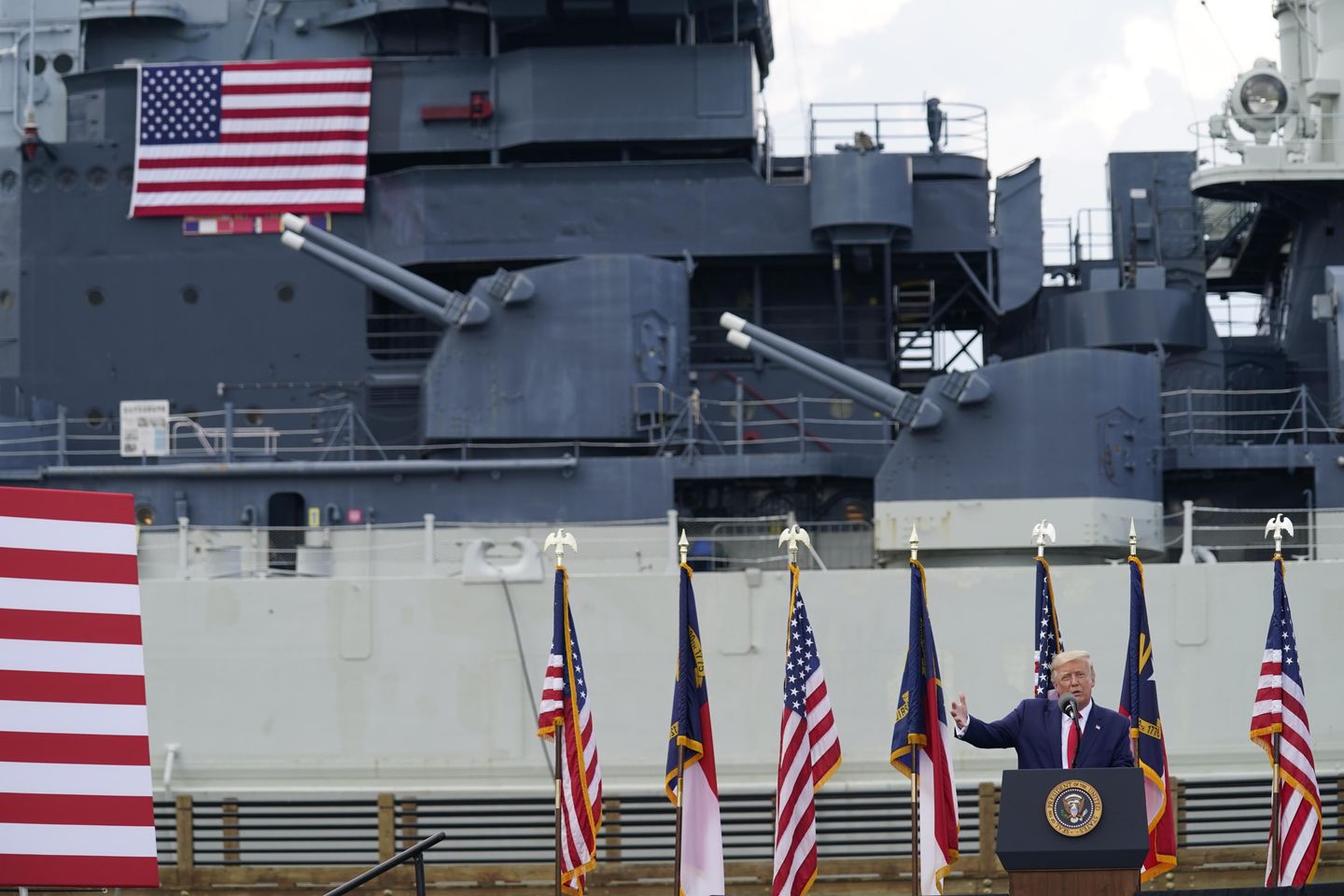
The Trump-class battleships, part of what the president described as a “Golden Fleet,” will feature a mix of offensive strike capabilities that outpace any other vessels in the Navy, including Arleigh Burke-class destroyers. Along with the usual gun systems, officials say, those new ships will have the ability to fire hypersonic missiles as well as sufficient power for future weapons such as railguns and directed energy systems.
The new battleships will give Navy leaders a command and control capacity at sea that they don’t have right now. The new battleships will be able to serve as part of an aircraft carrier strike group or their own surface action group, Adm. Trinque said.
When he announced the program, Mr. Trump cast the Golden Fleet plan as a way to guarantee U.S. superiority at sea and to kick-start the nation’s shipbuilding sector.
“We haven’t built a battleship since 1993. These cutting-edge vessels will be some of the most lethal surface warfare ships … other than our submarines,” Mr. Trump said in December.
“They’ll help maintain American military superiority, revive the American shipbuilding industry and inspire fear in America’s enemies all over the world,” Mr. Trump said of the new battleships. “We want respect. We’re going to have it.”
Some analysts say the proposed ships will prove to be far too expensive and that the program will take too long to complete.
“When the full cost and schedule become known, the program will almost certainly be canceled. However, that may be after spending several years and several billion dollars,” retired Marine Corps Col. Mark Cancian, now a senior adviser at the Center for Strategic and International Studies, wrote in a recent in-depth analysis of the Golden Fleet proposal.
“The Navy needs to build ships now rather than begin long development programs that will take years to produce usable capability, if they ever do,” Mr. Cancian said. “Far better to upgrade existing, proven designs and ramp up their production rates. That’s the way to reach the higher production levels that President Trump cited in his speech and to expand the U.S. presence on the world’s oceans.”
Modernizing the fleet
The Navy also has three Zumwalt-class destroyers. They were initially planned to be part of a larger inventory. The program was drastically cut, primarily because of runaway costs, but also because great power competition raised questions about its role.
Adm. Trinque said the stealthy-looking Zumwalt-class destroyers are being configured and modernized to carry hypersonic missiles.
Despite the U.S. focus on great power competition with potential adversaries such as China and Russia, the Navy still needs smaller warships because every mission is different, officials said. The force needed to attack an enemy fleet isn’t the same as the one needed to take down an alleged drug trafficking boat, for example.
“The national security strategy calls for a more appropriate Navy to control sea lanes and thwart illegal trafficking. That is a call for small surface combatants,” Adm. Trinque said.
The Navy has always relied on a “high-low” mix of larger and smaller warships.
“We need this mix now. Our large surface combatants are exquisitely capable. They’re designed very specifically for mission operations in every domain, from the seabed to space,” Adm. Trinque said.
The Navy still has 27 Littoral Combat Ships in the fleet. Despite promises of versatile, fast, near-shore vessels for counterterrorism and mine warfare, the LCS program was controversial because of cost overruns and maintenance failures. The remaining warships have received improved guns and electronic warfare systems.
“That is the entirety of our inventory of small surface combatants. Commanders have these ships in their fleet. We have to make them more lethal and more survivable,” Adm. Trinque said. “The LCS has come a long way. We’ve grown in our dedication to that class of ship.”
The Navy’s new frigates are expected to complement larger destroyers and littoral combat ships. They are a pivot from the troubled Constellation-class frigate to a smaller and more adaptable warship based on the Coast Guard’s National Security Cutter design, aimed for quicker delivery and lower costs.