President Trump on Monday imposed a 25% tariff on any country doing business with Iran amid Tehran’s violent crackdown on mass protests.
Under the tariff, all of Iran’s trading partners will be required to pay an additional levy on any business conducted with the U.S. Mr. Trump did not provide any further details about how the tariff would be implemented.
“Effective immediately, any Country doing business with the Islamic Republic of Iran will pay a Tariff of 25% on any and all business being done with the United States of America. This Order is final and conclusive,” Mr. Trump wrote on Truth Social.
China, Brazil, Turkey, India and Russia are Iran’s largest trading partners, combining for more than $10 billion in trade annually, according to data from the Observatory of Economic Complexity. In 2023, Iran had the 36th-largest economy in the world, ranking 92nd in total exports, according to OEC data.
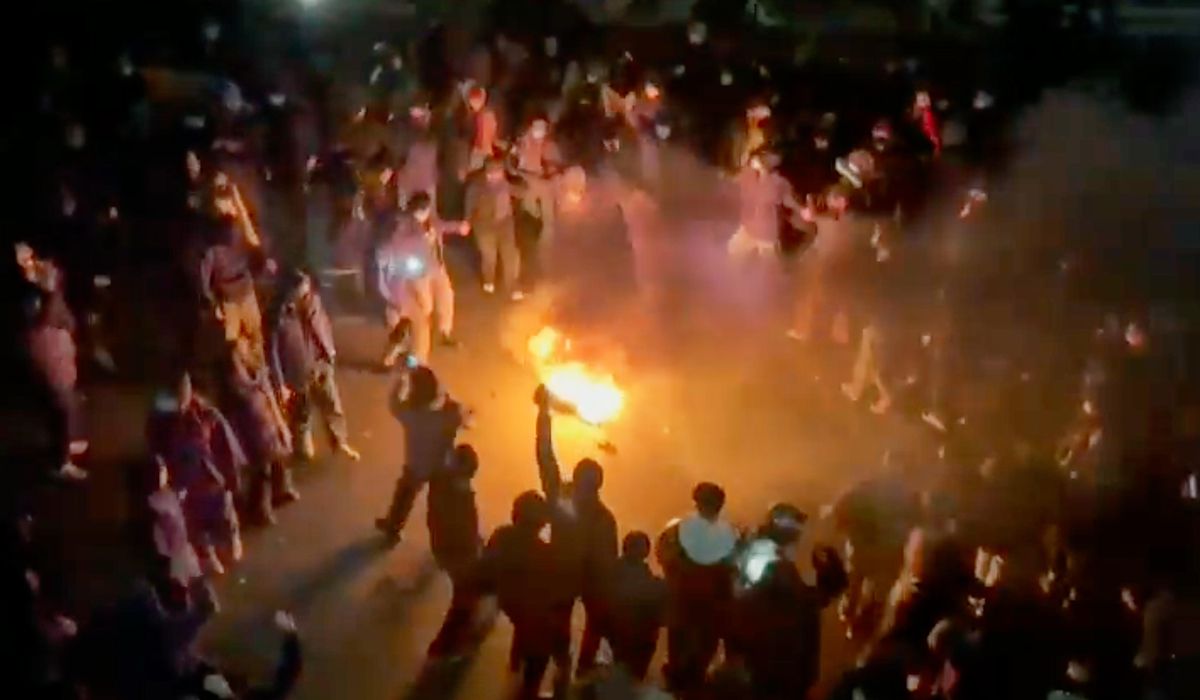
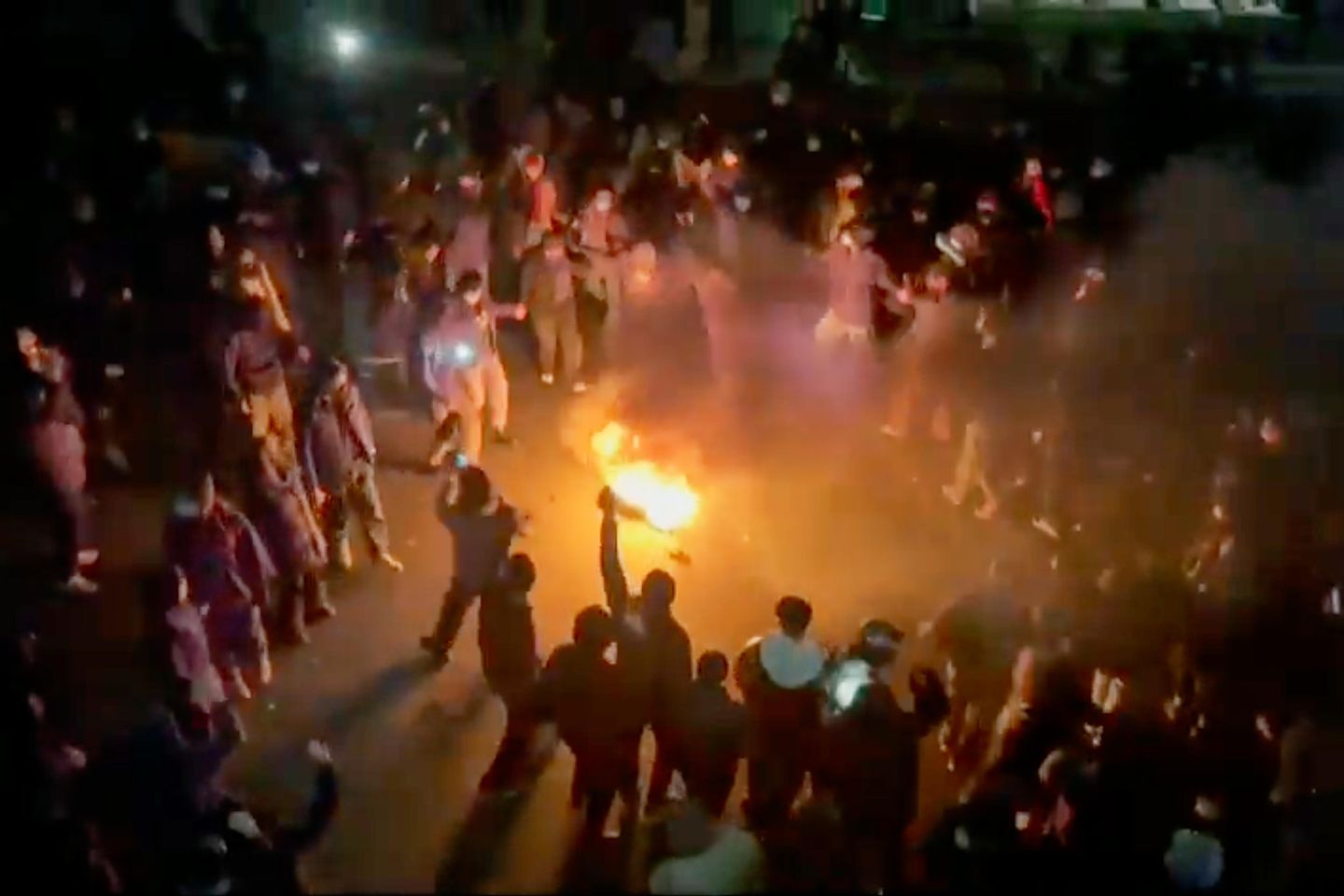
Mr. Trump continues to weigh his options for U.S. intervention in Iran as the Islamic regime escalates attacks against protesters. Several hundred protesters reportedly have been killed, and internet access has been cut off.
Potential next steps for Mr. Trump include bolstering anti-government organizations in Iran, unleashing cyber weapons against its military and civilian sites, placing more sanctions on Tehran and military strikes.
The president is not expected to send U.S. military forces, and U.S. military vehicles in the region have shown no movement.
“One thing President Trump is very good at is always keeping all of his options on the table,” White House press secretary Karoline Leavitt told reporters Monday. “And airstrikes would be one of the many, many options that are on the table for the commander in chief.”
The unrest began in late December after Iran’s currency collapsed, triggering a wave of anger that soon morphed into wider protests against the Islamic regime. Iran’s official currency, the rial, has lost half of its value over the past year and fell to a record low of 1 million rials per U.S. dollar last month.
Tehran over the weekend escalated its actions against protesters, with more than 500 people killed, according to the Human Rights Activists News Agency. Iran has warned the U.S. and Israel against any intervention, and President Masoud Pezeshkian is directly blaming both countries for the unrest.
Mr. Trump has openly supported the Iranian protests and hinted several times that the U.S. would “rescue” Iranians if the regime continues to kill protesters.
“Iran is looking at freedom, perhaps like never before. The USA stands ready to help!” Mr. Trump posted Saturday on Truth Social.
“We’re looking at it very seriously. The military is looking at it, and we’re looking at some very strong options. We’ll make a determination,” the president told reporters on Air Force One late Sunday.
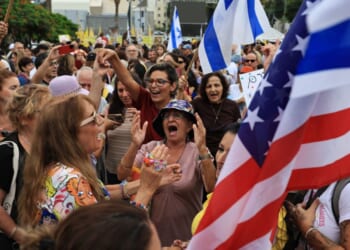
The Associated Press reported Monday that the Iranian regime drew tens of thousands of pro-government demonstrators to the streets in an attempt to counter the narrative that the theocracy is near collapse.
Iranian state television showed images of demonstrators thronging Tehran toward Enghelab Square, or “Islamic Revolution” Square. It called the demonstration an “Iranian uprising against American-Zionist terrorism.”
Iran’s top diplomat said earlier Monday that his country isn’t looking for conflict but is “prepared for war.”
Iranian Foreign Minister Abbas Araghchi, speaking at an ambassador conference in Tehran, said his country is “even more prepared than the previous war,” referring to Iran’s 12-day war against Israel in June, which severely damaged the Islamic republic’s defense and nuclear infrastructure.
However, he said, Iran is open to negotiations with the U.S. and is hoping for a peaceful solution to ongoing tensions.
“We are also ready for negotiations, but negotiations that are fair, with equal rights and mutual respect,” Mr. Araghchi said.
Iranian Foreign Ministry spokesperson Esmail Baghaei said Tehran had never left the negotiating table but would not engage in “one-sided negotiations.”
Mr. Baghaei added that communication channels between Mr. Arachchi and White House Special Envoy Steve Witkoff are still open.
• This article is based in part on wire service reports.