After years of losing games, races and titles to transgender competitors, female athletes may now have the advantage as two high-profile cases go before the Supreme Court.
Advocates for single-sex sports like their chances ahead of oral argument Tuesday on the Idaho and West Virginia bans on transgender athletes in female scholastic sports, given the high court’s 6-3 conservative majority and the strength of their legal arguments.
“We believe we’re right on the facts, we know we’re right on the Constitution, and we know we’re right on the law, but most importantly, we’re right on common sense,” said West Virginia Attorney General J.B. McCuskey at a Monday press conference held by the Republican Attorneys General Association.
“These laws make sense, they protect our women and girls, and we are all very proud to stand here to defend this very, very important issue,” he said.
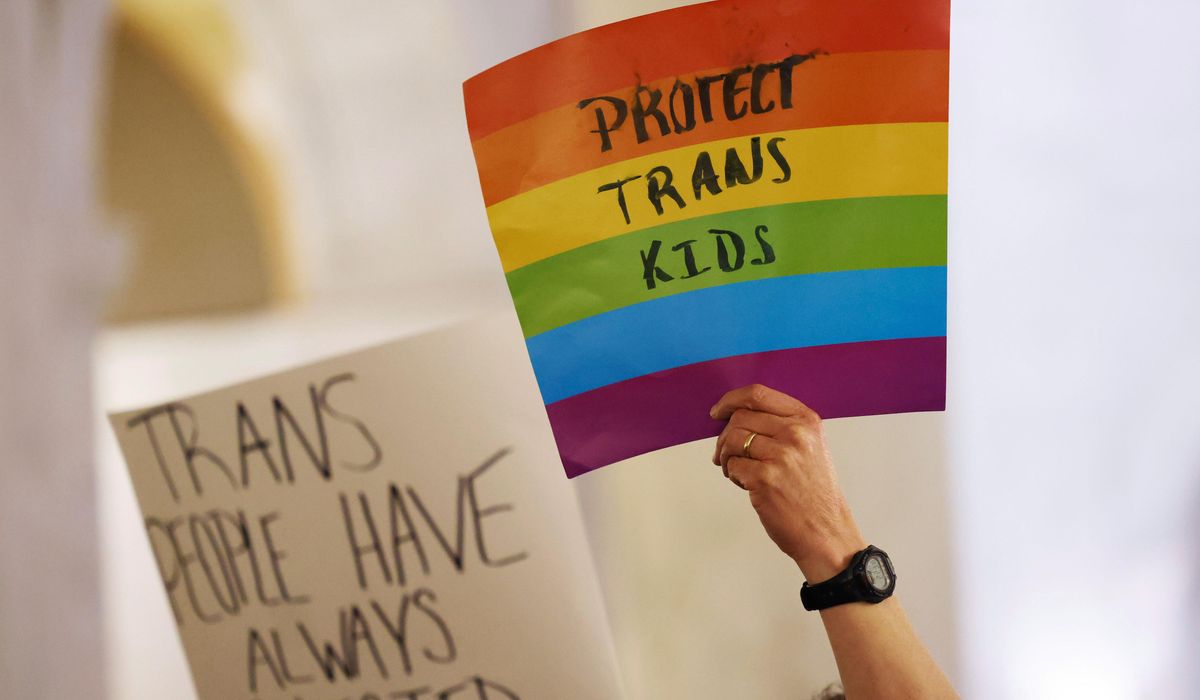
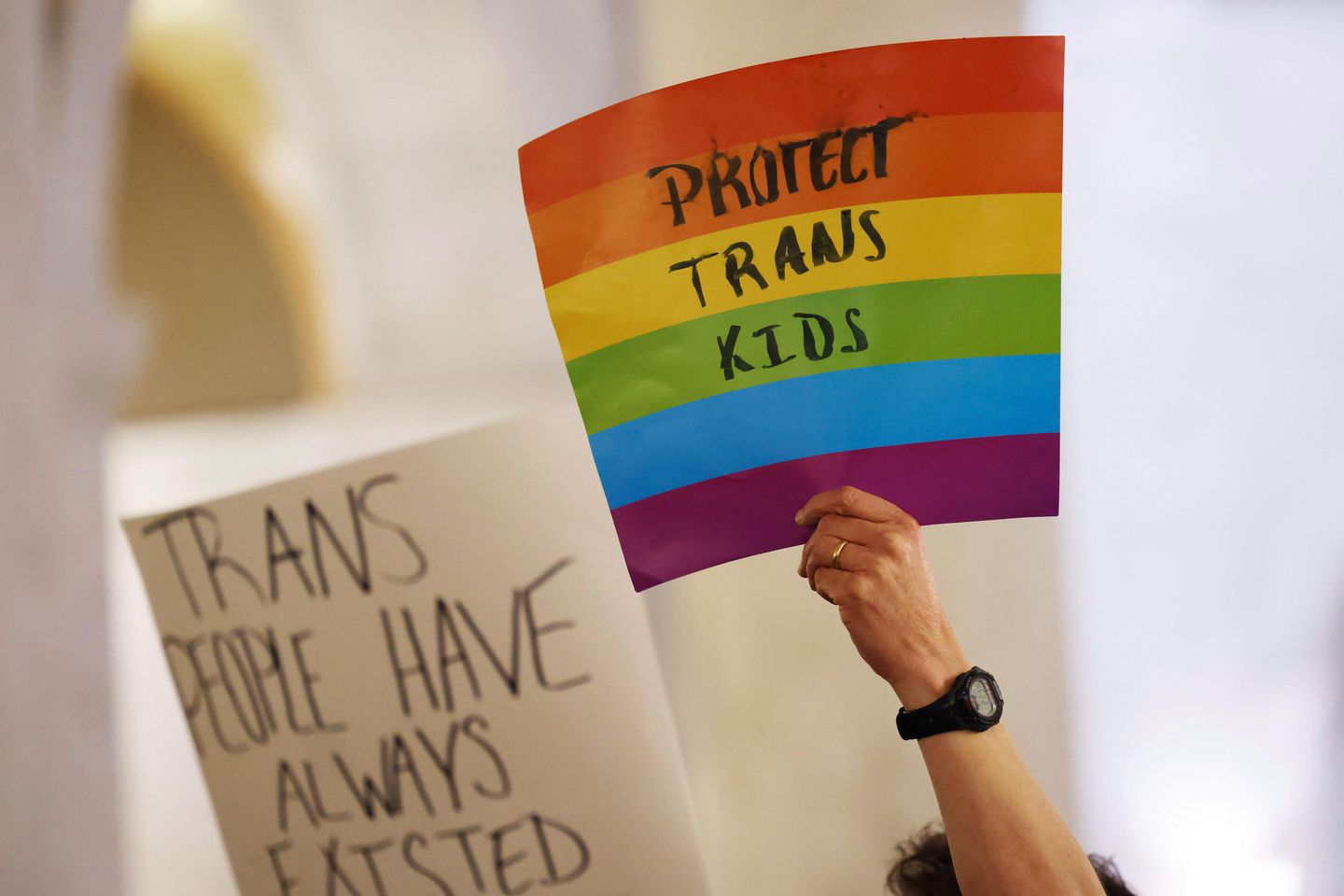
Large crowds are expected to gather Tuesday morning on the courthouse steps for competing rallies ahead of the oral argument.
A Supreme Court ruling in support of the Idaho and West Virginia laws would cap a string of victories for women’s sports as international and national athletic organizations reverse course on male-to-female transgender competitors in women’s sports.
Joining Mr. McCuskey and Idaho Attorney General Raul Labrador were GOP prosecutors and female athletes, including All-American swimmer Riley Gaines, who tied for fifth place with transgender competitor Lia Thomas at the 2022 NCAA Division I swimming championships.
“I’m very optimistic that we will see a favorable ruling here,” said Ms. Gaines. “What I do know is public opinion isn’t on their side, the other side, those who support the discrimination of women. Science isn’t on their side. What happened to ’follow the science’? They seemed to live by that mantra.”
A New York Times poll released last year showed that 79% of Americans oppose allowing transgender athletes to compete in female sports, including 67% of Democrats.
Even so, Democrats have aligned firmly with LGBTQ advocates in opposition to the state laws, arguing that they discriminate based on gender identity in violation of Title IX and the Fourteenth Amendment’s Equal Protection Clause.
The two state laws were challenged by two transgender competitors: Lindsay Hecox, a former Boise State University track athlete, and Becky Pepper-Jackson, who competes in girls’ high school track in West Virginia.
“Every child, no matter their background, race, or gender, should have access to a quality education where they can feel safe to learn and grow – and for many kids that involves being a part of a school sports team,” said Cathryn Oakley, Human Rights Campaign senior director of legal policy, in a statement. “To deny transgender kids the chance to participate in school sports alongside their peers simply because of who they are is textbook discrimination — and it’s unconstitutional.”
Advocates for women’s sports counter that the Equal Protection Clause and Title IX apply to sex, not gender identity.
“I’m hopeful the Supreme Court of the United States again does the right thing and protects women’s and girls’ rights, which are again on the line this week,” said Montana Attorney General Austin Knudsen. “Denying biological reality does not create equality.”
Ms. Gaines said that female athletes are seeking only the “bare minimum” from the Supreme Court.
“Understand tomorrow, the cases that are being heard: It’s not to determine if states must pass some sort of fairness in women’s sports law; it’s to determine if they even can,” she said. “We are fighting for the bare minimum here. Can we as women call ourselves champions? Can we allow ourselves to be vulnerable in an intimate area of undressing, such as locker rooms, without having to fear a man walking into that space?”
If the court does rule in their favor, advocates for single-sex sports are already looking ahead to the 23 states that have not passed bans on biological boys in girls’ athletics.
“We won’t be done. We will win these cases, and 27 states will be permitted to leave these laws on the books,” said Jennifer Sey, founder and CEO of XX-XY Athletics. “Twenty-three states and Washington, D.C., will continue to double down and allow boys to compete in girls’ sports. We need to change the cultural conversation.”
A decision in the two cases – Hecox v. Little and West Virginia v. B.P.J. – could come in June or July.