Senate Republicans are floating a variety of health care plans to address the year-end expiration of enhanced Obamacare premium subsidies that is projected to more than double out-of-pocket costs for 22 million Americans.
There are at least five different GOP proposals, two of which would temporarily continue the enhanced subsidies and three that rely on alternative approaches to delivering government aid.
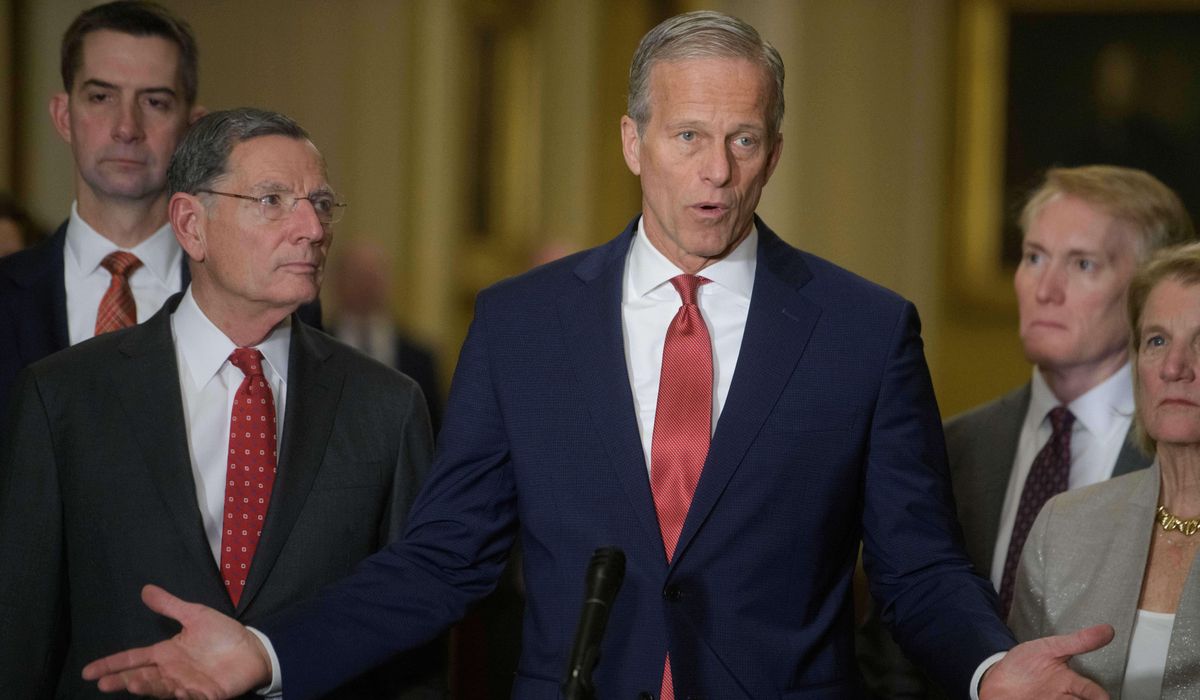
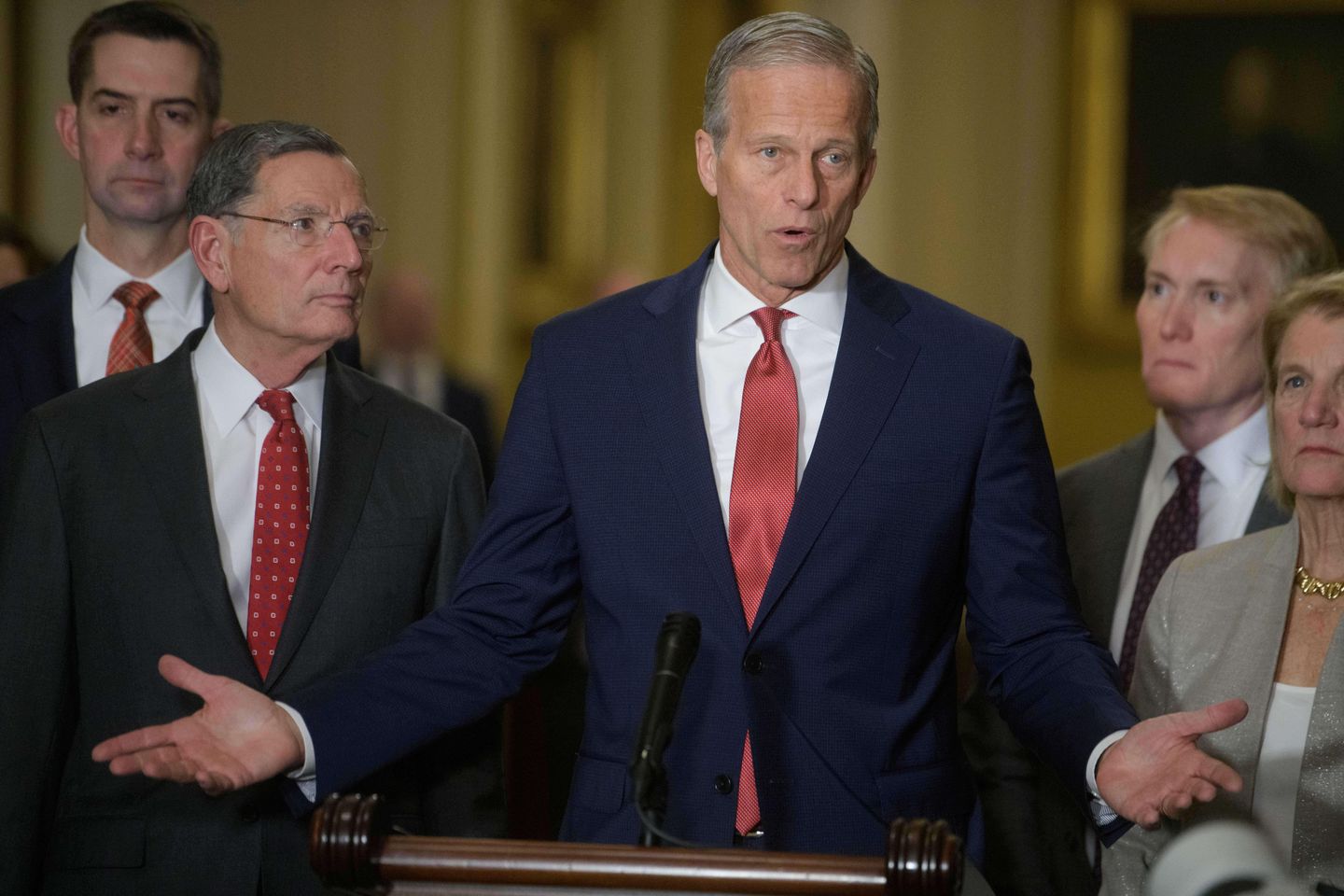
“It’s nice to have an abundance of good ideas to consider,” Senate Majority Leader John Thune, South Dakota Republican, said Monday.
He specifically mentioned a plan from Senate Finance Chairman Michael Crapo, Idaho Republican, and Senate Health, Education, Labor and Pension Chairman Bill Cassidy, Louisiana Republican, as one that “represents an approach that actually does something about affordability and lowers costs.”
That plan and other Republican proposals are designed as alternatives to Senate Democrats’ bill to extend the current enhanced Obamacare subsidies for three years.
The enhanced subsidies are more expansive versions of the Affordable Care Act premium tax credits that Democrats enacted during the COVID-19 pandemic to make the share of premiums the government will pay more generous, capping out-of-pocket costs at 0%-8.5%, based household income.
The pandemic expansion, which expires Dec. 31, extended access to the subsidies to families earning more than 400% of the federal poverty level, currently $62,600 for an individual or $128,600 for a family of four.
The two Senate GOP proposals to temporarily continue the subsidies would reinstate an income cap at a higher level.
The Senate will vote Thursday on Democrats’ bill to extend the enhanced subsidies for three years without an income cap or other changes Republicans said were needed to earn their support.
GOP leaders promised Democrats a vote on a bill of their choosing as part of a deal last month to end the 43-day government shutdown.
Republicans are still deciding whether to hold a vote on their own proposal but are unlikely to do so unless they can coalesce around a single plan.
Mr. Thune said he will hold discussions with his conference on the best path forward. But he said he would prefer to hold a vote on a bill that can get the 60 votes needed to overcome a filibuster rather than “side-by-side” votes on Democratic and GOP messaging measures that will fail.
“I think if there is going to be some meeting of the minds on this, it is going to require that Democrats sort of come off a position they know is an untenable one, and sit down in a serious way and work with Republicans,” he said.
Senate Minority Leader Charles E. Schumer, New York Democrat, said Republicans are too divided on the issue to come up with a viable plan and urged them to back Democrats’ bill.
“Left to their own devices, Republicans don’t have a snowball’s chance in hell of fixing the health care crisis,” he said.
The various GOP plans share some similarities but are different enough that it will be difficult for Senate Republicans to negotiate a plan that all 53 of them could support.
The Crapo-Cassidy bill, called the Health Care Freedom for Patients Act, would deposit government aid into a tax-exempt Health Savings Account if consumers enroll in a high-deductible Obamacare plan.
In the One Big Beautiful Bill Act enacted this summer, Republicans expanded HSAs to allow them to be paired with Obamacare bronze or catastrophic plans that have higher deductibles but lower premiums.
For Obamacare enrollees who participate in one of those plans, the Crapo-Cassidy plan would have the government deposit $1,000 into an HSA for individuals aged 18-49 and $1,500 for individuals ages 50-64.
The funds could not be used to pay for premiums under current HSA rules but can be used on deductibles, copays and other out-of-pocket expenses.
Mr. Crapo and Mr. Cassidy would add a restriction to ensure the government funds could not be used for abortion or gender transition services.
Their plan only authorizes the HSA payments for 2026 and 2027 and limits eligibility to individuals earning less than 700% of the poverty level, currently $109,550 for an individual and $225,050 for a family of four.
Starting in 2027, the Crapo-Cassidy proposal would also extend eligibility to catastrophic plans to all individuals and appropriate funding for cost-sharing reductions, or CSRs, that lower deductibles for low-income families that purchase silver-level Obamacare plans.
Funding CSRs for the first time since 2016 is also projected to lower premiums since insurers raised premiums for silver-level plans after losing those payments.
“The cost sharing reductions … we tried to get done last summer during reconciliation. The Democrats blocked it,” Mr. Thune said. “But it was scored as reducing premiums by 12% and saving $30 billion.”
The Crapo-Cassidy plan also includes other GOP proposals blocked during the reconciliation process, including a measure to require states to verify immigration status for Medicaid enrollees and reducing federal funding to states that provide coverage to illegal immigrants.
Sen. Roger Marshall, Kansas Republican who sits on the Finance and Health panels, has floated his own proposal that would continue the enhanced premium tax credits for one year before moving the government aid into an HSA-style account.
His plan would cap eligibility for the subsidies at 700% of the poverty level and add guardrails to protect against fraud, like an ID verification requirement and minimum monthly premium payments of $10-$40.
It would also authorize the Treasury Department to decrease the subsidy amount sent to the insurer based on their costs of covering abortion services so taxpayer dollars are not used for that purpose.
Starting in 2027, Mr. Marshall’s plan would stop the enhanced subsidy payments to insurers and redirect that funding into a new HSA-style health care affordability account that would not allow funds to be spent on abortion services.
The full enhanced subsidy amount would be deposited into the account in 2027, and each year after the amount will drop by 20% until it ends altogether in 2032.
Mr. Marshall’s plan would also appropriate funding for CSRs and would provide states funding to establish high-risk reinsurance pool programs to separate people with costly health conditions out of the actuary pool insurers use to set premiums.
He would also include his bipartisan price transparency bill that he says could collectively save Americans $1 trillion a year on health care costs. The measure would require health care providers to publish the costs of their services, including cash prices for patients who want to pay out of pocket, in addition to rates providers have negotiated with insurers.
Republican Sens. Bernie Moreno of Ohio and Susan Collins of Maine teamed up on a proposal they say will give Americans “a two-year glidepath off the COVID-era subsidies.”
Their temporary two-year extension phases out the subsidies for higher-income earners, ending them altogether once household income hits $200,000.
The proposal also includes a minimum monthly premium of $25 to protect against fraud and people being enrolled in $0 premium plans without their knowledge.
The measure incentivizes states to create new insurance plans that do not have to comply with all of Obamacare’s requirements but must still maintain protections for preexisting conditions by allowing them to apply for a waiver.
Anyone who purchases a plan approved under the state waiver that would have otherwise been eligible for the premium tax credits or CSR payments would get that money deposited into a Trump Health Freedom Accounts.
It also includes a provision requiring providers to publish the prices of their services.
Sen. Rand Paul, Kentucky Republican, also has released a bill but, unlike the other GOP plans, he does not propose continuing any direct government aid.
His measure would expand HSAs, which are currently limited to people both in the private and public insurance marketplaces who purchase high-deductible plans, to all Americans.
It would also raise the annual HSA contribution limit for 2026 to $24,500, up from $4,400 for an individual and $8,750 for a family.
Mr. Paul’s plan would allow HSA dollars to be spent on health insurance premiums and other expenses not currently eligible, like vitamins and dietary supplements, gym memberships and wearable fitness trackers.
Another component of his proposal would codify President Trump’s first-term executive order on Association Health Plans that was overturned in court.
It would allow membership-based entities such as Amazon, Costco credit unions, churches and associations to provide new coverage options by negotiating with insurers for lower group rates.
Mr. Paul told The Washington Times he spoke with the president and “he was very favorable and very open to the idea.”