Democrats, believing they have the political upper hand on a health care cliff they created, are rebuffing Republican alternatives to extending enhanced Obamacare subsidies that are set to expire at the end of the month.
A small number of Republicans are trying to tweak and temporarily extend those subsidies, the central issue in the government shutdown this fall.
It’s no coincidence that these moves are driven mainly by the most vulnerable Republican incumbents.
“We have a few days to prove that we care, that we’re going to try,” said Sen. Jon Husted, Ohio Republican. “It is frustrating, and I know we can do this.”
Mr. Husted, who was appointed to fill the Senate seat vacated by Vice President J.D. Vance, is running next year against former Sen. Sherrod Brown, a Democrat who lost his 2024 reelection bid by less than 4 percentage points.
He and Sen. Susan M. Collins of Maine, the only other Senate Republican incumbent considered vulnerable to a Democratic upset in 2026, expressed support at a hearing Wednesday for temporarily extending the enhanced Obamacare subsidies with a few changes.
SEE ALSO: Audit finds dead people, fabricated applications collected Obamacare tax credit
Ms. Collins floated an income cap, and Mr. Husted suggested a minimum premium payment of at least $1 to prevent people from being fraudulently enrolled without their knowledge.
Rep. Brian Fitzpatrick, a Pennsylvania Republican who represents a district that narrowly voted Democratic in the 2024 presidential election, is working with other vulnerable House incumbents from both parties on a compromise plan along those lines.
The base Obamacare subsidies, known as premium tax credits, do not expire.
On Dec. 31, a “sunset” rule in pandemic legislation will end the provisions that extended the subsidies to families earning more than 400% of the federal poverty level and made them more generous across the board.
Not a single Republican in Congress voted for the Affordable Care Act or the 2021 and 2022 bills that expanded the premium tax credits. Still, Democrats are eager to blame Republicans and campaign on the issue for the 2026 midterm elections if they fall off the health care cliff they created.
Regardless of what happens, Democrats will take credit for fighting to prevent the 22 million subsidized Obamacare enrollees from having to pay more than double, on average, next year for health insurance because of expired subsidies.
SEE ALSO: Trump pardons Democratic Rep. Henry Cuellar of Texas in corruption probe
“We’re going to either get it done by forcing votes in the Senate, or we’re going to get it done by getting it on some piece of legislation, or we’re going to get it done by marching through into the midterms and winning,” said Sen. Amy Klobuchar, Minnesota Democrat.
A poll conducted by the nonprofit health policy research organization KFF around the start of open enrollment found that 74% of Americans supported extending the enhanced Obamacare subsidies. That included 94% of Democrats, 76% of independents and 50% of Republicans.
The Senate is set to vote next week on a Democratic plan to extend the expanded subsidies.
Republicans agreed to hold the vote in exchange for eight Senate Democrats breaking with their party last month to reopen the government after a record 43-day shutdown.
Although some senators are holding out hope for a bipartisan agreement that can garner the 60 votes needed to overcome a filibuster, most predict “side-by-side” votes on a Democratic bill and a Republican bill and that will both fail.
“It’s going to be a side-to-side, but I’m going to work my tail off to get a bipartisan solution for the end of January,” said Sen. Roger Marshall, Kansas Republican.
Jan. 30 is the expiration date for stopgap spending for nine of the 12 annual spending bills.
Democrats have not ruled out another shutdown showdown over health care if Republicans don’t agree to a deal.
Most Republicans oppose extending the extra Obamacare subsidies and prefer alternatives, such as allocating funds to health savings accounts for consumers to use for high deductibles and other out-of-pocket expenses.
Democrats have said health savings accounts wouldn’t help with soaring premiums and the only workable solution, given the time crunch, is a clean extension of the enhanced subsidies.
Anyone who needs Obamacare coverage that begins Jan. 1 has until Dec. 15 to enroll.
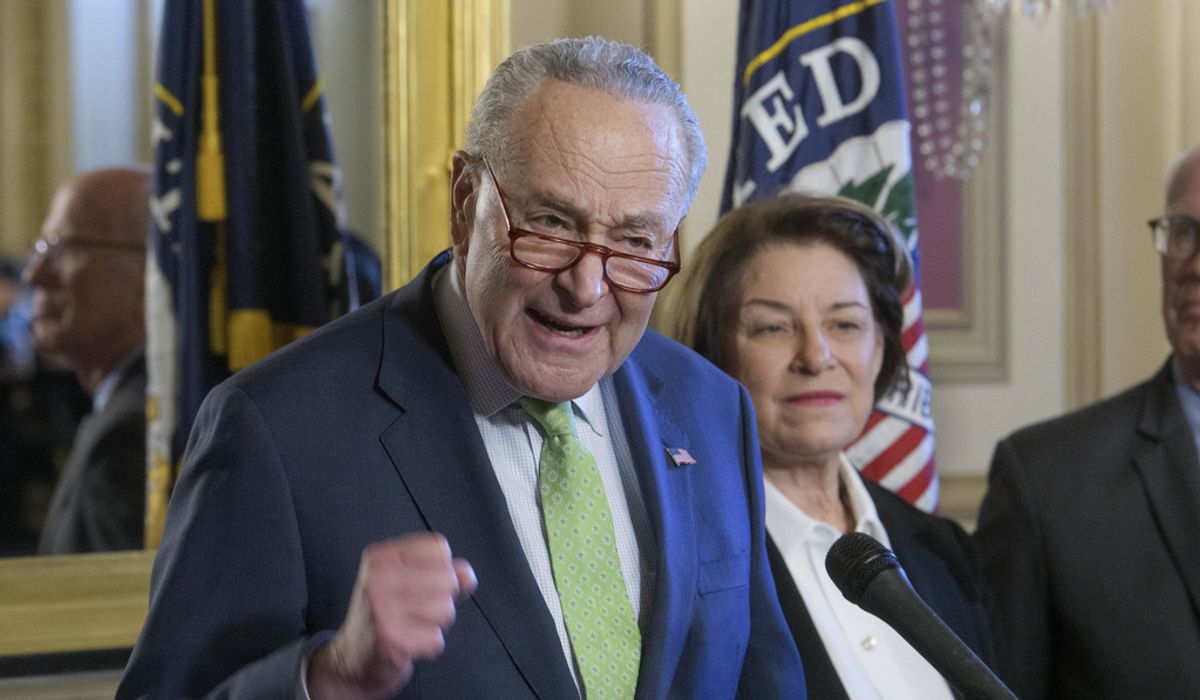
Senate Minority Leader Charles E. Schumer, New York Democrat, said his party is united on extending the subsidies while Republicans are “a mess.”
“They can’t come to an agreement on a solution,” he said. “Many of them don’t want any solution at all.”
Sen. Thom Tillis, a North Carolina Republican who is retiring, said Democrats will use the health care issue in the race to replace him and in other competitive 2026 contests.
“The Democrat strategists have got to be thinking about all the sympathetic stories that they’re going to march out, beginning in the first quarter of next year, if we don’t get it done,” he said. “These are not going to be fake sympathetic cases. These are going to be real cases where people can’t afford insurance, they have chronic health care challenges.”
Mr. Tillis is among the Republicans urging the party to “keep it simple” and extend the enhanced Obamacare subsidies with minimal changes for a year or two, giving lawmakers more time to enact a broader alternative.
That’s a minority position among Republicans, however.
Most Republicans are content to let the subsidies expire. Some have floated alternatives they think can be enacted in time to help Americans with their 2026 health care costs.
“Republicans are not interested in the status quo,” Sen. Bill Cassidy, Louisiana Republican and chairman of the Health, Education, Labor and Pensions Committee, said at a Wednesday hearing on the issue. “Putting a Band-Aid over a broken bone doesn’t help anything.”
Four Republicans on his panel — Mr. Husted, Ms. Collins and Sens. Lisa Murkowski of Alaska and Josh Hawley of Missouri — expressed interest in a temporary extension of the Obamacare subsidies with income caps and fraud protections.
The need for provisions to protect against fraud became even more apparent after the Government Accountability Office released a report Wednesday about the failure of existing verification guardrails.
The congressional watchdog submitted 20 fake applications for the 2025 plan year, all but one of which were approved. Another was canceled because of verification issues, but the other 18 active fake accounts have collectively defrauded the government of more than $10,000 a month.
“The status quo is not sustainable, but if we fail to act, if we fail to do something relatively soon here, the consequences are severe,” Ms. Murkowski said in support of a short-term extension of the enhanced subsidies.
Mr. Cassidy, who faces political pressures in the form of right-wing primary challengers, prefers to allocate the money the government would spend on the expanded subsidies to Obamacare enrollees through health savings accounts.
That would require Obamacare beneficiaries to enroll in a high-deductible bronze or catastrophic plan, which can be paired with health savings accounts. Although the dollars cannot be used to pay for premiums, high-deductible plans typically cost less.
Mr. Cassidy said he is open to a compromise that, for 2026, would allow Obamacare enrollees the choice of continuing to take the subsidy as a cap on their premium costs or through a health savings account that can be used to pay for deductibles, co-pays and other health care expenses.
“But I think that you’d find that the economics of it would work far more to go with the HSA and the bronze level plan,” he said. “Your premium would be cheaper, and you’d have first-dollar coverage.”
Mr. Cassidy and Senate Finance Committee Chairman Mike Crapo, Idaho Republican, are leading their party’s discussions about an alternative to the Obamacare subsidies.
Republicans have yet to coalesce around any specific plan, let alone find one that can garner 60 votes.
Senate Majority Leader John Thune, South Dakota Republican, said his conference is “still coalescing” around what to do, but he did not rule out a compromise that temporarily extends the enhanced Obamacare subsidies with some limitations.
“But it takes two sides to tango,” he said. “And it doesn’t seem like there’s a high level of interest in the Democrat side right now on doing something with reforms.”
Democrats say one of the Republicans’ proposed “reforms,” ensuring the subsidies cannot be used for plans that cover abortions, is a nonstarter.
Some are open to other ideas, such as the income cap and eliminating $0 premiums.
Mr. Schumer said the onus is on Republicans to first show they can negotiate among themselves before the two sides can hash out a bipartisan agreement.
In the meantime, Democrats will keep blaming Republicans for creating a health care and affordability crisis as they drive that message to the polls next year.
“You’re going to hear about the high costs that Americans have to pay for so many important things, especially health care, over and over and over again throughout this next month and all of next year,” Mr. Schumer said.
“It’s the No. 1 issue facing the American people. It’s the No. 1 thing they want their elected officials to help them with. It’s the No. 1 thing that Republicans are stonewalling,” he said.