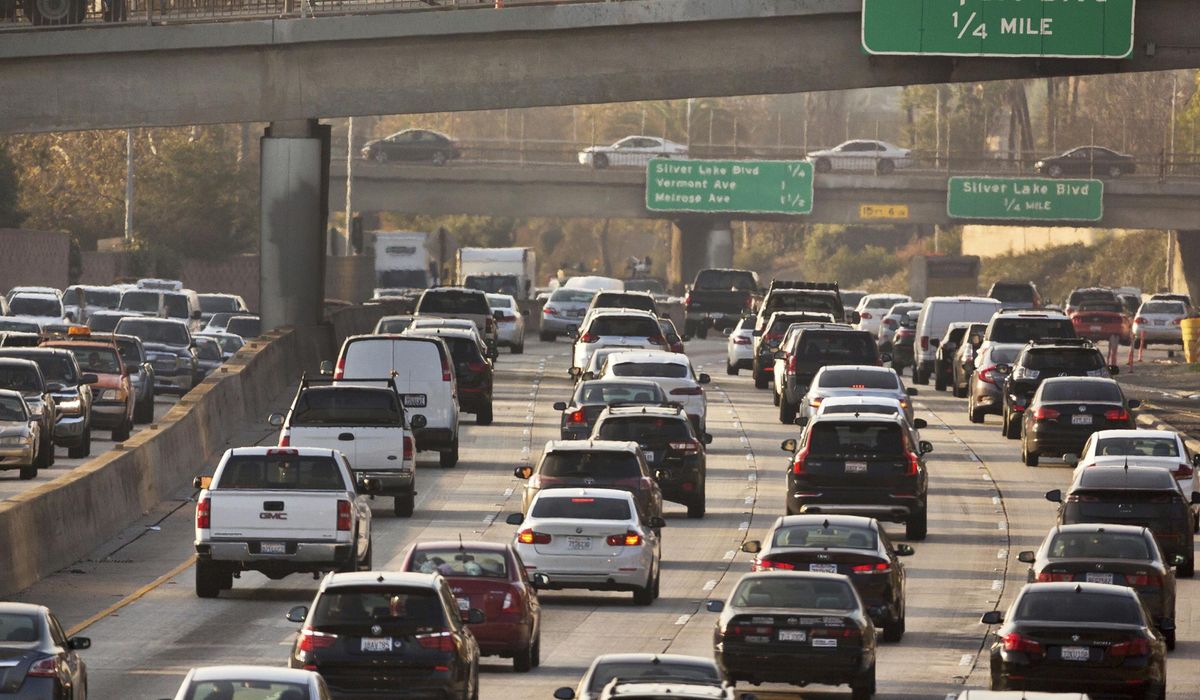
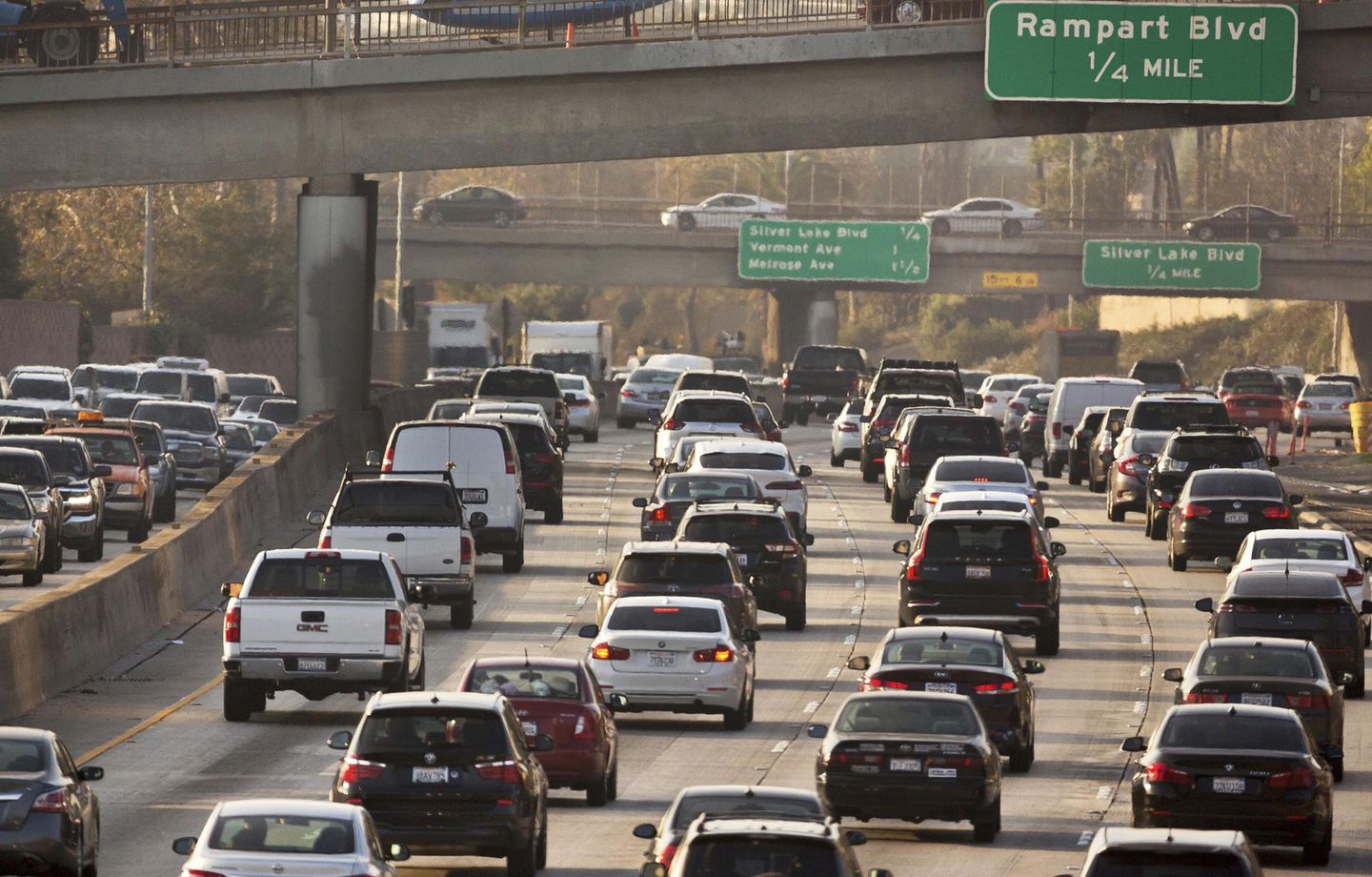
Several Democratic-led states are exploring new ways to monitor vehicle mileage as they work toward climate goals and shore up road maintenance budgets. But the proposals are raising privacy and equity concerns about who gets left behind.
Massachusetts lawmakers are currently considering the “Freedom to Move Act,” which would require the state to track emissions and miles traveled while developing plans to reduce overall vehicle mileage. Similar efforts are underway in Minnesota, California, Oregon, and New York.
State Senator Cynthia Creem, who sponsors the Massachusetts bill, said the state should pursue additional strategies to reduce transportation emissions. Transportation is the largest source of greenhouse gases in Massachusetts, according to state data.
But critics worry these programs could hurt rural families, raise privacy concerns, and penalize people without good public transit options. Here are the key questions these proposals raise:
1. How exactly would mileage tracking work?
The Massachusetts bill doesn’t specify how miles would be monitored or how car trips would be reduced. That vagueness is fueling speculation and concern.
Some states are testing different approaches:
- Minnesota uses roadside sensors and data modeling to track aggregate vehicle miles
- Oregon allows electric vehicle owners to enroll in a pay-per-mile system instead of paying a flat annual fee of about $115
- Separately, Massachusetts Sen. Mike Barrett has proposed requiring odometers to be checked during annual vehicle inspections as part of a mileage-based tax on electric vehicles
The roadside sensor approach collects general traffic data without identifying individual drivers. The odometer check method raises questions about how states would distinguish in-state from out-of-state driving, or whether drivers could game the system.
What remains unclear: Whether states would eventually need more detailed tracking systems to fairly implement mileage-based fees.
2. Is this about climate change or budget holes?
The bills are framed as climate policy, but there’s a significant fiscal component that often gets less attention.
States face a gas tax funding challenge: As vehicles become more fuel-efficient and electric vehicle adoption grows, gas tax revenues are declining. Meanwhile, electric vehicles are heavier than traditional cars and cause more wear on roads and bridges, while contributing nothing to the gas tax that funds repairs.
Minnesota’s Department of Transportation explicitly states their mileage fee pilot aims “to close the highway funding gap and ensure everyone is paying their fair share.”
Creem’s perspective: Her office says the Massachusetts bill focuses on expanding transportation options to align with net-zero goals. “It does not in any way limit people’s choices about how to get around. It does not impose fines, penalties or taxes on drivers. In fact, it gives people more choices,” she said in a statement.
Critics’ view: The Massachusetts Fiscal Alliance, a conservative group, argues “Massachusetts politicians don’t want you driving, all in the name of their net-zero 2050 mandate.”
The reality appears to be both: States need climate solutions and sustainable road funding as the gas tax becomes obsolete.
3. What about people without transit alternatives?
This geographic divide is where the debate gets heated.
Senator Creem represents affluent Wellesley and Brookline near Boston. These are areas with extensive public transit. But residents in places like Sterling, Massachusetts, pushed back hard on social media, with one calling it “just a money grab.”
Residents complained on social media that the legislation would penalize people without access to public transportation and families who cannot use buses or the subway to bring children to school and appointments or who plan to take their cars on vacation.
For rural residents, late-shift workers, or people in “transit deserts,” a car isn’t optional. It’s how you get to work, medical appointments, or the grocery store. If mileage reduction comes through fees, or what some critics fear could become caps, these residents worry they’ll bear a disproportionate burden.
The challenge: How do you reduce vehicle emissions without penalizing people who have no realistic alternative to driving?
4. Are electric vehicles creating a fairness problem?
Here’s an irony at the heart of these proposals: The vehicles that are supposed to solve the climate problem are creating a new infrastructure funding challenge.
Electric vehicles are heavier than gas-powered cars because the batteries add significant weight. They cause more stress to roads, bridges, and other infrastructure. Yet in many states, EV owners contribute nothing to the gas taxes that have traditionally funded road maintenance.
Because EVs don’t buy gasoline, their drivers don’t pay gas taxes at the pump. It’s one reason proposals like Barrett’s mileage-based tax are being discussed in Massachusetts. As EV adoption grows (Massachusetts had planned to ban gas-powered car sales by 2035 before pausing the rule), the gas tax model becomes increasingly unsustainable.
Oregon has already addressed this by allowing EV owners to opt into a pay-per-mile system instead of paying an annual flat fee of about $115.
This creates a fairness question that cuts both ways:
- Gas car drivers wonder why they’re subsidizing road damage from heavier EVs
- EV owners who bought cars to help the environment worry they’re being targeted with new taxes
The mileage-based fee proposals aim to create a level playing field where everyone pays based on road use, regardless of what powers their vehicle. But implementing that system requires the tracking infrastructure that’s raising privacy concerns.
California is explicitly considering a mileage-based fee “as a potential replacement” for the gas tax, acknowledging this isn’t just about climate, but maintaining roads as the gas tax becomes obsolete.
5. Where does the money go, and when do alternatives arrive?
Minnesota and other states say mileage fees would fund road maintenance. Massachusetts’s bill emphasizes expanding public transportation. But here’s the timing problem: If you make driving more expensive or difficult before viable transit alternatives exist, what happens to commuters in the interim?
Infrastructure projects take years or decades. The MBTA and similar systems in other states already struggle with delays, safety issues, and capacity constraints.
Residents want to know: Will new transit options be in place before mileage restrictions take effect? Or will people face reduced mobility while waiting for promised improvements?
The Freedom to Move Act calls for Massachusetts to expand public transportation, but doesn’t specify timelines or guarantees about when improved service would be available.
Read more: Democrat-run states want to monitor automobile mileage to reduce car use, raise revenue
This article is written with the assistance of generative artificial intelligence based solely on Washington Times original reporting and wire services. For more information, please read our AI policy or contact Steve Fink, Director of Artificial Intelligence, at sfink@washingtontimes.com
The Washington Times AI Ethics Newsroom Committee can be reached at aispotlight@washingtontimes.com.